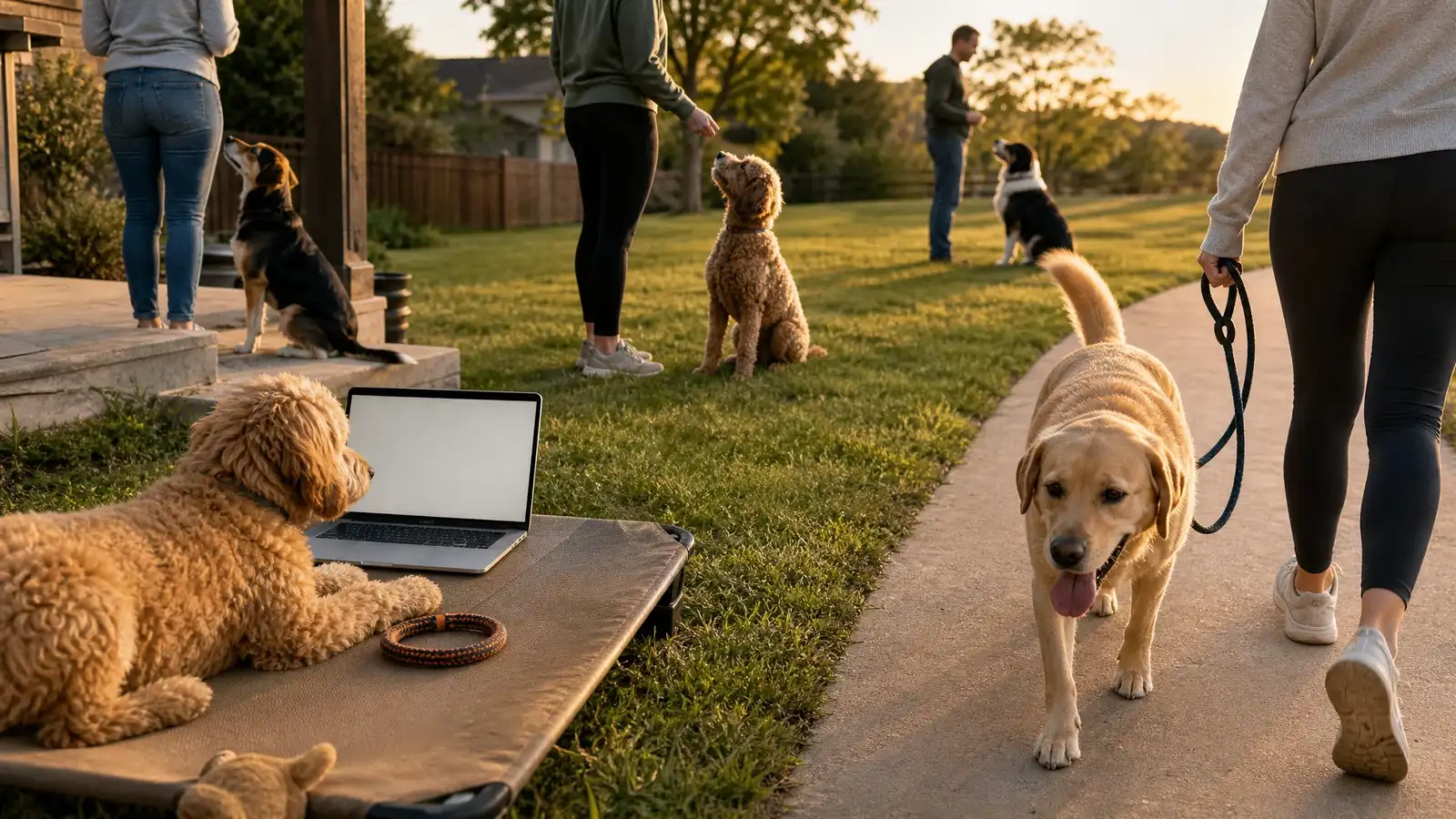
The right type of dog training depends on your dog's temperament, your goal and how you learn, so most owners are choosing between private lessons, group classes, board-and-train and online coaching. The table below compares them, with local published price ranges last verified 2026-11-11.
Not sure which format fits? Choose in-person or online and we will start from how your dog acts at Doggie Depot or the park gate
- In-person training in Arlington and nearby areas
- Online training anywhere
- Reward-based methods only
How do the main types of dog training compare?
Private lessons and online coaching put the focus on you and your dog, while group classes and board-and-train add other dogs or your dog's time away. No type is best for everyone. The table sets out strengths and trade-offs.
| Type | Best for | Strengths | Trade-offs | Local published price |
|---|---|---|---|---|
| Private in-home | Reactivity, fear, door manners, anything tied to your home | Tailored plan; works in your real surroundings | Costs more per hour than a class | About $90 to $200 per lesson |
| Group class | Social, confident dogs; basic manners with distractions | Real-world distractions; meet other owners | Hard for fearful or reactive dogs; less individual attention | Not established; ask for a quote |
| Board-and-train | Owners who want a head start while away | Concentrated days of practice | Skills must transfer to your home; your coaching still matters | $850 to $5,800 total (two businesses) |
| Online | Puppies, manners, mild problems, busy schedules | Flexible; works from anywhere | Needs a willing owner; not hands-on | Varies by provider |
Prices are local published market ranges, not our prices. Per-lesson figures at the high end are derived from package totals; details are on the cost page.
A few things the table cannot show. In private lessons, we see how your dog behaves in your real hallway, kitchen and street, so the plan fits the life you actually have. With a group class, you get a rehearsal for distraction, but you share the trainer's attention and the dogs around yours are not under your control. With board-and-train, the biggest question is what happens in the first week at home, and a good program plans for it. In online coaching, the quality of your video, the clarity of your questions and the regularity of your practice do most of the work.
Whatever the format and whoever the trainer, us included, ask for the plan in writing: what behaviors will be taught, in what order, how you will practice and what you will do if your dog gets stuck. A clear plan is a better sign than a long list of promises.
Which type of training is best for your dog?
Match the format to the problem. Here are common situations and how we would think about them.
| If your dog... | Consider | Why |
|---|---|---|
| Lunges, barks or freezes around other dogs | Private or online, at a distance | Group classes put the dog close to the trigger; reactivity needs gradual desensitization first |
| Is a young, friendly puppy | Puppy class, private, or online | Early exposure and skill-building matter; see puppy classes vs private lessons |
| Is an adult with basic manners gaps | Private, online or group | Any of them work if the owner practices |
| Is afraid of fireworks or storms | Private or online | Fear needs slow, individual work |
| Needs a jump-start while you travel | Board-and-train | Concentrated time, but plan owner coaching on return |
If you are unsure, choose in-person or online and a trainer will talk through which program looks like a fit. A common first step is a private or online session to see how your dog responds before you commit to a larger program.
It also helps to think about what kind of learner you are. Some owners like to be shown a skill once and then repeat it alone, which suits online coaching. Others want a trainer in the room to adjust their hands, timing and leash handling, which suits private lessons. If your schedule makes weekly appointments hard, a shorter plan with daily five-minute practice can still work. If you share a household, decide who will practice, because a dog learns fastest when everyone uses the same cues and rewards the same behavior.
Can a dog learn in a group class in Arlington?
Yes, many dogs do well in a group class, especially social, confident ones. Arlington owners also have real-life practice spaces. The city runs Rush Creek Dog Park and Tails 'N Trails Dog Park as fenced off-leash areas, and Doggie Depot opened downtown in March 2025 as an off-leash space. Last verified 2026-11-11.
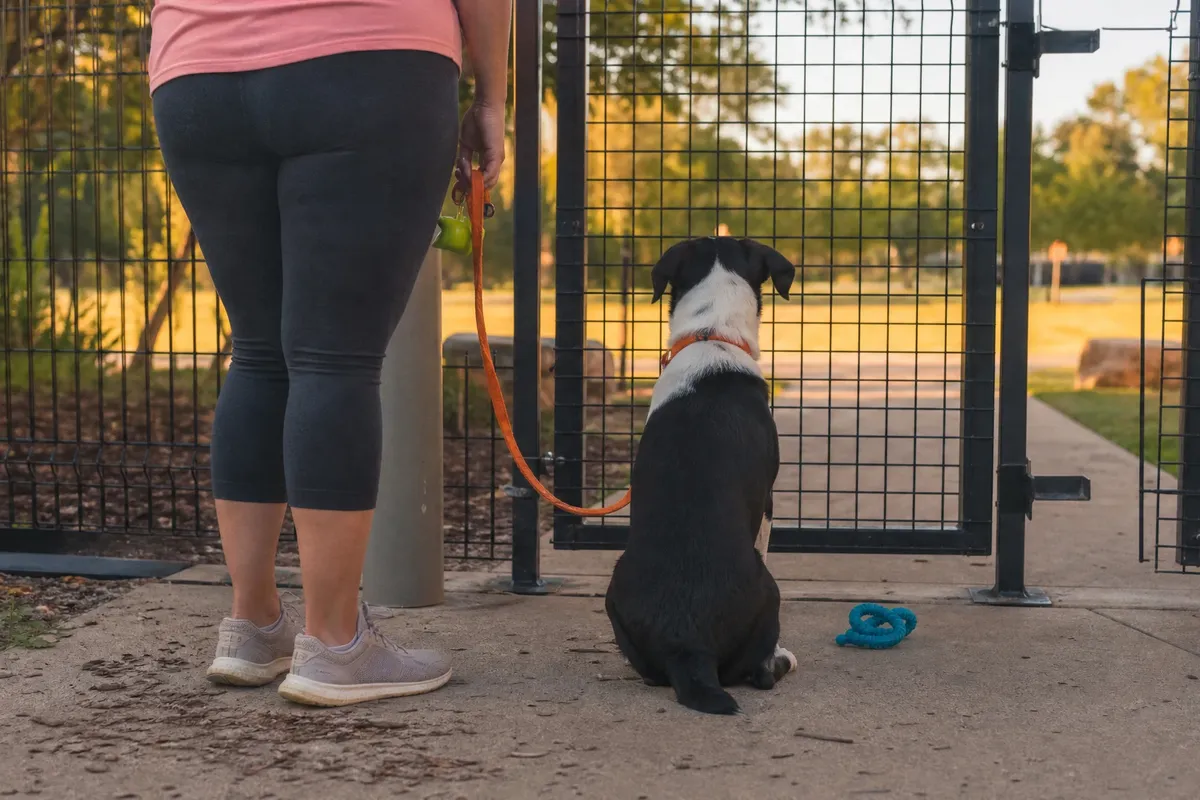
Before a dog goes in with unfamiliar dogs, it should handle distance and distraction on a leash. Rush Creek asks owners to keep dogs leashed until they are inside the double-gated entry, and that entry is a good place to practice calm waiting. Park rules and hours change, so confirm them with the city.
A common situation Arlington owners face: a friendly young dog is fine in a class, but at the park gate, the sight of a crowd of dogs turns the leash into a tug of war. A short private lesson on gate manners is often what bridges the gap.
How does Arlington's climate affect the choice?
Summer heat narrows your options for outdoor sessions. DFW averages 20.2 days a year at or above 100F, and the nearest official weather station is DFW, not Arlington itself. The city advises testing pavement with the back of your hand and doing activities in the morning or evening.
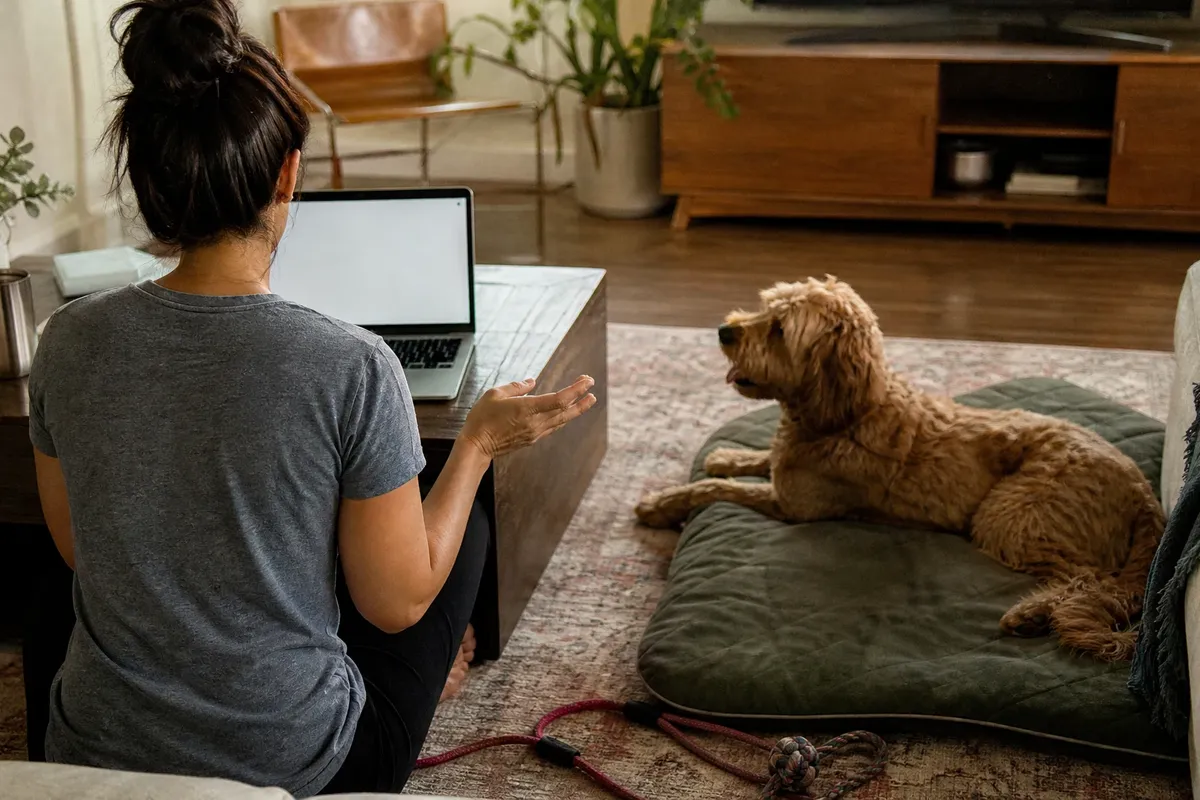
Online coaching and indoor private sessions suit the hottest months, because much of the foundation work, such as settling, name response and loose-leash skills in the hallway, needs no pavement. Group classes held outdoors and board-and-train schedules depend on the provider's heat policy, so ask. For a closer look, see our guide to training and the Arlington climate.
How do we train, whichever type you choose?
Every format we offer uses the same method: reward-based teaching, management and prevention, gradual desensitization and counter-conditioning, short consistent sessions and owner coaching, with humane tools only. The format changes where and how often we meet, not how we treat your dog.
Sessions stay short and consistent, because a dog learns more from several brief, successful repetitions than from one long, tiring drill. We also change one thing at a time, so you and your dog always know what is being asked.
That is also why we say owner coaching is the constant. A dog that returns from board-and-train needs you to know the cues, timing and household rules. A dog in an online plan needs you to practice daily. A dog in private training needs you to repeat the lesson in the situations it happens. Progress depends on your dog and your consistency, so we do not promise timelines.
What are the next steps?
- Pick the format from the tables above, then choose in-person or online with us and talk it through with a trainer.
- Compare cost on cost of dog training in Arlington.
- Vet-check any sudden behavior change first.
- Read how to choose a dog trainer before you commit.
Frequently asked questions
Is private training better than a group class?
Neither is better in every case. Private training suits fear, reactivity and problems tied to your home. A group class suits social dogs that can focus around others. Ask for help choosing if your dog reacts to other dogs.
Does board-and-train work?
It can give a head start, but your dog still has to apply what it learned at home. Plan for owner coaching when your dog returns. Local published totals ran from $850 to $5,800 across two businesses, so compare scope as well as price.
Can online dog training work as well as in-person?
For many puppies, manners and mild problems, yes, if you practice consistently. Serious fear or aggression is usually better handled with in-person, hands-on help. A trainer can help you decide which suits your dog once you choose in-person or online.
How long does training take?
It depends on the dog and on how consistent the owner is. Short, daily practice usually beats long, occasional sessions. We do not promise a timeline because behavior varies from dog to dog.
Keep reading
- Start dog training with usRead more →
- private in-home dog trainingRead more →
- online dog trainingRead more →
- board-and-train in ArlingtonRead more →
- group dog training classesRead more →
- cost of dog training in ArlingtonRead more →
Sources
- Published price page, Arlington-area trainer (private lessons, board-and-train) (last verified 2026-11-11)
- Published price page, Arlington-area trainer (private packages) (last verified 2026-11-11)
- Published price page, DFW trainer (private packages, board-and-train) (last verified 2026-11-11)
- Published price page, Fort Worth trainer (private lessons) (last verified 2026-11-11)
- Published price page, Arlington-area trainer (board-and-train) (last verified 2026-11-11)
- City of Arlington, Rush Creek Dog Park (last verified 2026-11-11)
- City of Arlington, Tails 'N Trails Dog Park (last verified 2026-11-11)
- City of Arlington news, Doggie Depot grand opening (March 2025) (last verified 2026-11-11)
- City of Arlington, Heat Safety Tips for Enjoying Arlington Parks This Summer (June 2026) (last verified 2026-11-11)
- NWS Fort Worth, DFW annual normals and first/last 100F dates (last verified 2026-11-11)
Not sure which format fits? Choose in-person or online and we will start from how your dog acts at Doggie Depot or the park gate
- In-person training in Arlington and nearby areas
- Online training anywhere
- Reward-based methods only