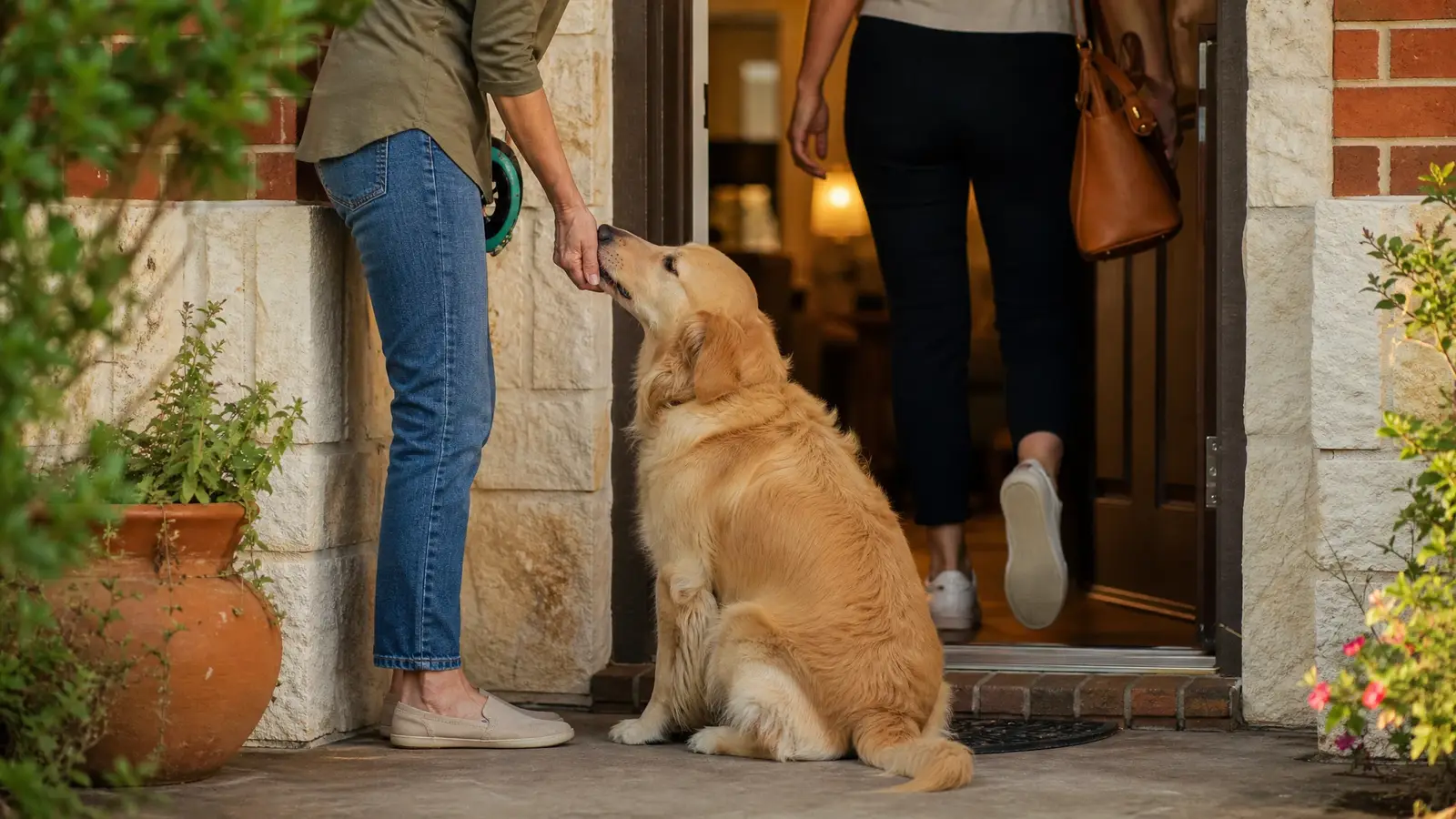
Dogs jump because it has worked: people look, touch, push or laugh, and that is attention. We teach Arlington owners to make four paws on the floor the thing that pays, and to manage greetings until the habit fades.
Tell us who your dog jumps on, from guests at home to strangers at Doggie Depot
- In-person training in Arlington and nearby areas
- Online training anywhere
- Reward-based methods only
Why does my dog jump on people, and is it a dominance problem?
It is not dominance. Jumping is an excited greeting that gets paid with attention, and puppies learn it quickly because people bend down to pet them. The older and heavier the dog gets, the more it matters.
| Situation | What the dog is after | What to practice |
|---|---|---|
| Guests arrive | Excitement and attention | Dog on leash or behind a gate, treats for sitting |
| You come home | Joy and a reunion | Stay calm, ignore until all four paws are down, then greet |
| Strangers on walks | Contact and greeting | Teach a sit-to-greet or skip the greeting |
| Kids running | Chase and play | Management, calm rules for children, a settle cue |
| Counter or table | Food | Keep food out of reach, reward a mat |
Jumping gets harder to change the longer it is rewarded, because the dog has practiced it hundreds of times. That is not a reason to give up. It means the first job is to stop the rewards, and the second is to make the new behavior easy, fast and worth more than the old one.
What can I do today to stop the jumping?
Make jumping unproductive and sitting profitable. Consistency across everyone in the house matters more than any one trick.
- Turn away and stand still when the dog jumps. Reward the moment all four paws touch down.
- Keep treats by the door so you can reward fast.
- For guests, clip a leash on before the door opens, or use a gate and let the dog greet after settling.
- Teach one simple cue, like sit or go to your mat, and use it every time.
- Give plenty of exercise and chew time before visitors arrive.
- Tell guests the rule before they come in: no eye contact or petting until the dog is calm.
Plan a two-minute practice at the door each day with a family member as the "guest." Ring the bell, ask the dog to sit, reward, then let the helper in. Repeat a few times, then end while your dog is still doing well. Practice beats good intentions, and a dog that rehearses the right greeting daily is far more likely to use it when real company arrives.
What does jumping look like in Arlington homes and parks?
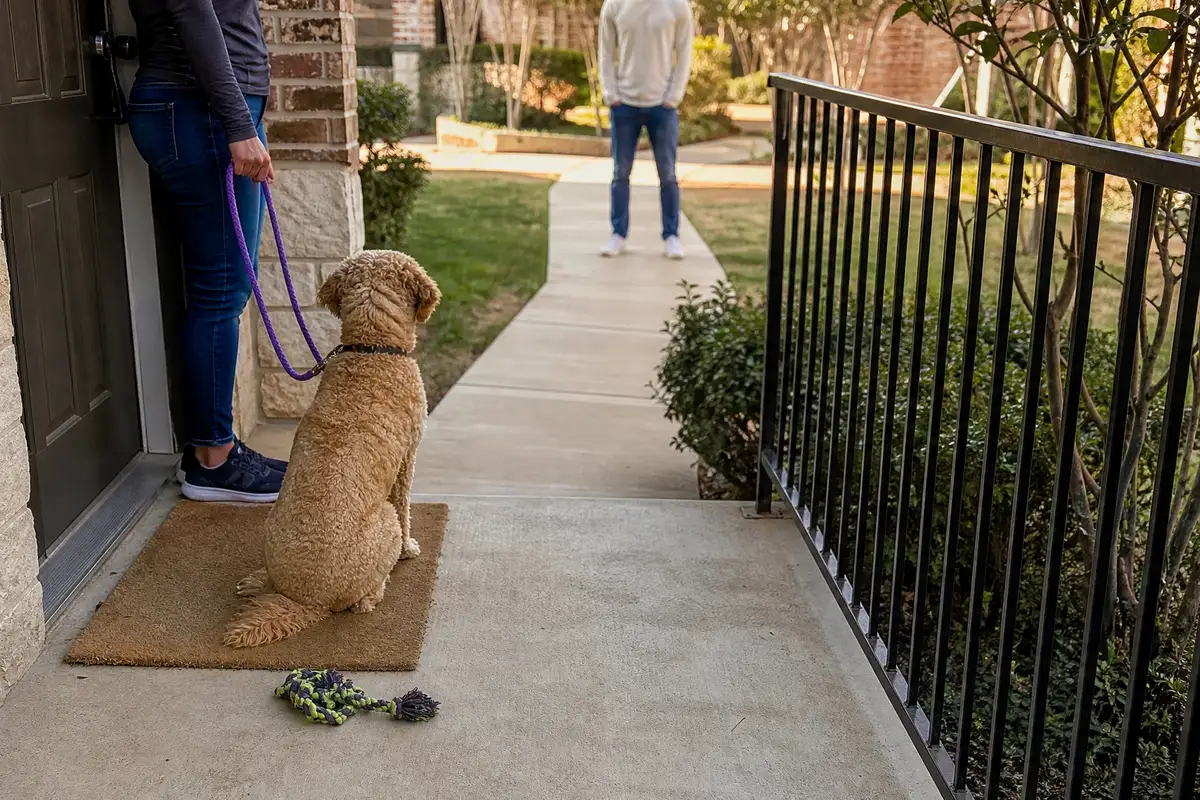
Last verified 2026-11-11. Here is a common situation Arlington owners face: a dog lives in a small condo or apartment where the front door opens straight to a hallway, and every delivery or neighbor becomes a greeting. About 45% of Arlington households rent, according to RentCafe citing Census data (RentCafe summary), so close quarters and hallway greetings are common in the city.
Greeting moments also come up at dog areas. Downtown's Doggie Depot at 105 N Mesquite St. opened in March 2025 as an off-leash space for dogs and their people, but the city article lists no hours or rules, so check the city's pages before visiting. At Rush Creek Dog Park, the city says dogs stay leashed until inside the double-gated entry, which is a tight space where a jumpy dog meets other people and dogs head-on. It also lists a limit of three dogs per visit.
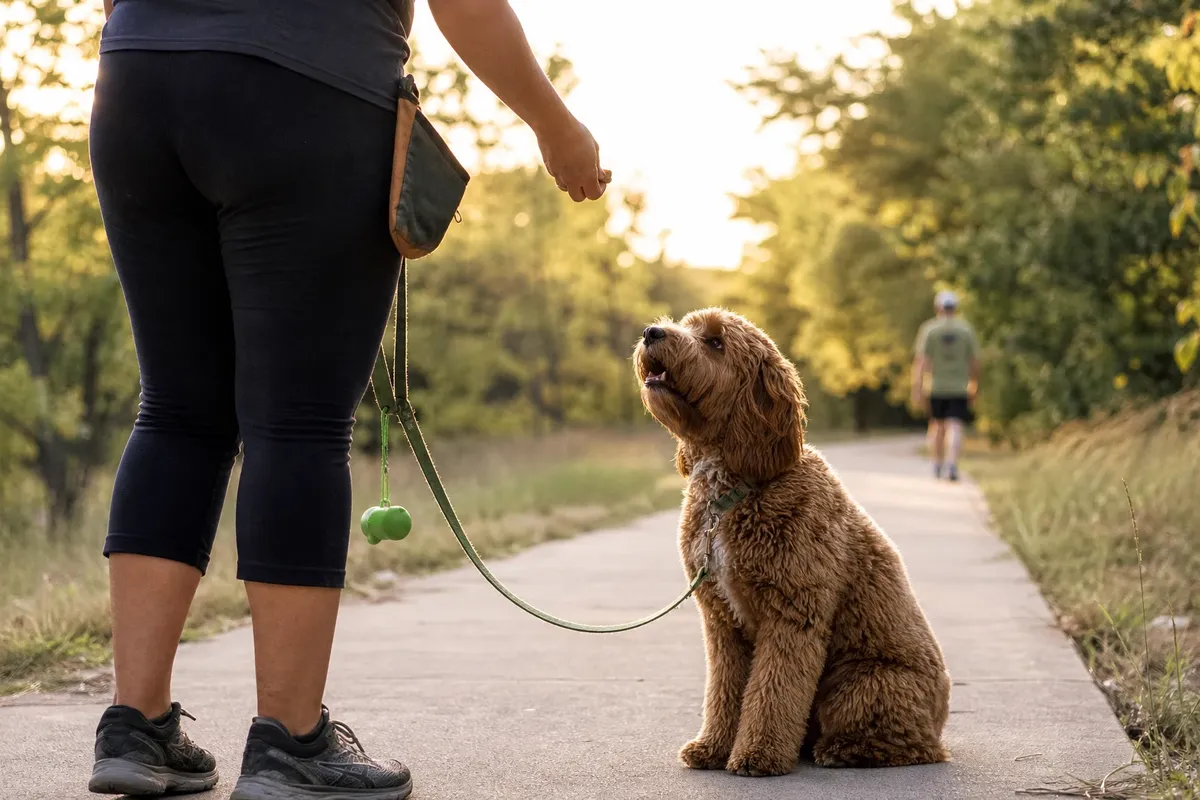
For walks, the 1.44-mile hike/bike trail at Veterans Park gives room to practice sit-to-greet from a distance. The city page lists no pet or leash rules, so confirm park rules with the city before you go. Practice with a leash and ask people to wait for your cue.
How we train a dog not to jump
We build an alternative behavior and manage the setup so the old habit stops paying. The AVSAB position recommends reward-based methods for all training and says aversive methods should not be used (AVSAB statement via Purdue). That means no kneeing, stepping on paws or leash jerks.
- Plan greetings. Where does the dog wait, and who rewards what?
- Teach sit and mat. Practice in easy places first, then add distractions.
- Add the doorbell. We rehearse arrivals with helpers, gradually increasing excitement.
- Greeting rules for strangers. Ask permission, wait for four paws down, then pet.
- Fade management. Leash and gate go away only when the dog is reliable.
- Owner coaching. We practice timing so rewards land at the right moment.
Sessions are brief, often just a few minutes of focused practice, and we adjust the plan to your dog's age and energy. A young, bouncy dog may need more exercise and more frequent practice, while an older dog with a long habit may need more patience and clearer rules for guests. We also help you plan the hard moments, such as holiday visits or deliveries, before they happen.
Short, consistent sessions work best, and results depend on the dog and on whether everyone follows the same rules.
Should I train in person or online for jumping?
Jumping is very trainable online, since you can record greetings and get feedback on timing. In-person is useful when you want hands-on help with a large dog, visitors or children. Compare in-person private training with online dog training, then apply and tell us which greetings are hardest.
Frequently asked questions
Why does my dog jump more when I come home?
Because the reunion is exciting and attention follows. Stay calm, wait for four paws on the floor, then greet and reward.
Is it okay to knee my dog in the chest?
No. It can hurt your dog, frighten it and may even make jumping into a game. Reward four paws down instead.
What if guests keep petting my dog while it jumps?
Set expectations before they arrive and use a leash or gate. Many guests mean well, so a short, friendly rule works better than a lecture.
Will my dog grow out of jumping?
Not on its own. Dogs often jump more as they gain confidence, so it helps to teach a polite greeting early.
Can a large dog be trained not to jump?
Yes, with management and consistent rewards. Large dogs need extra care around children and older adults while they learn.
Keep reading
- Puppy biting and mouthingRead more →
- Basic obedience in ArlingtonRead more →
- Dog park behavior in ArlingtonRead more →
- In-person private dog training in ArlingtonRead more →
- Online dog training for greeting mannersRead more →
- Apply for trainingRead more →
Sources
- RentCafe, Arlington TX rental market (third-party summary of Census data) (last verified 2026-11-11)
- City of Arlington news, Doggie Depot grand opening (last verified 2026-11-11)
- City of Arlington, Rush Creek Dog Park (last verified 2026-11-11)
- City of Arlington, Veterans Park (last verified 2026-11-11)
- AVSAB humane dog training position (via Purdue Canine Welfare Science Center) (last verified 2026-11-11)
Tell us who your dog jumps on, from guests at home to strangers at Doggie Depot
- In-person training in Arlington and nearby areas
- Online training anywhere
- Reward-based methods only