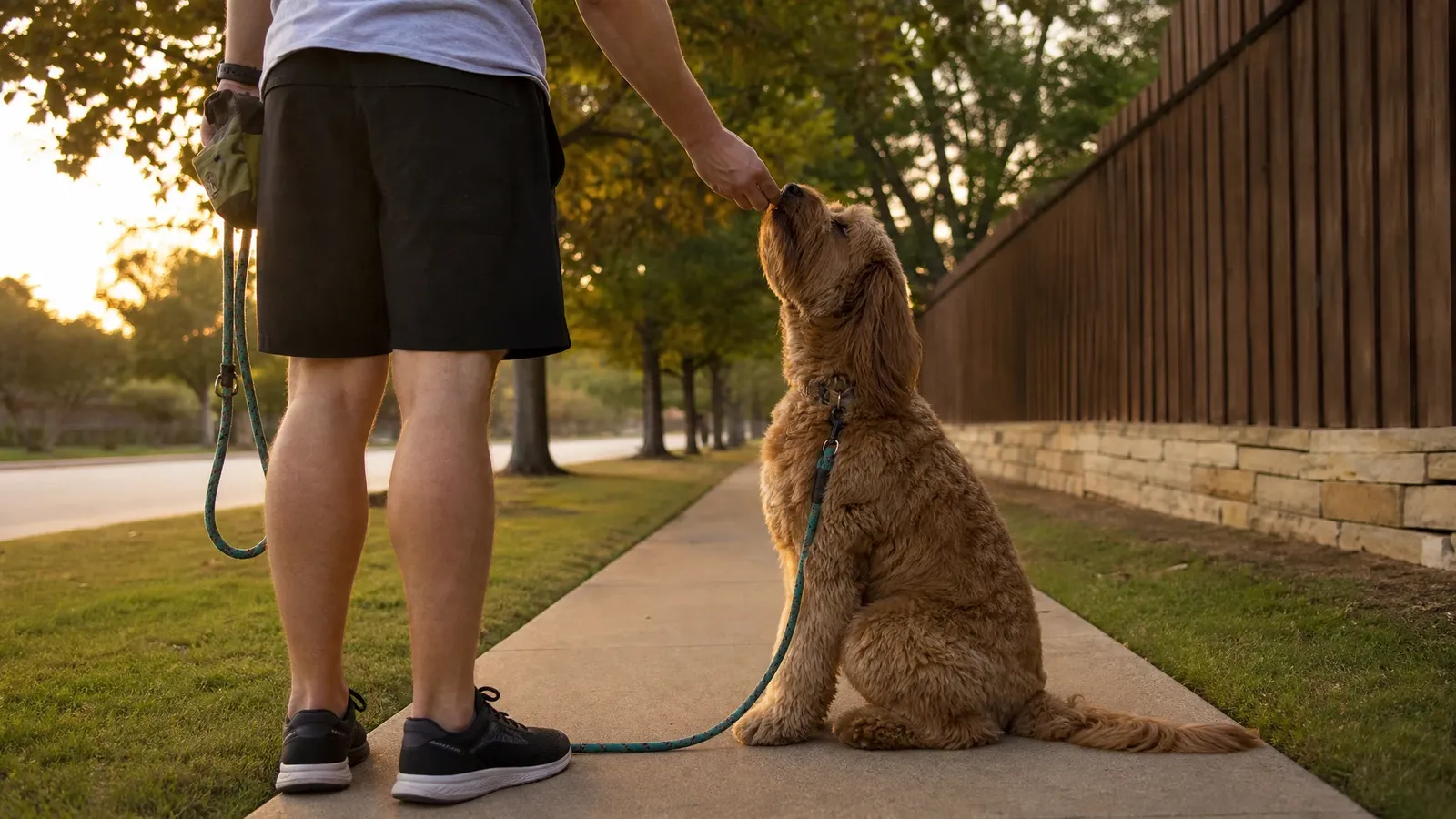
Reward-based training teaches a dog what to do and pays for it; aversive training uses discomfort or fear to stop behavior. Veterinary behavior groups recommend reward-based methods, and we explain how to recognize each approach, whoever you hire.
Want a reward-based plan? Choose in-person or online and we will build it around your dog and your walking spots
- In-person training in Arlington and nearby areas
- Online training anywhere
- Reward-based methods only
What is the difference between reward-based and aversive training?
| Reward-based | Aversive | |
|---|---|---|
| Main idea | Reward behavior you want; manage the setting so unwanted behavior is not rehearsed | Use discomfort, startle or fear to suppress behavior |
| Typical tools | Treats, toys, praise, harness or flat collar, long line, baby gates | Prong or choke collars, shock collars, shake cans, leash jerks, alpha rolls |
| Risk with fear or aggression | Lower; fears are approached gradually | Can add stress to a dog already afraid |
| What veterinary behavior groups say | AVSAB recommends it for all training | AVSAB and AAHA advise against it |
The AVSAB statement says evidence supports reward-based methods for all canine training. We read it through Purdue's Canine Welfare Science Center, which hosts the statement.
One practical test: ask any trainer, us included, to describe, step by step, what they do the first time your dog does the wrong thing. The answer shows the method more clearly than any label. Ours is the reward-based column.
What are the red flags when hiring a dog trainer?
A few signals should make you pause about any trainer, us included, whatever their credentials. We hold ourselves to the same list.
- Dominance language. Talk of being "alpha," pinning a dog down or "showing who is boss."
- Harsh tools as the default. Prong, choke or shock collars offered without discussing alternatives. Veterinary groups list these among the aversive methods they advise against.
- Promises of a cure. Behavior depends on the dog and on your consistency. No one can promise a result.
- No explanation. A trainer who will not describe the method or answer your questions.
- Dismissing a vet check. Pain and illness cause behavior changes.
- Pressure to buy a big package up front before you understand the plan.
Why do some local packages include an e-collar?
Some trainers sell them because owners ask for fast results. In the local price pages we reviewed on 2026-11-11, at least one Arlington-area package listed an e-collar as included. We do not name or rate businesses, and we are not saying every trainer who offers one is unsafe. We are saying you should ask, because AVSAB and AAHA statements advise against shock collars.
If any trainer proposes one, ask what the dog will experience, what alternatives were considered and what happens if the dog gets more fearful. Then decide whether that fits your values. We do not use them.
What does humane training look like in Arlington's climate and neighborhoods?
Humane training fits local conditions. The city advises scheduling outdoor activity in the morning or evening, testing pavement with the back of your hand, and bringing water. Short, consistent sessions work well here: a few minutes before the day heats up beats an hour on hot pavement.
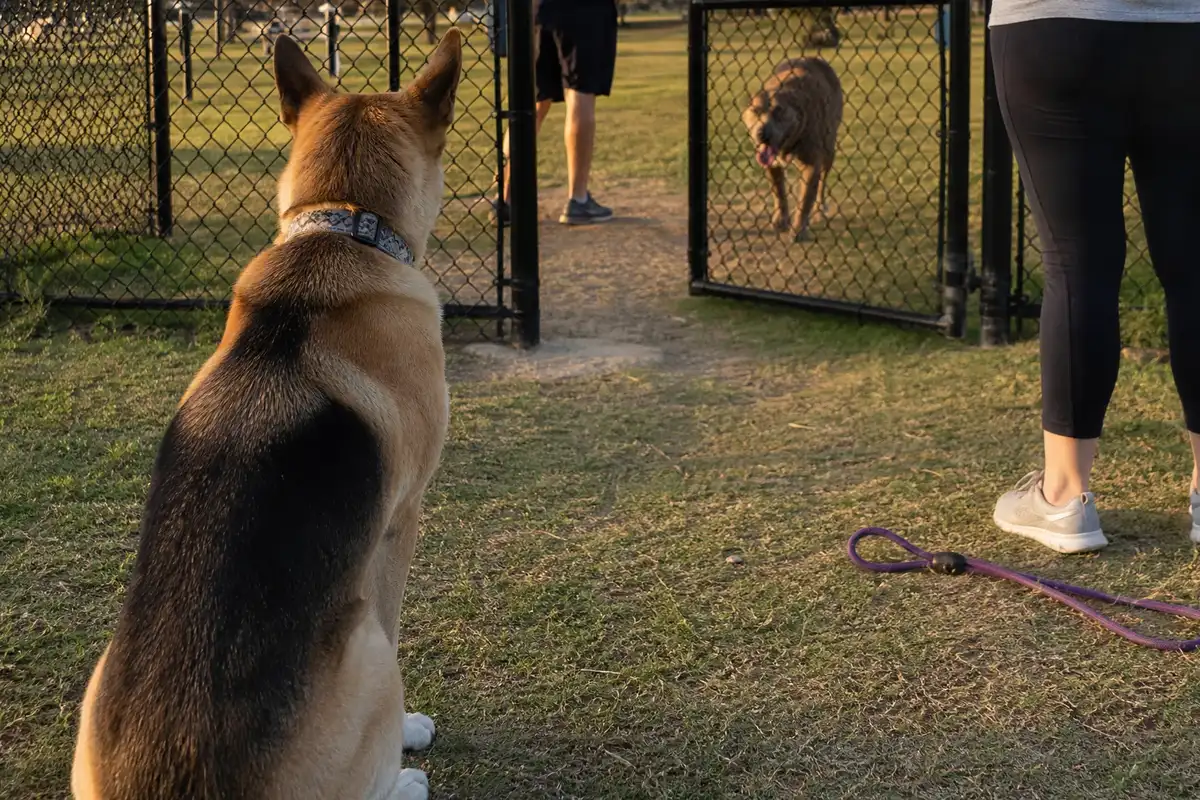
Fenced parks suit practice at a distance. Rush Creek Dog Park asks owners to keep a dog leashed until inside the double-gated entry, and Tails 'N Trails is a 5.7-acre fenced off-leash area. For rules, read the city pages; we did not find a single citywide park leash rule to quote.
A common situation Arlington owners face: a dog pulls and lunges toward other dogs at the park gate, and a friend suggests a harsh collar. A reward-based plan first adds distance and teaches the dog to look at you when it sees another dog.
What should you do if you already tried a harsh method?
You are not alone, and it is not too late to change course. Many owners start with advice from a friend or a video and then find the dog has become more fearful or more reactive.
Stop the tool or technique, keep your dog safe with management (a secure harness, distance from triggers, baby gates), and talk to your veterinarian if the behavior changed suddenly, since pain and illness can cause it. Then rebuild trust with predictable routines and rewards. We coach owners through this step by step.
If your dog has bitten or shown aggression, read our aggression page and consider getting help sooner rather than later. The City of Arlington has a dangerous dog process that begins with an unprovoked attack causing bodily injury (last verified 2026-11-11), and we explain how we assess risk without making promises.
How we train
We use reward-based training, management and prevention, gradual desensitization and counter-conditioning, short consistent sessions, owner coaching and humane tools only.
- We set up the environment so the dog is not practicing the problem.
- We teach what to do instead, and reward it until it is reliable.
- For fears and reactivity, we start below the dog's threshold and move closer in small steps.
- We coach you so the plan works when we are not there.
Timelines depend on the dog and on how consistently you practice. A typical session of ours is short, ends on a success and gives you one or two things to practice before the next visit. If a dog is not ready for a skill, we go back a step instead of pushing through.
That approach also suits the dogs we meet in Arlington's apartments and townhomes, where quiet, indoor practice matters as much as outdoor skills.
Frequently asked questions
Is reward-based training slower than aversive training?
Speed varies by dog and owner. Veterinary behavior groups recommend reward-based methods for all training, and it lets a dog learn without added fear. What matters most is consistency.
Are prong collars considered aversive?
Yes. An AVSAB-hosted summary and the AAHA guidelines both name prong and choke collars among the aversive methods they advise against.
What if my dog is already scared of other dogs?
We use gradual desensitization and counter-conditioning, starting far enough away that the dog stays calm. We never force a dog closer.
Do you ever use e-collars?
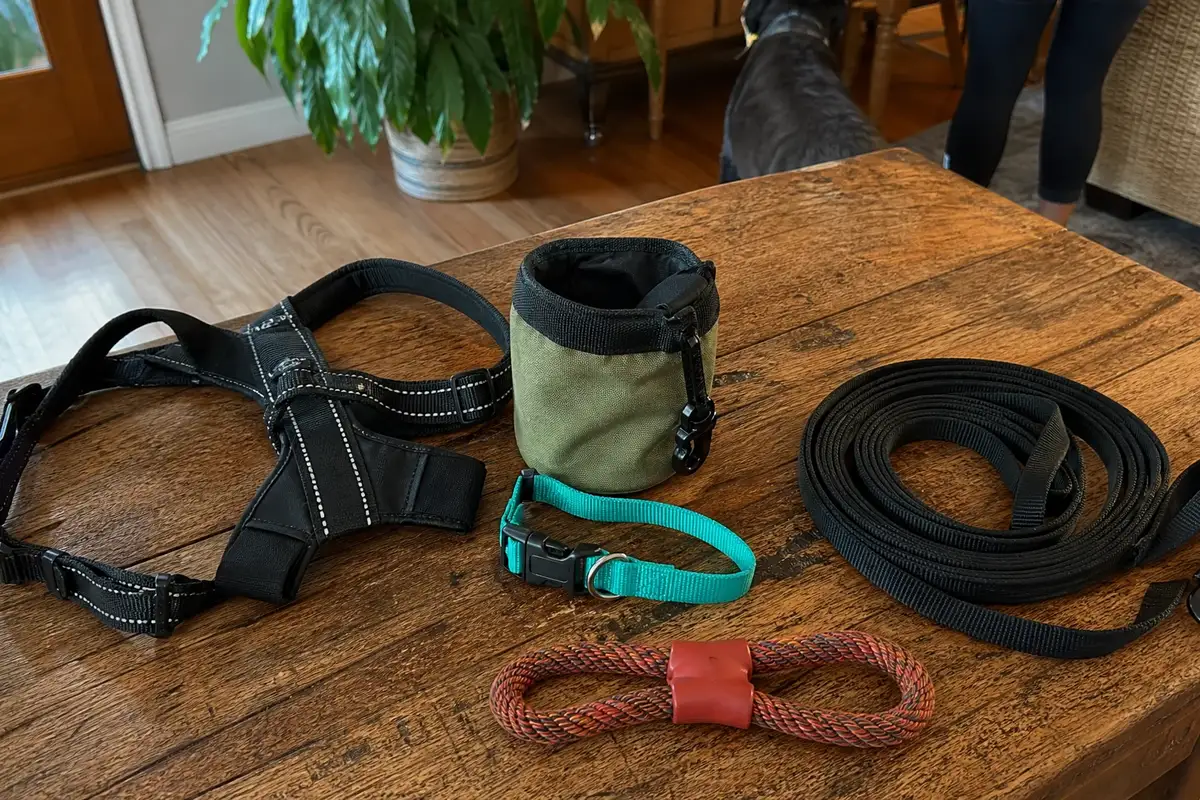
No. We use humane tools only: treats, toys, harnesses, flat collars, long lines and management tools.
How can I tell if a trainer is reward-based?
Ask what happens when your dog gets it wrong, and ask how a session runs. A reward-based trainer will describe what they teach instead and how they reward it. Ask us the same.
Keep reading
- dog trainer certifications explainedRead more →
- questions to ask before hiring a dog trainerRead more →
- leash reactivity trainingRead more →
- private in-home dog training in ArlingtonRead more →
- online dog trainingRead more →
- choose in-person or online trainingRead more →
Sources
- Purdue Canine Welfare Science Center, AVSAB humane dog training position statement (last verified 2026-11-11)
- AVSAB, why you need to reward your dog in training (guest summary) (last verified 2026-11-11)
- AAHA 2015 Behavior Management Guidelines, take-home messages (last verified 2026-11-11)
- Karen Pryor Academy, KPA CTP (last verified 2026-11-11)
- City of Arlington, Heat Safety Tips for Enjoying Arlington Parks This Summer (June 2026) (last verified 2026-11-11)
- City of Arlington, Rush Creek Dog Park (last verified 2026-11-11)
- City of Arlington, Tails 'N Trails Dog Park (last verified 2026-11-11)
- City of Arlington, How To Responsibly Enjoy Arlington Parks This Summer (June 2025) (last verified 2026-11-11)
- City of Arlington, Dangerous Dogs (last verified 2026-11-11)
Want a reward-based plan? Choose in-person or online and we will build it around your dog and your walking spots
- In-person training in Arlington and nearby areas
- Online training anywhere
- Reward-based methods only