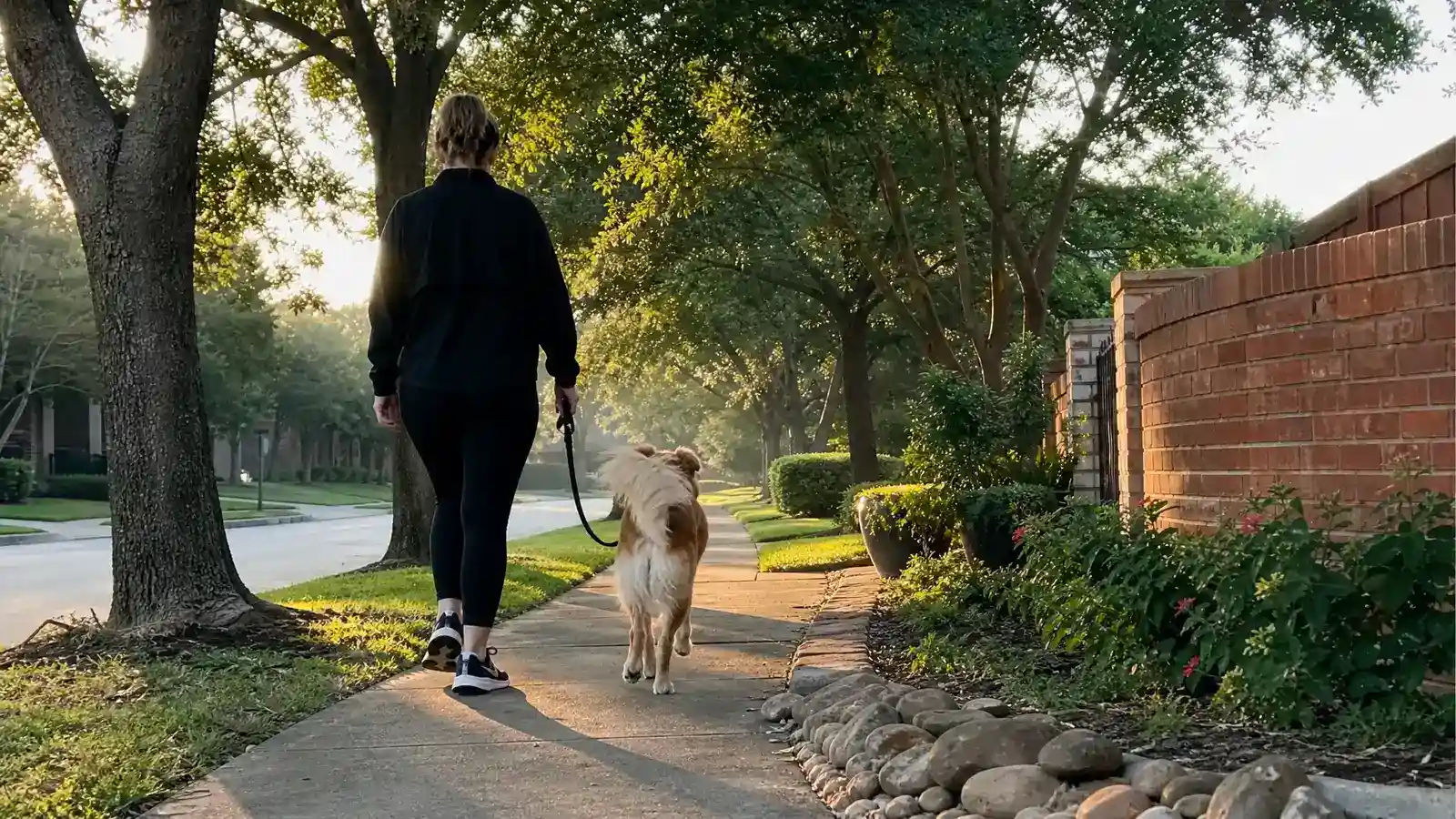
If every walk feels like a tug of war, you are not alone, and it is fixable without harsh tools. Dogs pull because it works, so we teach them that a slack leash gets them where they want to go. Local details here are last verified 2026-11-11.
Tired of being towed to the park? Tell us where you walk and how your dog pulls.
- In-person training in Arlington and nearby areas
- Online training anywhere
- Reward-based methods only
Why does my dog pull on the leash?
Because pulling pays off. Every time a taut leash leads to the sniff, the squirrel or the park gate, the dog learns that tension works. Dogs also walk faster than people, get excited outdoors and have no natural idea that a leash means "stay near."
- Pulling gets rewarded by forward movement
- Excitement and sniffing drives are high outdoors
- Equipment can encourage pulling if it fits badly
- Inconsistent rules ("sometimes it is okay") keep the habit alive
Dogs are not trying to dominate you. They are doing what has been paid for.
What is the quick fix, and does it exist?
There is a fast first step, but not a shortcut to a perfect heel. Stop moving forward when the leash tightens, then move again when it slackens, and reward the dog for being beside you. A front-clip harness can reduce pulling while you teach, though it does not teach the dog anything on its own.
| Do | Do not |
|---|---|
| Reward the dog for walking beside you, at your pace | Yank, jerk or "correct" with a leash pop |
| Change direction calmly when the leash tightens | Let the dog pull you to a sniff and then expect a slack leash |
| Use a short, quiet route to start | Start with the busiest park trail |
| End walks while the dog is still doing well | Practice until you are both frustrated |
How do we teach a loose leash step by step?
We teach it in layers, in a quiet place first. The sequence below is typical; your dog's pace sets the timeline.
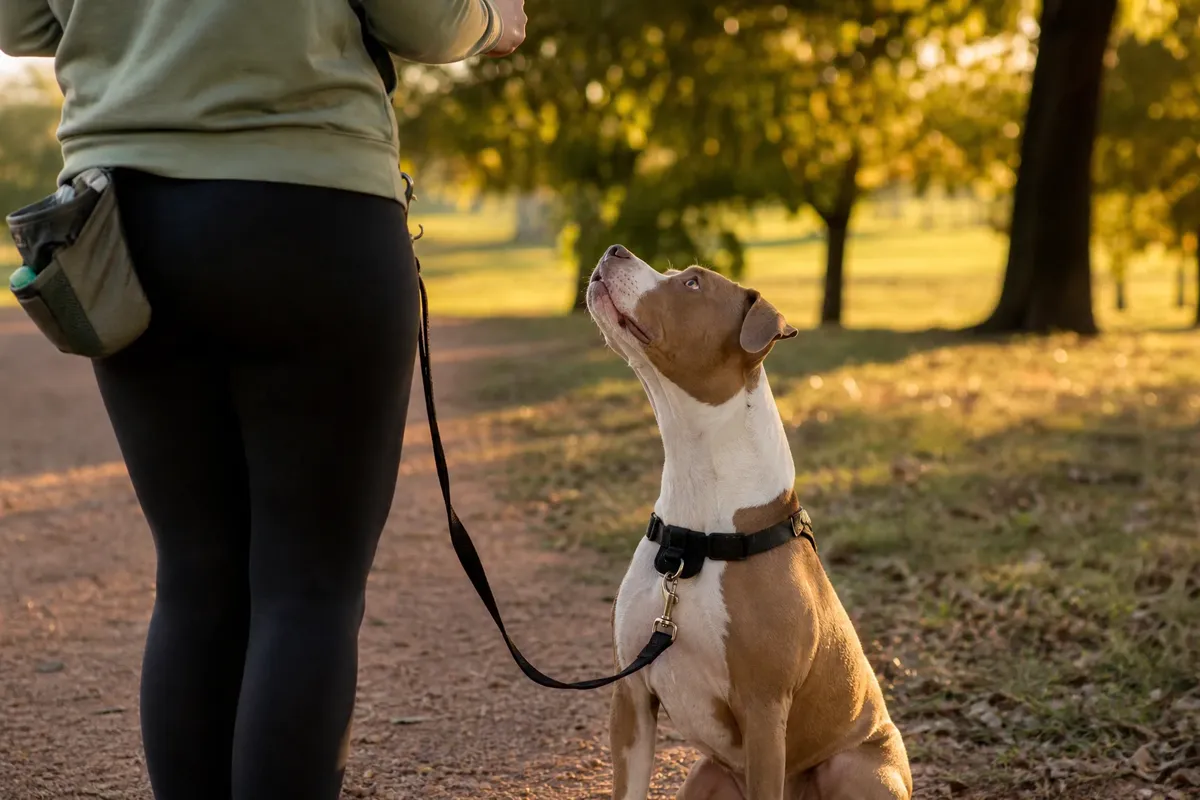
- Indoors: reward the dog for being next to you, then add a few steps
- Hallway or driveway: walk with a loose leash for short stretches, rewarding often
- Quiet street: add turns, stops and a "go sniff" release so walks still feel fun
- Mild distractions: practice near a lawn, a parked car or a calm person at a distance
- Real routes: build to your normal walk, thinning rewards slowly
A release cue, like "go sniff," matters. When the dog knows it will get to sniff after walking nicely, it is much easier to ask for loose-leash walking in between.
How do Arlington's weather and rules shape walks?
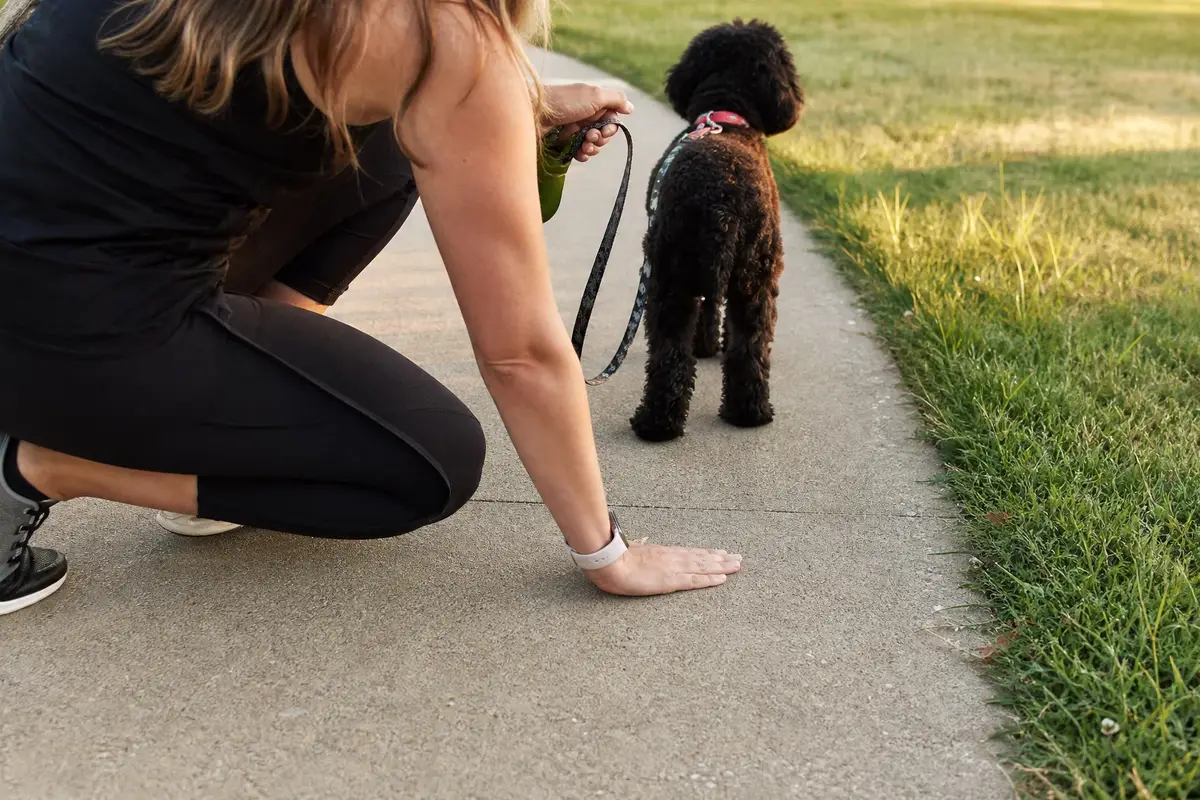
Heat is the first local factor. DFW averages 20.2 days a year at or above 100 degrees F, with the average first 100-degree day on July 1 (NWS normals, 1991-2020; DFW is the nearest official station). The city advises scheduling outdoor activity for morning or evening and testing pavement with the back of your hand for five seconds before walking your dog. A hot, short, hurried walk makes pulling worse, so we plan cooler routes and shorter, more rewarding practice.
The city's own pages also set expectations. Its wildlife guidance says to always keep dogs on a leash during walks and to watch pets closely between dusk and dawn. The Responsible Pet Ownership page says to pick up after your dog in public, and not to tether a dog to a stationary object, while walking one on a hand-held leash is fine. We build habits to match: a dog that walks beside you is easy to leash up, easy to pick up after and easy to steer away from wildlife.
What does a common Arlington walk look like?
A common situation Arlington owners face: a strong, young dog living in an apartment or townhome that bolts for the grass the second the elevator opens. The 2020 census summary on Wikipedia (secondary source) reports 46.0 percent of occupied housing units are renter-occupied, so a lot of dogs begin their walks in shared hallways and parking lots with little room to settle.
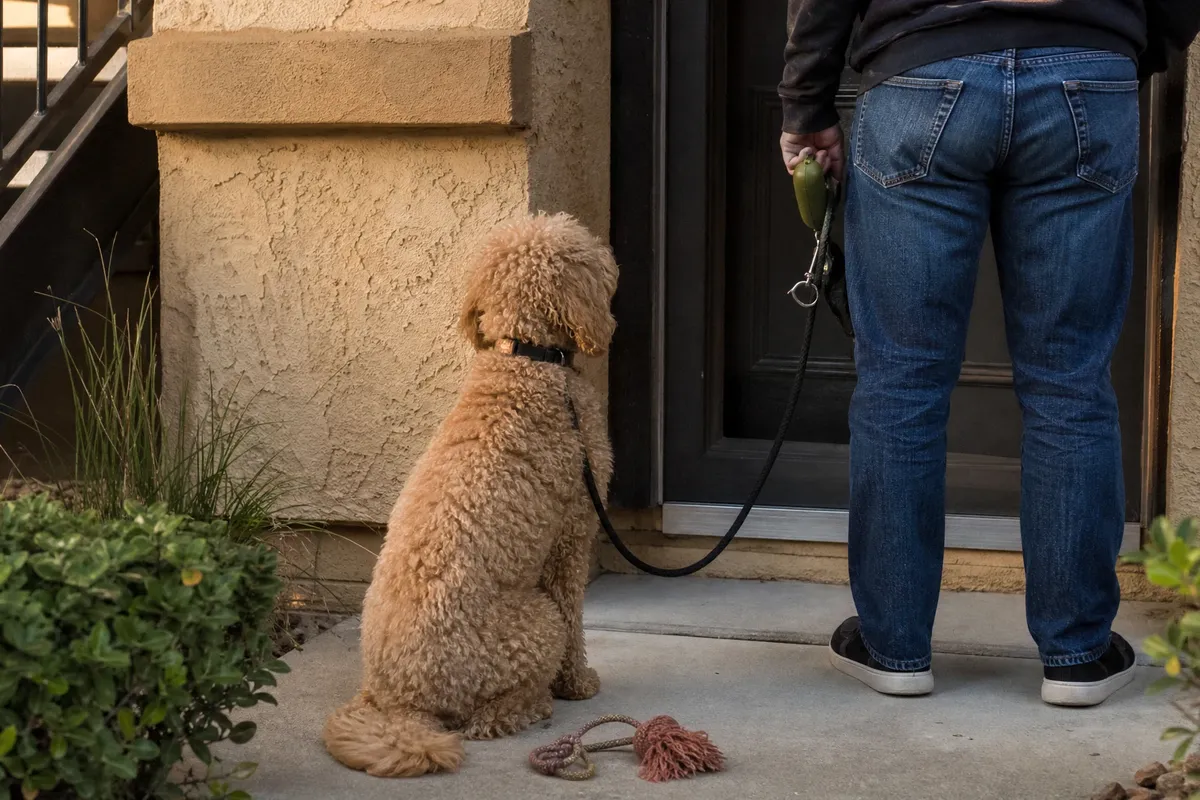
We start in the hallway: wait at the door for a calm leash, reward the first loose steps, and only then walk out. Waiting for a loose leash before the door opens teaches the dog that the start of the walk depends on calm. Then we move to the nearest quiet block before any park.
Owners in houses face a different version: a front yard full of smells, a mail carrier and a neighbor's dog behind a fence. The fix is the same, just with a longer ramp. Start by practicing in the driveway, add the sidewalk, and only then take the full route. Short, successful walks teach more than a long walk spent hauling on the leash.
How we train loose-leash walking
We use reward-based methods, management and prevention, short consistent sessions and owner coaching. Humane tools only. The American Veterinary Society of Animal Behavior position, hosted by Purdue's Canine Welfare Science Center, says evidence supports reward-based methods for all canine training, which is why leash jerks and corrections are not part of our plan.
- Teach the behavior we want in a place the dog can succeed
- Raise difficulty only when the dog is succeeding most of the time
- Coach the owner on leash handling, treat position and timing
- Manage meanwhile: front-clip harness, shorter route, treat scatter to pass triggers
If your dog lunges, barks or snaps at people or dogs, that is leash reactivity, not simple pulling, and the plan changes. Dogs that suddenly pull more than usual, or seem sore, should see a vet. We will tell you early if a different program fits better, in person or online.
Frequently asked questions
Will a front-clip harness fix pulling?
It can reduce the pull while you teach loose-leash walking, but it does not teach the skill by itself. Pair it with rewards for walking beside you.
How long does it take to stop pulling?
It depends on the dog, its age, how long it has practiced pulling and how consistently the household trains. Expect steady progress in quiet places first.
Can I fix pulling with online lessons?
Often yes. We watch your walks on video, coach your handling and send a written plan. Reactive dogs may need in-person help.
Should I use a prong or choke collar?
We do not. Veterinary behavior groups advise against aversive tools and recommend reward-based training for all dogs.
Keep reading
- Basic obedience trainingRead more →
- If it is lunging, not just pullingRead more →
- Private in-home dog trainingRead more →
- Online dog trainingRead more →
- Training in the Arlington climateRead more →
- Apply for leash trainingRead more →
Sources
- City of Arlington, Coexisting Safely with Arlington's Urban Wildlife (Sept 2026) (last verified 2026-11-11)
- City of Arlington, Responsible Pet Ownership (last verified 2026-11-11)
- City of Arlington, Heat Safety Tips for Enjoying Arlington Parks This Summer (June 2026) (last verified 2026-11-11)
- NWS Fort Worth, DFW annual normals (last verified 2026-11-11)
- Wikipedia, Arlington, Texas (2020 census summary; secondary source) (last verified 2026-11-11)
- AVSAB Humane Dog Training Position Statement (Purdue Canine Welfare Science Center) (last verified 2026-11-11)
Tired of being towed to the park? Tell us where you walk and how your dog pulls.
- In-person training in Arlington and nearby areas
- Online training anywhere
- Reward-based methods only