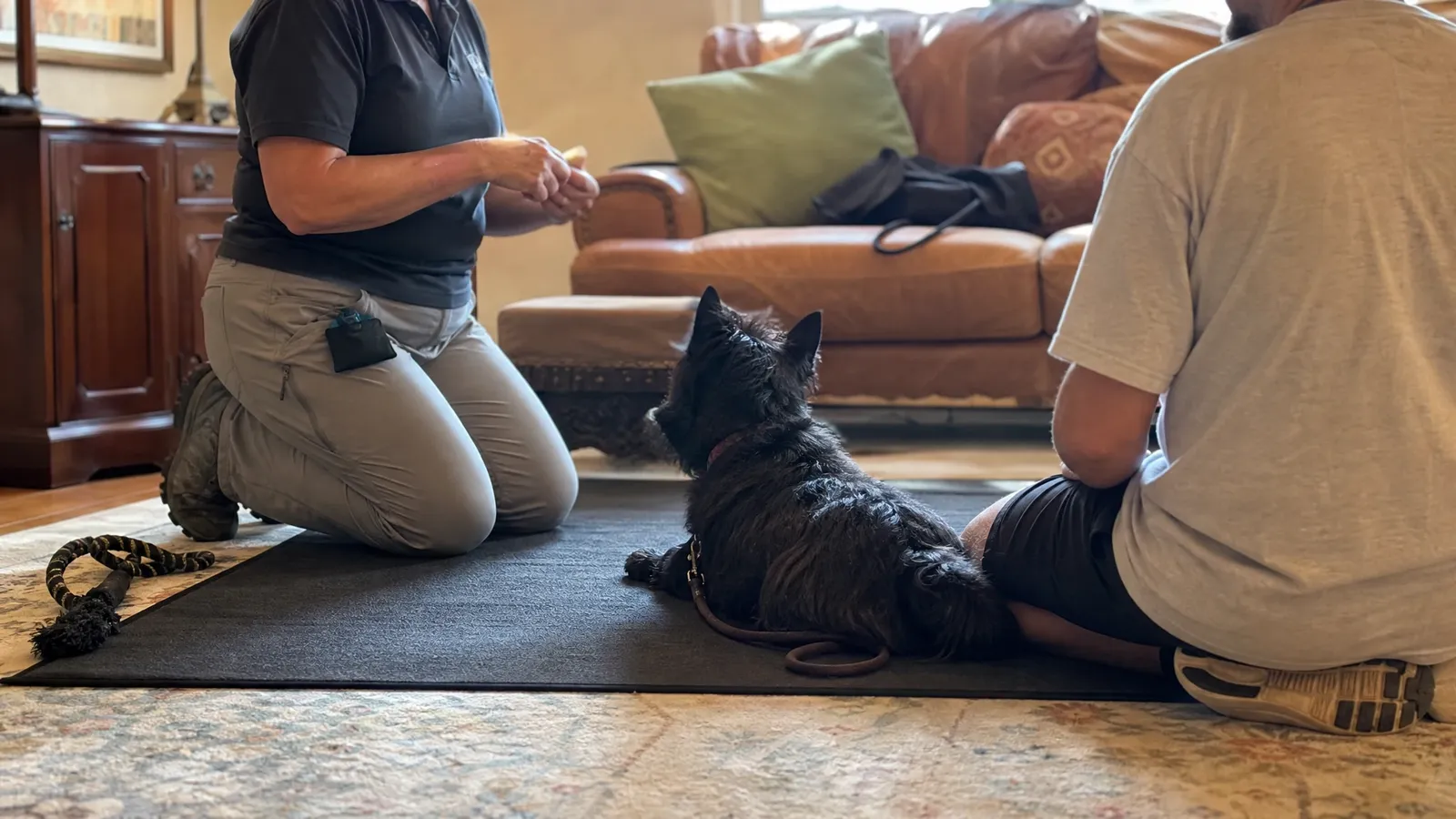
Private in-home training puts a trainer where the problem actually happens: your door, your yard or your apartment hallway. This page covers what a lesson looks like, published local price ranges and how it fits Arlington households, last verified 2026-11-11.
Want help in your own living room or apartment hallway? Tell us about your home and your dog.
- In-person training in Arlington and nearby areas
- Online training anywhere
- Reward-based methods only
Who is private in-home training for?
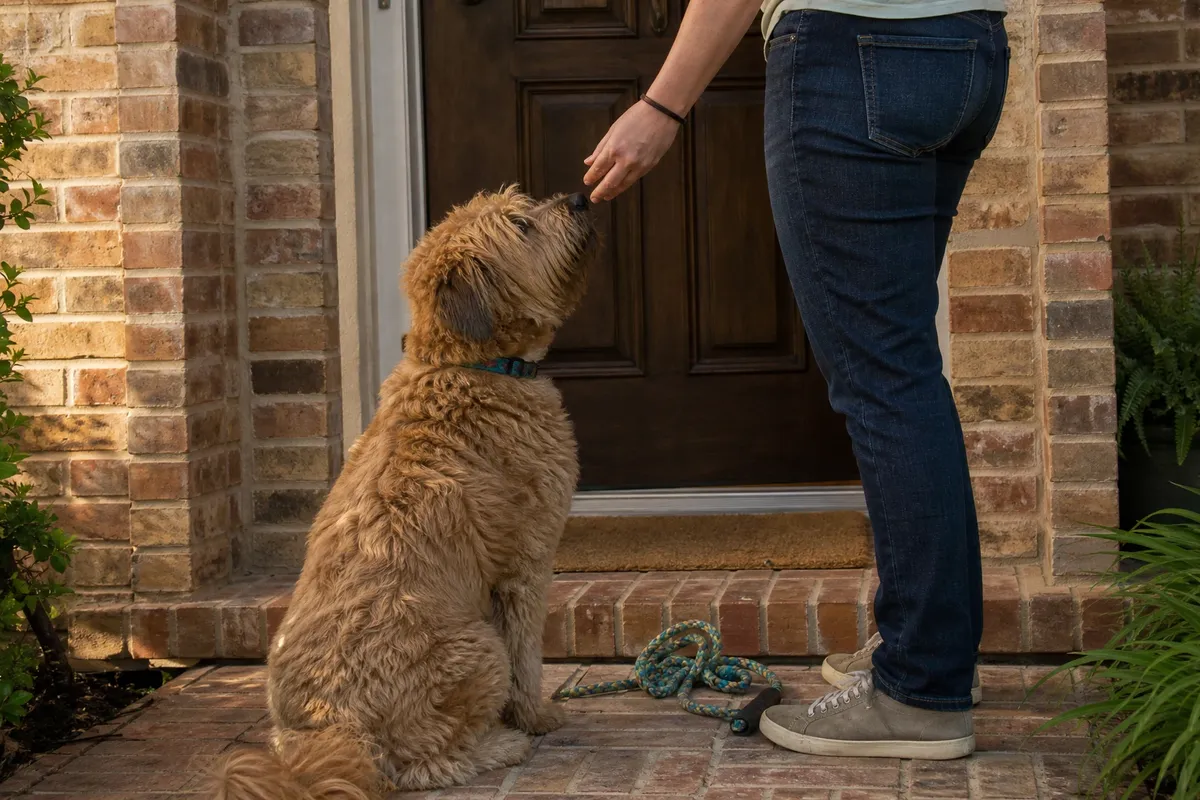
It is for owners whose dog's trouble spots are at home: barking at the door, pulling toward the elevator, jumping on guests, scratching at the crate. Seeing the real space lets us fix the setup, not just the dog.
- Apartment, condo and townhome owners with shared walls
- Households with kids, roommates or multiple dogs
- Shy dogs that do better in familiar surroundings
- Owners whose work schedule makes class times hard
What does a lesson look like?
Each lesson runs about an hour. We watch the problem happen, set up a version your dog can succeed at, practice it with you and leave a written plan.
| Part of lesson | What we do |
|---|---|
| Review | Last week's practice, what worked, what did not |
| Walkthrough | Home layout, doorways, windows, yard and crate or gate setup |
| Skill block | Reward-based practice of the week's skill, with you handling the leash and treats |
| Troubleshooting | Real triggers: doorbell, hallway dogs, delivery drivers |
| Plan | Short written practice routine and management changes for the week |
How many lessons you need depends on the dog, the problem and how consistently the household practices.
How much does private dog training cost around Arlington?
We do not publish our own rates on this page. As local published market ranges, four DFW trainers that post prices list private lessons from about $90 to about $200 per one-hour lesson, with four-lesson packages around $500 to $800 and eight-lesson packages around $1,000 to $1,500. Per-lesson figures are derived by dividing package prices by lessons. One Arlington trainer's published page also lists a separate paid evaluation before programs start. Retrieved 2026-11-11; published prices change.
Price drivers: location (in-home usually costs more than at a facility), lesson length, package size, whether evaluations are separate and whether tools such as e-collars are bundled. We do not use e-collars. Always ask for a written quote.
What does private training look like in apartments and condos around Arlington?
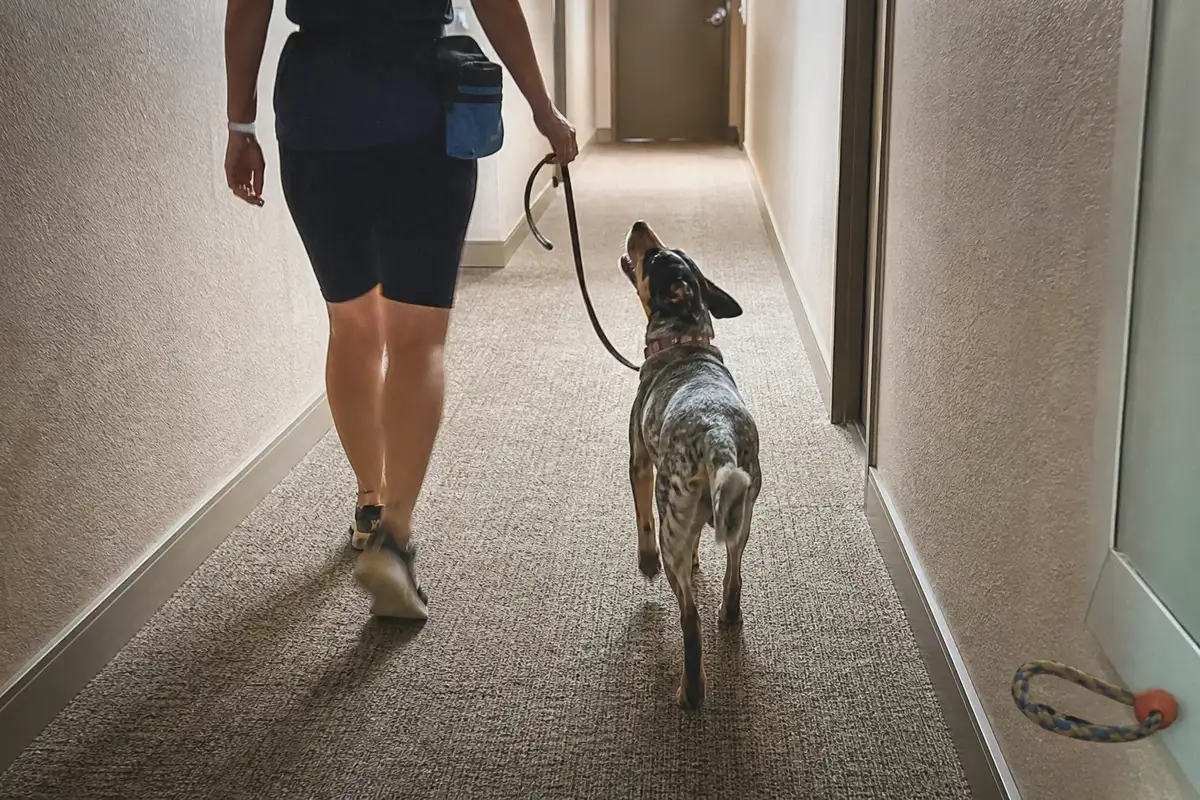
A common situation Arlington owners face: a dog that barks every time a neighbor passes in the hall. The city has a formal barking-dog complaint process that begins with neighbors talking to each other, and the city page says the neighbor files a notarized affidavit listing dates, times and duration if that fails. No outcome is guaranteed. Most owners would rather fix the habit before it reaches that point.
The 2020 census summary on Wikipedia (a secondary source) shows 46.0 percent of Arlington's occupied housing units are renter-occupied, so shared walls and short leases are common. The Redfin neighborhoods blog (a marketing source, March 2024) describes Downtown Arlington as mixing modern high-rise condominiums with historic brownstones. For Downtown households, the city's Doggie Depot, an off-leash space that opened on March 13, 2025, gives dogs a place to burn energy, and we work on elevator, hallway and door manners first so the trip there is calmer.
We work on quiet cues, door-bell desensitization, mat settling and planned exercise rather than just telling the dog to stop.
How we train at your home
Our trainers use reward-based methods, management and prevention, gradual desensitization and counter-conditioning, and short consistent sessions. You will leave each lesson knowing exactly what to practice.
- Management first: gates, window film, crate placement and routines that prevent rehearsal of the problem
- Teach the replacement behavior before asking the dog to stop the old one
- Coach every adult and older child in the home to use the same cues
- Humane tools only: no shock, prong or choke devices
Progress depends on the dog and the owner's consistency, so we do not promise timelines.
Multi-dog homes get extra attention. Dogs often copy each other, good and bad, so we usually train each dog separately first and then practice together once both understand the rules.
A typical first lesson starts with a conversation: what your day looks like, who handles the dog, what has worked and what has not. Then we watch the problem happen, because the real trigger is often different from the one owners describe. For example, a dog that "barks at everything" may really be reacting to one particular window view or one particular sound. Fixing that single trigger changes the whole picture.
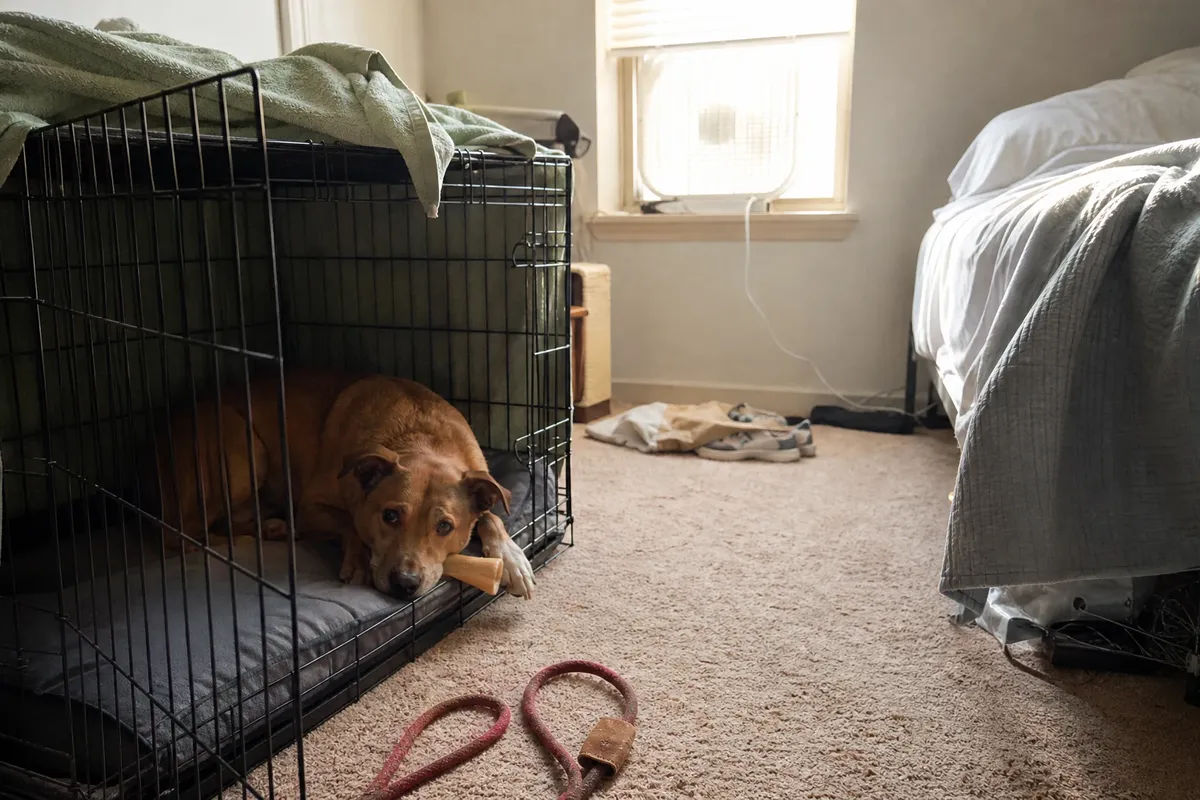
Because lessons happen in your space, we can also adjust the environment: where the food bowl sits, where the crate goes, how a gate is placed, which door the dog is allowed to greet people at. Those small changes often prevent more problems than any cue.
Who is private in-home training not for?
If a dog has bitten, or owners are afraid of the dog, we may recommend meeting in a controlled setting and involving your veterinarian first. It is also not the best fit when a dog's main need is practice around many other dogs, where a group class or planned meetings work better.
It is also not a shortcut for owners who cannot practice between lessons. A lesson shows you what to do; the daily repetition is what changes the dog's habits. If your week is packed, tell us, and we will build a plan with very short practice windows or suggest online coaching instead.
Frequently asked questions
Do you come to my apartment?
In-person training happens at your home where possible, and we can talk through building rules, common areas and neighbors when you apply. If in-person does not fit, online coaching covers many of the same skills.
How many lessons will I need?
It depends on the dog, the problem and your consistency between lessons. We set goals in the first lesson and check progress as we go.
Can the whole family join?
Yes, and we encourage it. Dogs learn faster when everyone uses the same cues, and children can help with age-appropriate tasks.
What do I need ready?
Your dog's regular leash, collar or harness, small soft treats and a calm space. We help with the rest.
Keep reading
- Online dog trainingRead more →
- Apartment dog training in ArlingtonRead more →
- Help with excessive barkingRead more →
- What dog training costs in ArlingtonRead more →
- Basic obedience trainingRead more →
- Apply for in-home trainingRead more →
Sources
- City of Arlington, Barking Dogs Complaint Process (last verified 2026-11-11)
- Wikipedia, Arlington, Texas (2020 census summary; secondary source) (last verified 2026-11-11)
- Redfin blog, Arlington TX neighborhoods (March 2024; real-estate marketing source, wording attributed) (last verified 2026-11-11)
- City of Arlington news, Doggie Depot grand opening (March 2025) (last verified 2026-11-11)
- Published private-lesson price pages of four DFW trainers (provenance only; ranges derived) (last verified 2026-11-11)
- AVSAB Humane Dog Training Position Statement (Purdue Canine Welfare Science Center) (last verified 2026-11-11)
Want help in your own living room or apartment hallway? Tell us about your home and your dog.
- In-person training in Arlington and nearby areas
- Online training anywhere
- Reward-based methods only