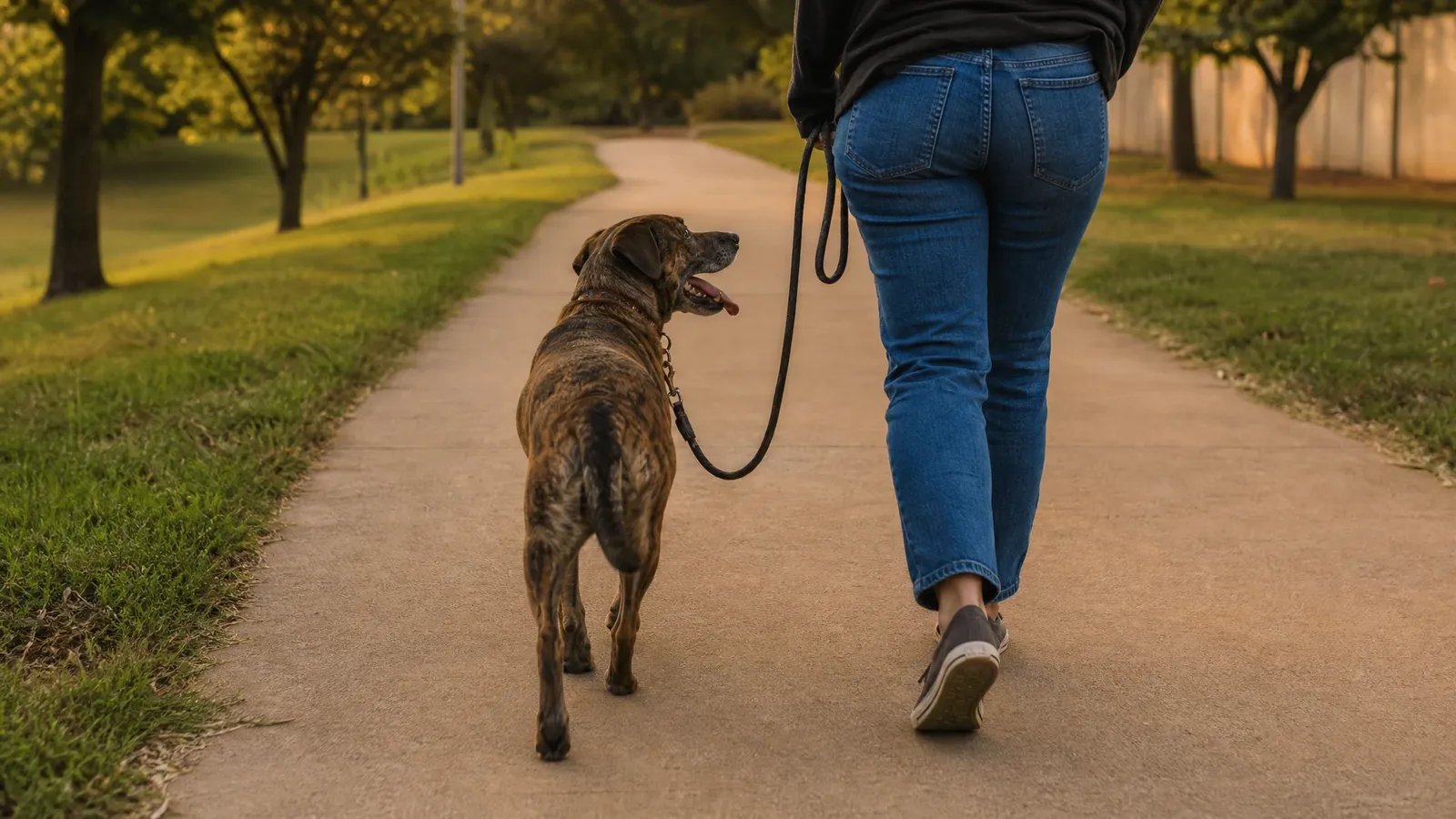
Yes, adult dogs can learn new habits, and reward-based training works at any age. This page, last verified on 2026-11-11, explains what an adult-dog plan looks like, what we teach first and which Arlington places make good practice spots.
Adult dog with habits you want to change? Tell us what happens on your usual walk to Veterans Park or the dog park
- In-person training in Arlington and nearby areas
- Online training anywhere
- Reward-based methods only
Can you train an adult dog?
Yes. Adult dogs learn with the same reward-based methods as puppies, and many are easier to work with because they can focus longer. What changes is that an adult dog has had time to practice the habit, so the plan needs prevention as well as teaching. The table shows where we usually begin.
| Common adult-dog goal | First step | Page |
|---|---|---|
| Pulling on the leash | Reward position beside you; stop practicing the pull | Leash pulling |
| Barking at the door or neighbors | Prevent the trigger; teach a calm alternative | Barking |
| Jumping on people | Reward four paws on the floor; manage greetings | Jumping |
| Not coming when called | Rebuild recall with high-value rewards on a long line | Recall |
| Fear or reactivity | Work at a distance your dog can handle | Leash reactivity |
If you adopted your dog, you may be starting from scratch with an unknown history. See rescue and shelter dog training for the first weeks.
Choosing the first goal matters. Trying to fix everything at once usually fixes nothing, so we pick the behavior that affects daily life most, such as a walk that leaves you sore or a door that turns into chaos, and build the plan around it. Once that is steady, the next goal usually goes faster because your dog already understands how the game works.
What happens session by session?
We start by watching what your dog does and why, then pick one or two goals and build outward. A plan might look like this.
- First session: your goals, your dog's history, what has been tried and a management plan. We often begin teaching one useful skill so you leave with something to practice.
- Early sessions: core skills in the quietest place, such as your living room, then your yard or hallway.
- Middle sessions: real-life practice at your door, on your sidewalk and on your usual walk, adding distance, duration and distraction one at a time.
- Later sessions: proofing in busier places, troubleshooting setbacks and cutting back the treats gradually.
Home practice is a few minutes, several times a day. Adult dogs often improve fastest when the whole household uses the same cues and rewards the same behavior. How long it takes depends on your dog and your consistency.
How do we train adult dogs?
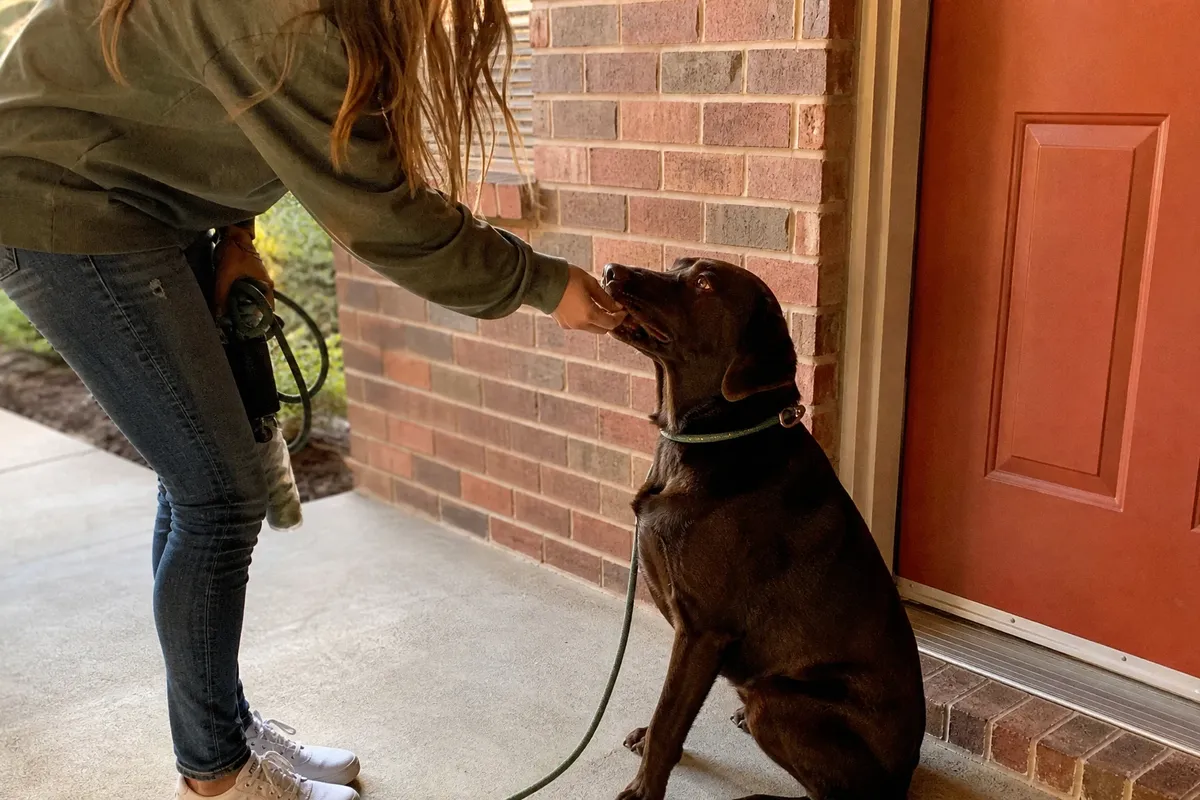
We reward the behavior we want and manage the setting so the old habit stops paying off. A dog that has pulled for five years has been rewarded for pulling thousands of times, so the plan gives the dog a better route to the same goal.
For fear, barking at triggers or reactivity, we use gradual desensitization and counter-conditioning: starting well below your dog's threshold and pairing the trigger with something your dog loves. Sessions are short and consistent. You get hands-on owner coaching on timing, leash handling and reading your dog's body language. We use humane tools only, with no pain, fear or intimidation.
Where in Arlington can you practice with an adult dog?
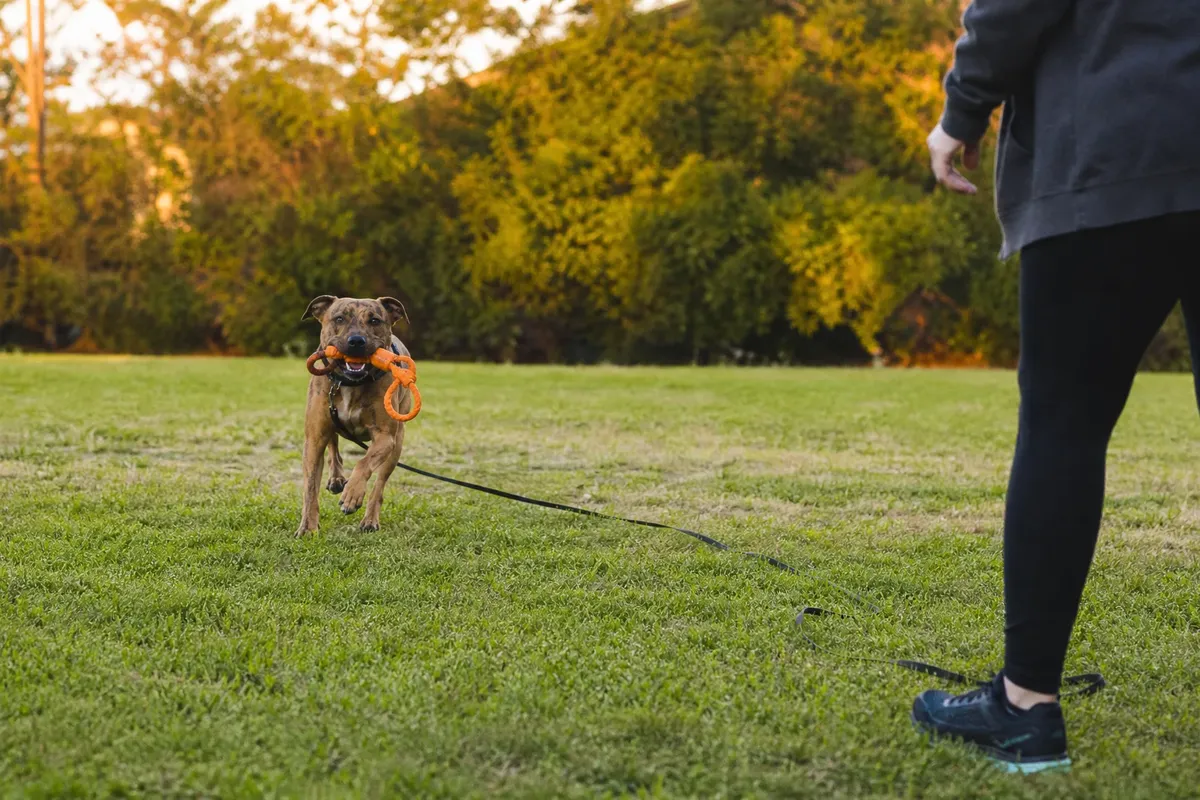
Start with places you can control, then add the city's fenced parks as your dog is ready. Rush Creek Dog Park is free, allows three dogs per visit, and requires dogs to stay leashed until inside the double-gated entry; it is closed Wednesday mornings until noon for maintenance. Tails 'N Trails Dog Park is free, fully fenced, open during daylight hours and closed Tuesday mornings until noon. Veterans Park has a 1.44-mile hike and bike trail, but the city page lists no pet or leash rules, so check the city before you go. Last verified 2026-11-11.
If barking is your issue, the city publishes a Barking Dogs Complaint Process that asks neighbors to try open communication first and then involves a notarized affidavit with dates, times and duration. Training early is much easier than waiting for a complaint.
A common situation Arlington owners face: a three-year-old adopted dog pulls hard on every walk in an apartment complex with narrow sidewalks and a lot of foot traffic. We would start in the hallway or parking lot, reward the dog for staying beside you, and move to busier routes only when the dog is calm there.
About 46% of occupied housing units in Arlington were renter-occupied in the 2020 census (a secondary summary), so close neighbors and shared walkways are part of the picture for many adult dogs here.
Who is adult dog training not for?
It is not for owners looking for a guaranteed fix, and it is not a replacement for vet care. If your dog's behavior changed suddenly, see your vet first, because pain and illness can cause new behaviors. If your dog has injured a person or another animal, say so in the application so a trainer can review the situation with care.
It is a good fit for owners who can practice daily and will use the same rules at home. Choose in-person private training for hands-on help in your space or online training for flexible coaching, then apply to see which looks right.
Frequently asked questions
Is it too late to train my adult dog?
No. Dogs can learn at any age with reward-based methods. An adult may have long-standing habits, so the plan combines prevention with teaching, and progress depends on the dog and your consistency.
How often should we practice?
A few minutes several times a day beats one long session. Short, consistent practice keeps your dog successful and keeps the training easy to fit into your day.
What if my dog does well at home but not outside?
That is common. Skills need to be rebuilt in each new place, starting with low distraction and adding distance and duration step by step. We coach you through it on your own routes.
Can adult dog training be done online?
For many manners and routine problems, yes. Fear, reactivity and aggression usually benefit from hands-on, in-person help. A trainer can advise after reviewing your application.
Keep reading
- Apply for adult dog trainingRead more →
- private in-home dog trainingRead more →
- online dog trainingRead more →
- leash pulling helpRead more →
- recall training in ArlingtonRead more →
- basic obedience for adult dogsRead more →
Sources
- City of Arlington, Rush Creek Dog Park (last verified 2026-11-11)
- City of Arlington, Tails 'N Trails Dog Park (last verified 2026-11-11)
- City of Arlington, Veterans Park (last verified 2026-11-11)
- City of Arlington, Barking Dogs Complaint Process (last verified 2026-11-11)
- Wikipedia, Arlington, Texas (2020 census; secondary summary) (last verified 2026-11-11)
- City of Arlington, Heat Safety Tips for Enjoying Arlington Parks This Summer (June 2026) (last verified 2026-11-11)
Adult dog with habits you want to change? Tell us what happens on your usual walk to Veterans Park or the dog park
- In-person training in Arlington and nearby areas
- Online training anywhere
- Reward-based methods only