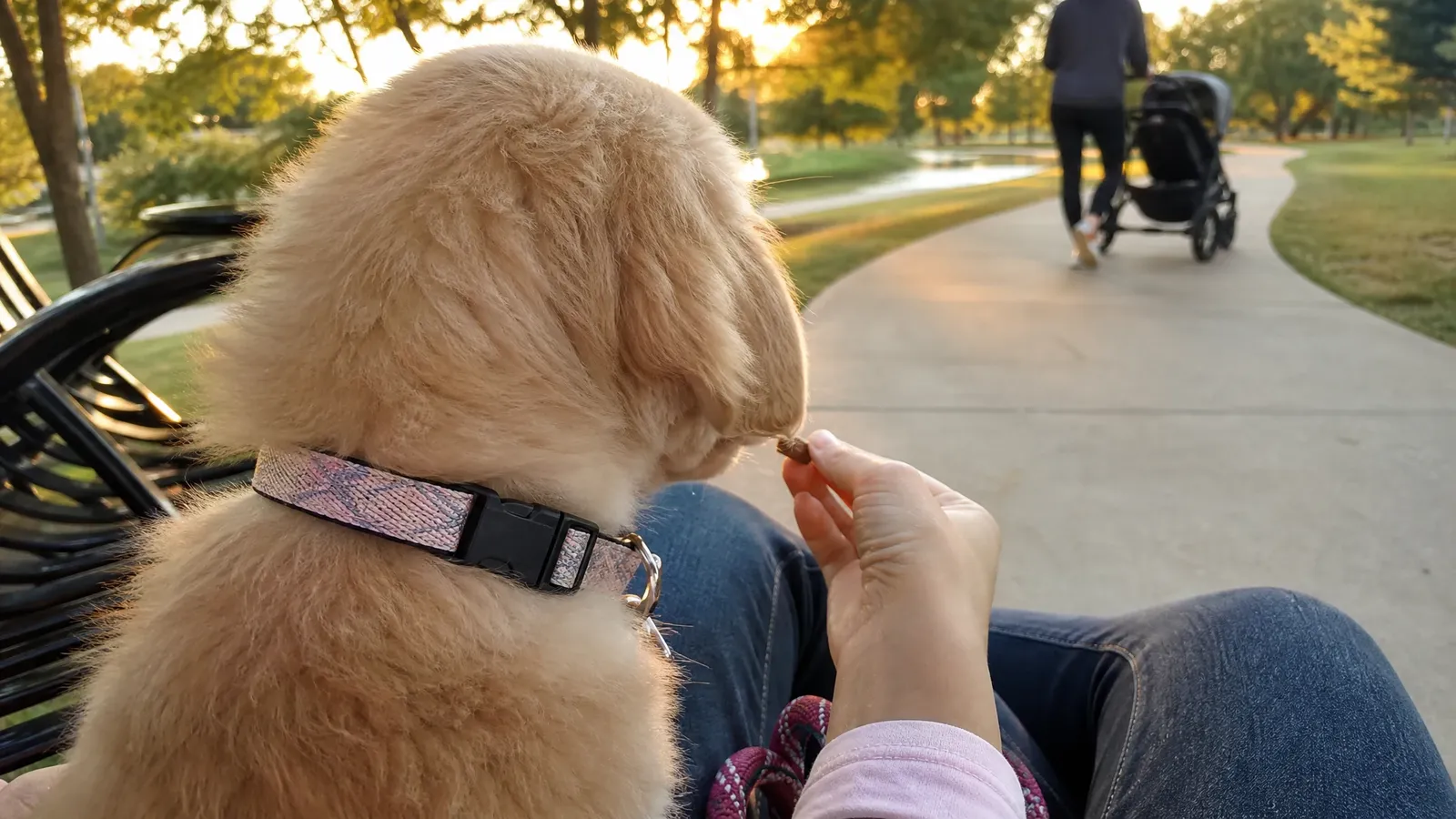
Socialization means helping your puppy feel safe and relaxed around new people, dogs, sounds and places, and veterinary behavior experts say it can begin as early as 7 to 8 weeks. This page, last verified on 2026-11-11, gives a safe checklist and Arlington places to think about, with your vet deciding what is safe before vaccines are complete.
Planning your puppy's first outings near Doggie Depot or Rush Creek? Tell us about your puppy
- In-person training in Arlington and nearby areas
- Online training anywhere
- Reward-based methods only
What is puppy socialization, and when should it start?
It is the process of letting a young puppy experience the world in small, pleasant doses so new things become normal. The American Veterinary Society of Animal Behavior recommends starting as early as 7 to 8 weeks, keeping vaccinations up to date and watching for signs of illness, and describes socialization before full vaccination as the standard of care in the first three months. Ask your vet what is right for your puppy.
The goal is not exposure for its own sake. A puppy that is overwhelmed learns that the world is scary. A puppy that sees a stroller from a distance, gets a treat and relaxes learns that strollers are fine.
| Category | Examples to introduce gently | How |
|---|---|---|
| People | Different ages, hats, uniforms, children with an adult managing them | Let the puppy approach; treat for calm |
| Dogs | A calm, vaccinated adult dog you know | Short, supervised meetings; no forced greetings |
| Sounds | Traffic, doorbells, vacuum, thunder recordings at low volume | Start quiet; pair with treats |
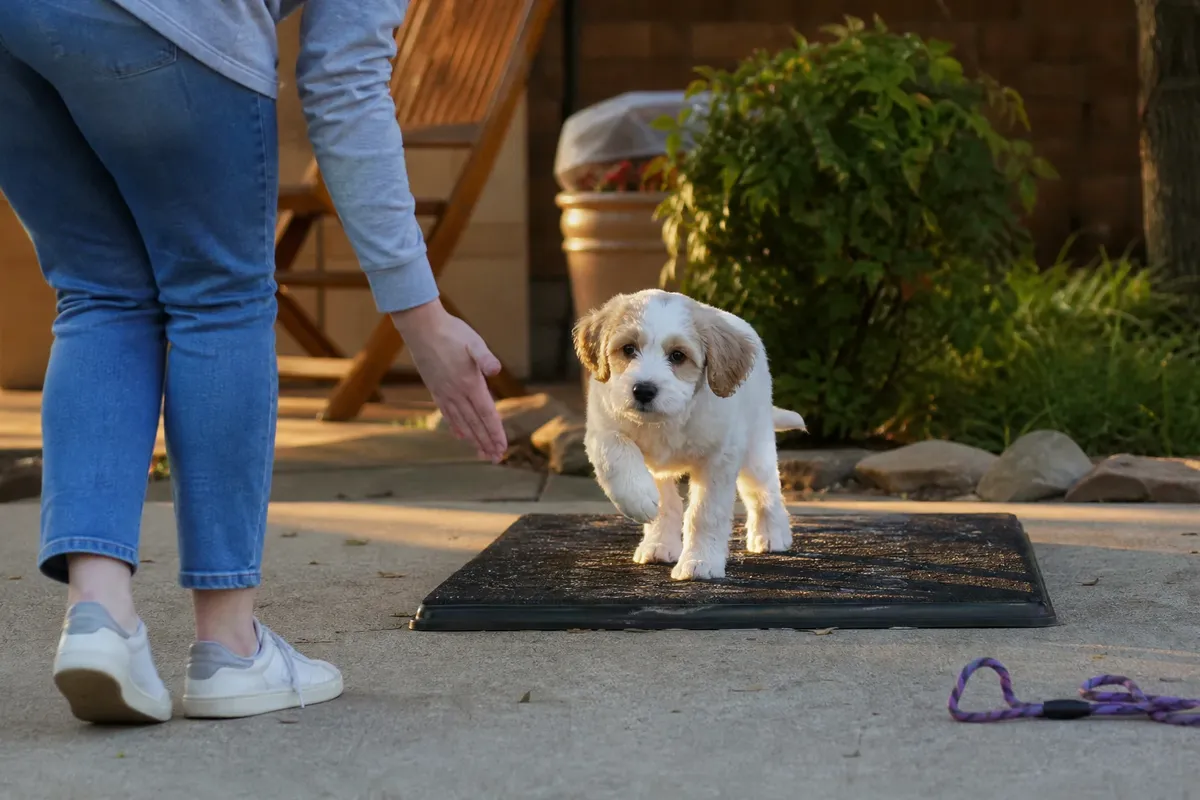
| Surfaces | Tile, grass, gravel, stairs, a wobbly board | Let the puppy choose to step |
| Handling | Paws, ears, mouth, brushing, towel | A few seconds, then reward |
| Places | Car rides, lobby, patio, quiet street | Short visits and an easy exit |
How do you keep socialization safe before your puppy is fully vaccinated?
Choose low-risk, controlled experiences and let your vet guide you. Carrying your puppy, sitting on a bench with treats, visiting a friend's clean yard and meeting known, healthy, vaccinated dogs are common low-pressure options. Crowded dog areas with unknown dogs are a different question, and it is one for your vet.
- Ask your vet which places are okay for your puppy's vaccine status.
- Skip any place where you cannot control who your puppy meets.
- Leave early if your puppy shows stress: tucked tail, hiding, lip licking, freezing or refusing treats.
- Keep each outing short and end it on a good note.
- Do not force a greeting.
Vaccine and health decisions belong to your vet. Our role is to build the experiences and to coach you through them. For the wider foundation, see puppy training in Arlington.
Where in Arlington can you socialize a puppy?
Start with quiet, controlled spots and add busier ones as your puppy gains confidence. The city runs fenced off-leash dog parks, and a third off-leash space opened downtown. Rush Creek Dog Park is free, allows three dogs per visit, requires dogs to stay leashed until inside the double-gated entry, and closes Wednesday mornings until noon. Tails 'N Trails Dog Park is free, fully fenced, open during daylight hours and closed Tuesday mornings until noon. Doggie Depot opened in Downtown Arlington in March 2025 as a dedicated off-leash space; we could not find its hours or rules on the page we opened, so check with the city. Last verified 2026-11-11.
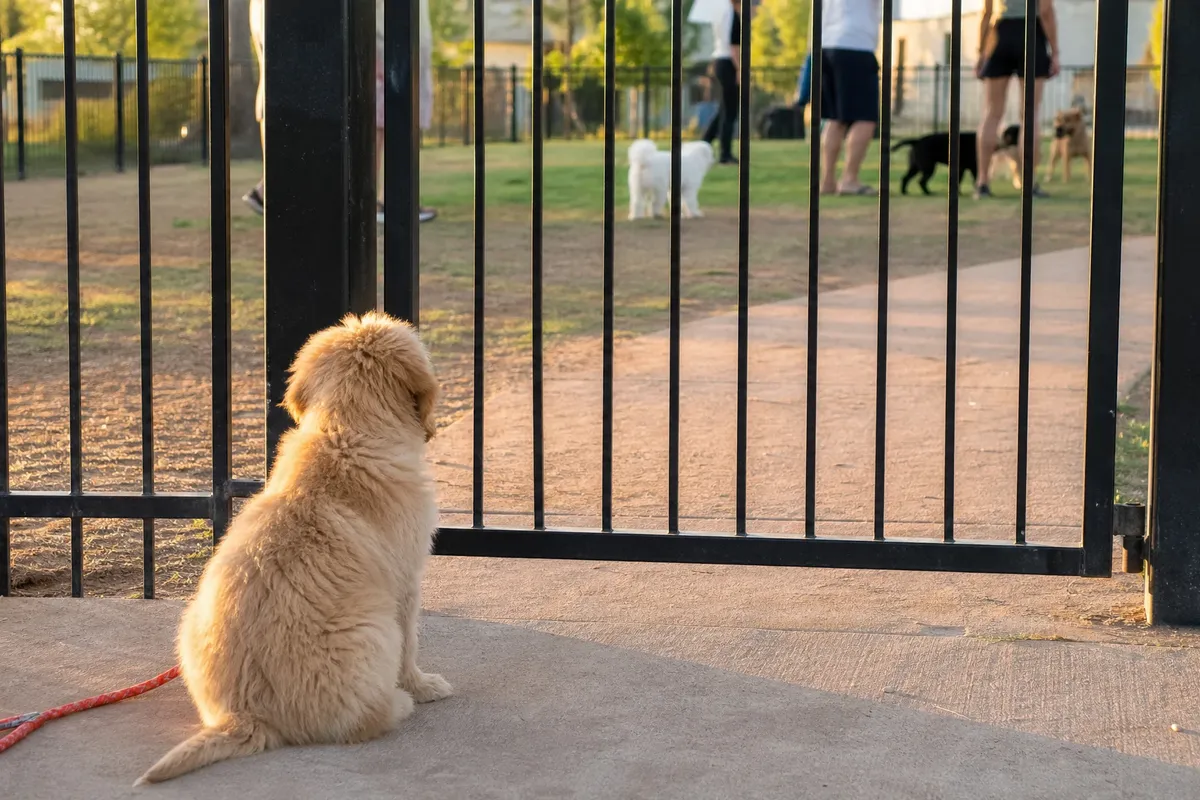
These spaces are best used after your vet says your puppy is ready, and many puppies get more out of watching from the gate than rushing in. The gate area itself is a useful training spot: practice calm waiting and treats while dogs go by at a distance.
Arlington also has a large university campus: UT Arlington's 420-acre main campus sits at the southern edge of downtown and had 41,613 students in fall 2024 (secondary source). If you live near campus, sidewalks can be busy, so start with quiet hours and watch your puppy's comfort.
A common situation Arlington owners face: a puppy in a downtown apartment who gets very little exposure to anything beyond the building lobby. We would plan short, quiet outings, such as sitting on a bench at a distance from foot traffic, rewarding calm looks and gradually adding sounds and people.
How do we train and socialize puppies?
We make every new thing easy and rewarding, and we let your puppy set the pace. We use reward-based teaching, management and prevention, and gradual desensitization and counter-conditioning. In practice, that means starting at a distance where your puppy stays relaxed, pairing the new thing with food or play, and moving closer only when your puppy stays comfortable.
Sessions are short and consistent, and owner coaching is central: you learn to spot stress early and to step in. We do not flood a puppy with experiences and we do not force greetings. We use humane tools only. Progress depends on the puppy and on your consistency, so we do not promise timelines.
What should you not do when socializing a puppy?
Do not force it. Pushing a nervous puppy into a crowd, an off-leash group or a long greeting line tends to teach fear, not confidence. If your puppy looks stressed, increase distance, reward calm, or go home.
If your puppy seems very fearful, or shows lasting fear of people, dogs or sounds, talk to your vet and consider private in-home training or online training. Choosing between a class and private help? Read puppy classes vs private lessons. When you are ready, apply.
Frequently asked questions
Can I socialize my puppy before vaccines are finished?
Veterinary behavior experts say socialization can begin early, as young as 7 to 8 weeks, with controlled and low-risk experiences. Ask your vet which activities and places are safe for your puppy's vaccine status.
Should I take my puppy to a dog park?
Ask your vet first. Dog parks bring unknown dogs, so many puppies are better served by controlled meetings with known, healthy dogs and by watching from a distance. Check the city's park rules before you go.
How do I know my puppy is stressed?
Common signs include a tucked tail, hiding, lip licking, freezing, yawning and refusing treats. Increase distance or leave. A calm puppy that stays curious is ready for a little more.
Is it too late if my puppy is older than 12 weeks?
No. The early weeks are important, but dogs can learn to feel comfortable at any age with gradual, reward-based work. A trainer can help you plan the pace.
Keep reading
- Apply for puppy trainingRead more →
- private in-home puppy trainingRead more →
- online puppy trainingRead more →
- puppy training in ArlingtonRead more →
- puppy classes vs private lessonsRead more →
- best dog parks in ArlingtonRead more →
Sources
- dvm360, AVSAB position: puppy socialization should start before vaccinations are complete (last verified 2026-11-11)
- Purdue Canine Welfare Science Center, AVSAB Puppy Socialization Position Statement (last verified 2026-11-11)
- City of Arlington, Rush Creek Dog Park (last verified 2026-11-11)
- City of Arlington, Tails 'N Trails Dog Park (last verified 2026-11-11)
- City of Arlington news, Doggie Depot grand opening (March 2025) (last verified 2026-11-11)
- Wikipedia, University of Texas at Arlington (secondary) (last verified 2026-11-11)
- City of Arlington, Low-Cost Vet Services (TCAP) (last verified 2026-11-11)
Planning your puppy's first outings near Doggie Depot or Rush Creek? Tell us about your puppy
- In-person training in Arlington and nearby areas
- Online training anywhere
- Reward-based methods only