Resource guarding means a dog growls, stiffens or snaps to keep something it values, and the safe fix is to trade, prevent and build trust, never to take things by force. We coach Arlington owners, including those who just adopted a dog from a shelter or rescue, through a careful, reward-based plan.
Tell us what your dog guards, from the food bowl at home to toys at Tails 'N Trails
- In-person training in Arlington and nearby areas
- Online training anywhere
- Reward-based methods only
Why does my dog growl when I get near its food or toys?
Because it is worried you will take it. Growling is communication, and dogs that are punished for it often stop growling and bite without warning. Our job is to change how the dog feels about people near its things.
| What the dog guards | Warning signs | Safe first step |
|---|---|---|
| Food bowl | Freezing, eating faster, hard eyes | Feed in a separate room and stop approaching the bowl |
| Chews or bones | Carrying away, growling | Give chews in a closed space, only when alone |
| Toys | Stiff body, mouth tension | Play with a trade toy, keep guarded toys away |
| Beds or couch | Growling when approached | Call the dog off with a treat toss, not by grabbing |
| People | Standing between you and others | Management and professional guidance |
What should I do right away if my dog guards?
Prevent situations where the dog feels forced to guard, and keep everyone safe. Management is the quickest safety measure.
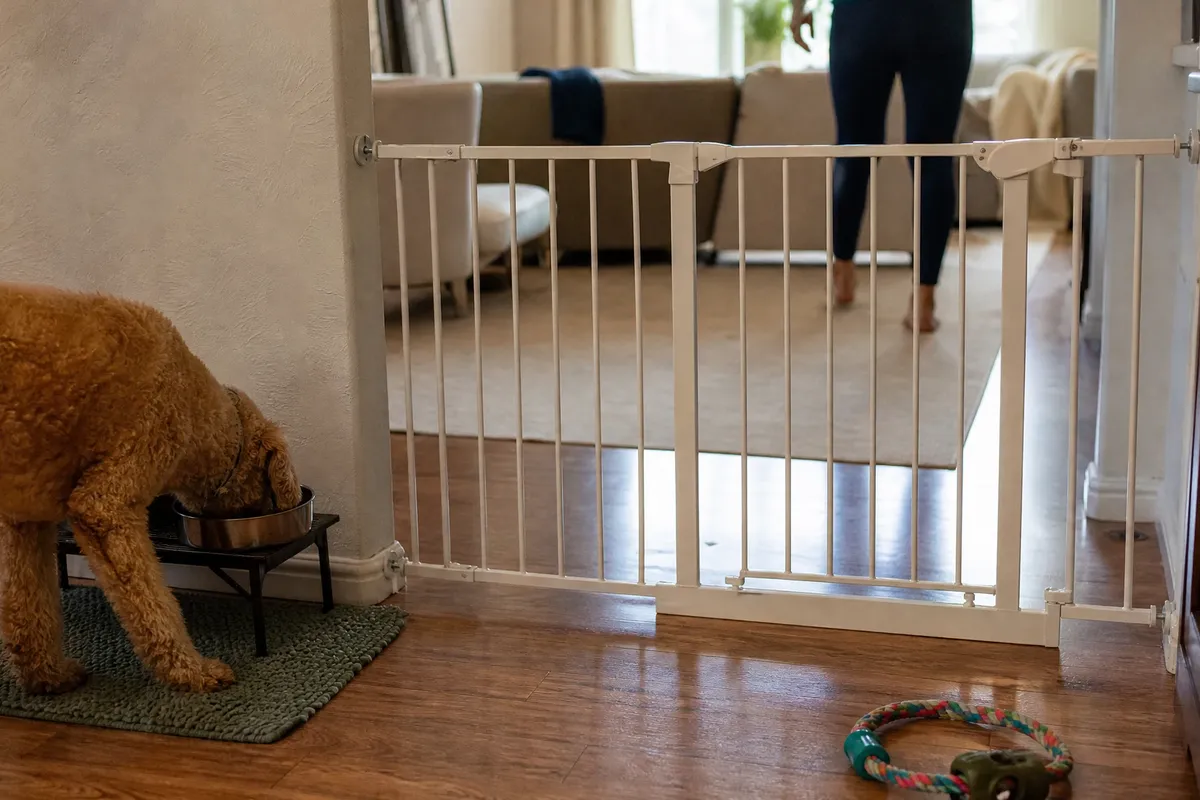
- Feed in a quiet space with the door closed, away from children and other pets.
- Give high-value chews only when you can separate the dog from everyone else.
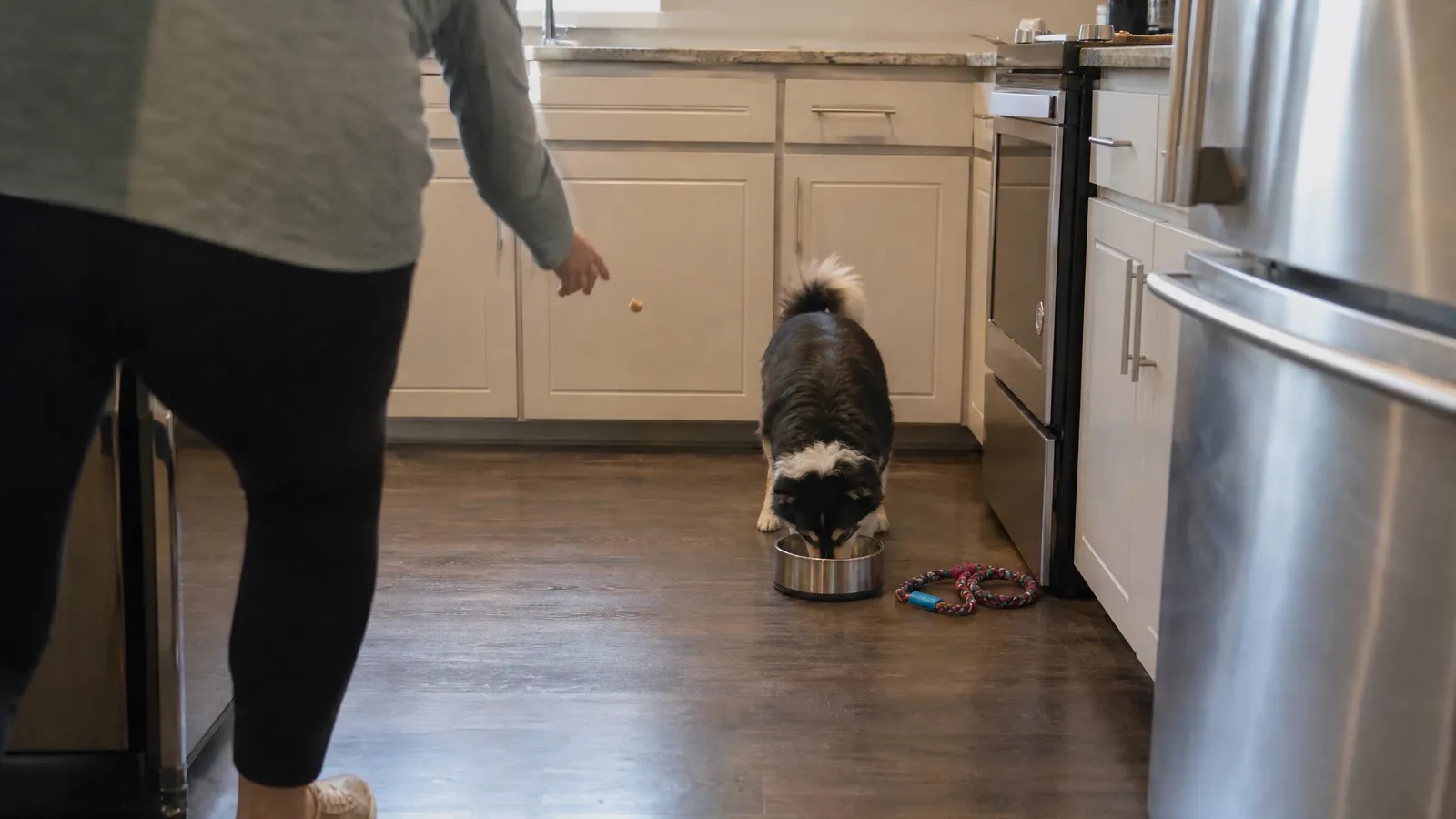
- Pick up items you cannot trade for, like stolen socks, without confrontation: toss treats away from the item, then retrieve it.
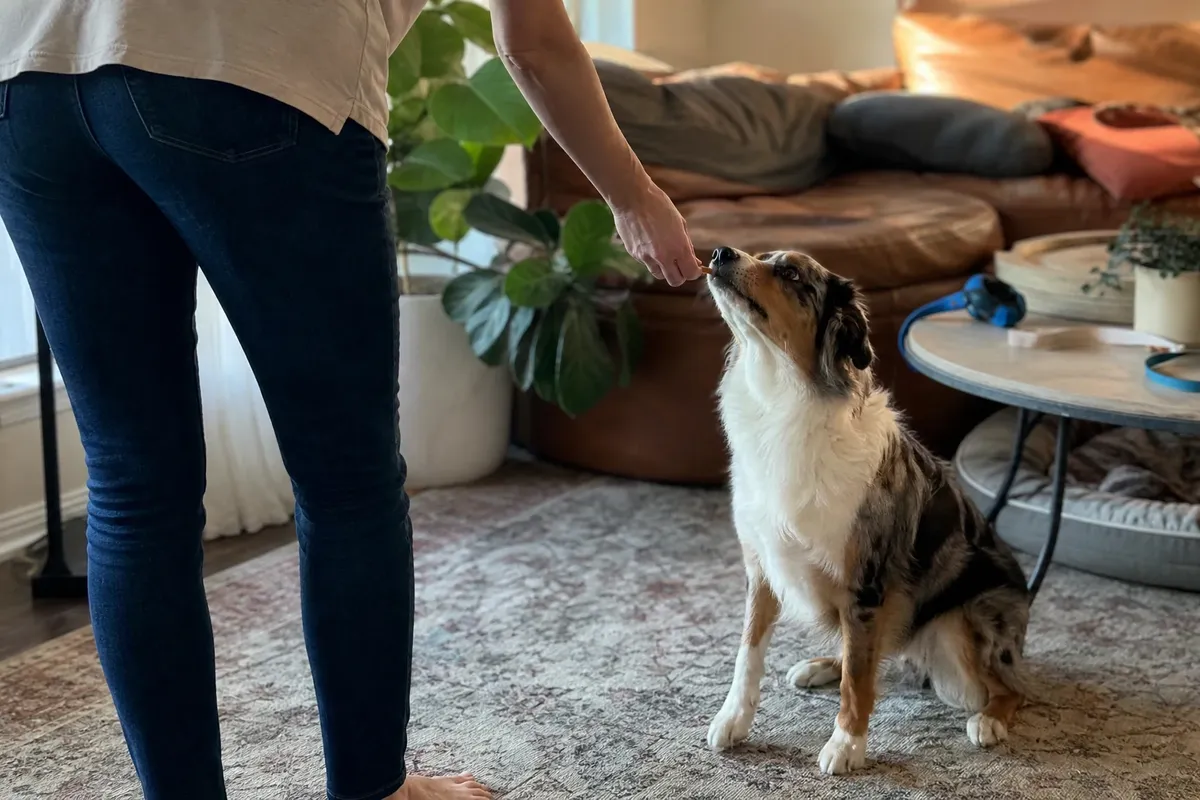
- Teach a trade: say "trade," offer a better treat, return the item when possible.
- Keep children away from the dog's food, bones and resting spots, and supervise.
- Do not scold or take food from a dog with a history of guarding, since it can make guarding worse.
A simple daily routine helps. Pick one meal a day, feed it in the dog's quiet space and walk away. Once the dog eats calmly, you can toss a better treat into the bowl from a distance as you walk by, so passing becomes a good sign. Keep the distance big enough that the dog stays loose and keeps eating, and do not move closer unless the dog is clearly relaxed. If the dog stiffens, you moved too fast; go back to the last distance where it was comfortable.
If the dog has already bitten, read our dog aggression page and ask for help before attempting exercises on your own.
What should Arlington owners of adopted dogs know?
Last verified 2026-11-11. A common situation Arlington owners face: a dog adopted from a shelter eats calmly in the first days, then starts growling when a family member walks past its bowl once it feels settled. That is common, and it is not a reason to give the dog up, but it is a reason to start management and training early.
The City of Arlington lists the steps for adopting from the Animal Services Center and notes that a "Very Important Pet" fee can be offered for reasons that include behavioral or special needs (City of Arlington, Pet Adoption Process). The city also runs a Foster Pet Program and publishes a list of rescue partners. Lighthouse Dog Rescue, which serves Tarrant County, gives each adoptable dog a profile with an adoption form (Lighthouse Dog Rescue). Whichever route you take, ask what the shelter or foster home observed around food and toys, and tell your trainer.
Resource guarding can also show up outside the house. At fenced off-leash areas like the city's Tails 'N Trails Dog Park, toys, treats and even a water bowl can trigger guarding between dogs. We usually suggest leaving food and toys at home when a dog is still learning.
How we train resource guarding
We use a slow, safety-first approach. The AVSAB position says reward-based methods are recommended for all training and that aversive methods should not be used (AVSAB statement via Purdue), which is why we never take items by force.
- Safety setup. Gates, separate feeding and rules for children and guests.
- Vet check. Pain, dental issues and illness can increase guarding.
- Trade games. The dog learns that people approaching means something better is coming.
- Counter-conditioning. We add low-level approach distances and pair them with treats, only as fast as the dog stays relaxed.
- Cues that help. Drop, leave it and a go-to-mat give you alternatives to confrontation.
- Owner coaching. You learn the early signs, such as freezing and a tight mouth, and how to back off before the dog escalates.
Progress depends on the dog, the item guarded and how consistent the household is. Some dogs relax around most items but keep a few high-value ones for life, and we plan for that with management.
Is in-person or online training better for resource guarding?
In-person is generally safer because a trainer can read the dog's body language and watch your handling. Online coaching can support prevention plans and follow-up after an assessment. Compare in-person private training with online dog training, then apply and describe what your dog guards.
Frequently asked questions
Is resource guarding the same as aggression?
It is a type of defensive aggression, and it can be mild or serious. A growl over a bone is different from a bite, but both deserve a safe plan.
Should I take my dog's bowl away to show who is boss?
No. This can teach the dog that people near its food are a threat. Feed in a quiet space and avoid approaching the bowl while it eats.
Will neutering stop resource guarding?
Not by itself. Guarding is mostly about learning and emotion, so management and training are the main tools. Ask your vet about any health factors.
Can resource guarding be cured?
Many dogs improve a lot, but there is no promise of a permanent fix. We aim for safer behavior, clearer signals and a household that knows how to manage the dog.
I have kids. Is it safe to keep my guarding dog?
That depends on the severity and your ability to manage. Keep the dog separated during meals and chews, supervise every interaction and get professional help before deciding.
Keep reading
- Dog aggression: when to bring in helpRead more →
- Rescue and shelter dog trainingRead more →
- Arlington animal shelters and rescuesRead more →
- In-person private dog training in ArlingtonRead more →
- Online dog training and coachingRead more →
- Apply for trainingRead more →
Sources
- City of Arlington, Pet Adoption Process (last verified 2026-11-11)
- City of Arlington, Foster Pet Program (last verified 2026-11-11)
- City of Arlington, Rescue Partners (last verified 2026-11-11)
- Lighthouse Dog Rescue (last verified 2026-11-11)
- City of Arlington, Tails 'N Trails Dog Park (last verified 2026-11-11)
- AVSAB humane dog training position (via Purdue Canine Welfare Science Center) (last verified 2026-11-11)
Tell us what your dog guards, from the food bowl at home to toys at Tails 'N Trails
- In-person training in Arlington and nearby areas
- Online training anywhere
- Reward-based methods only