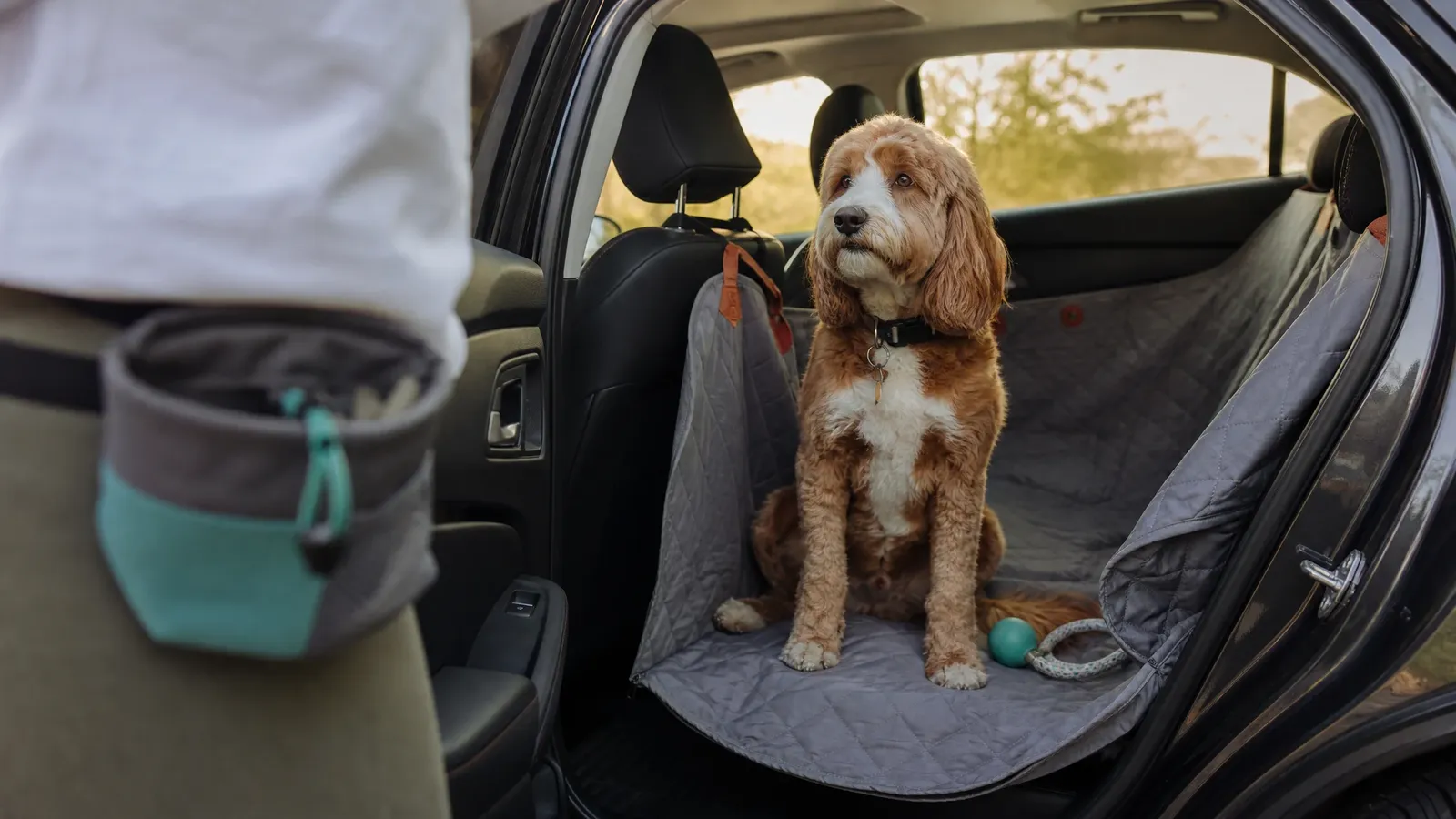
Dogs with car anxiety usually need small, positive steps: first the parked car, then the engine, then short trips to places they like. Arlington owners often face long summer heat and cross-town drives to vets and parks, so we plan the training around real routes and real weather.
Tell us about your dog's rides, from the vet to Rush Creek Dog Park
- In-person training in Arlington and nearby areas
- Online training anywhere
- Reward-based methods only
Why is my dog afraid of the car?
Usually because the car has meant something unpleasant, or because the motion, smells and confinement are overwhelming. The most common pattern is a dog whose only rides end at the vet or groomer, so the car becomes a predictor of bad things.
Other causes:
- Motion sickness, especially in puppies, which teaches the dog to dread the car
- A scary event in or near a car, such as a loud noise or a crash
- Never being introduced to a car slowly during early socialization
- A rescue dog whose ride history is unknown
Motion sickness and fear look alike. If your dog drools heavily or vomits, tell your vet; treating nausea can remove much of the fear, and training works better afterward.
What does car anxiety look like, and what should I do first?
Start by noticing where the fear begins, because that tells you where training starts. This table maps what you see to where we start.
| Where the fear starts | What you see | Where we begin |
|---|---|---|
| At the sight of the car | Pulling away, freezing, refusing to approach | Treats and play near the parked car, far from the door |
| At the door or seat | Won't jump in, has to be lifted | Rewarding each step toward and onto the seat, engine off |
| When the engine starts | Trembling, panting, whining | Engine on for a few seconds, then off, with food |
| When the car moves | Drooling, vomiting, barking | Moving a few feet, then short trips to something fun; vet check for nausea |
Do not force a frightened dog into the car, and do not scold drooling or vomiting. Those are signs of distress, and scolding makes the car worse.
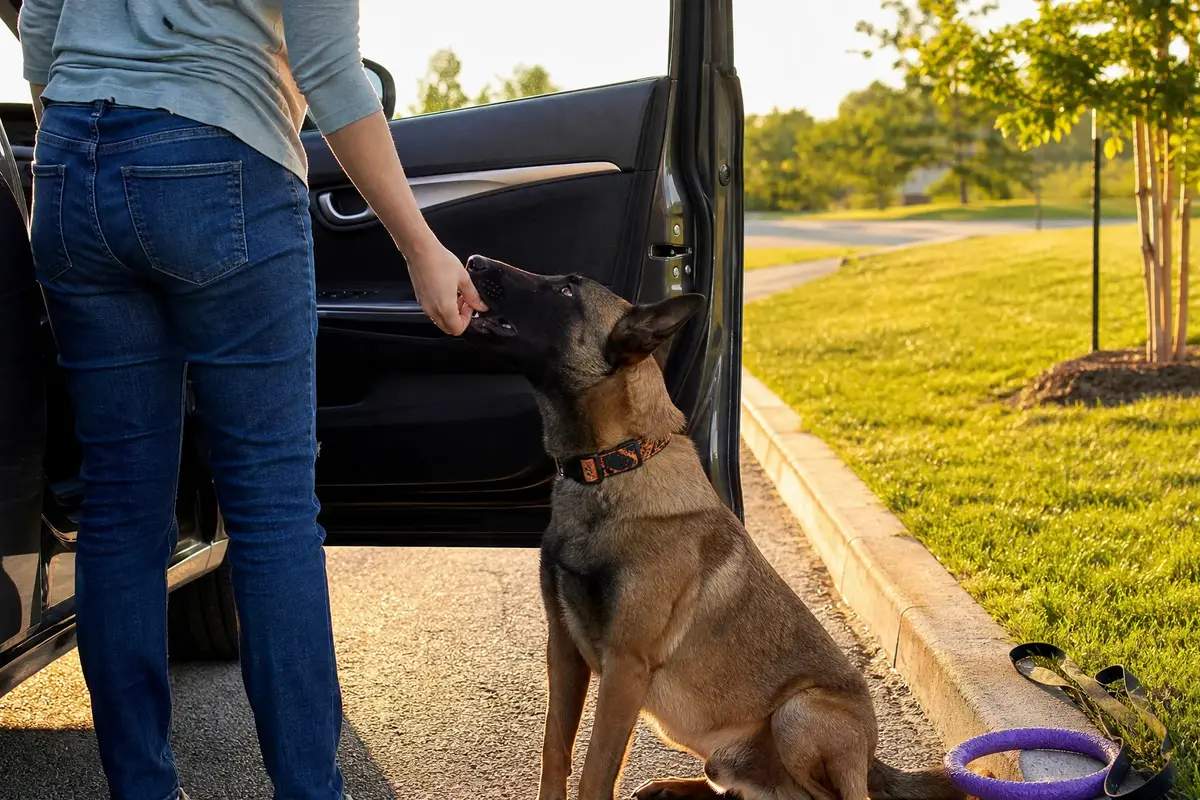
How does Arlington's climate affect car training?
It decides when you can train. Heat is the main limit: NWS Fort Worth's 1991-2020 normals for the DFW station list 20.2 days a year at or above 100F, 7.4 of them in July, with the average first 100F day on July 1 and the last on August 27 (the DFW station is the nearest official one, not Arlington itself). A parked car in Texas summer can become dangerous quickly, so we do our practice at cool times of day and never leave a dog in a parked car.
The city's own heat-safety guidance points the same way: schedule outdoor activities in the morning or evening, test pavement with the back of your hand, and bring water for your pet. We apply that to car work by practicing early in the day in shade, with the windows cracked and the engine off for the early steps.
In the cooler months, October through March, you can do longer sessions and add short drives. That is a good time to start training for the summer.
What does a car-anxiety week look like for an Arlington owner?
Here is a common situation Arlington owners face. A rescue dog is adopted from the Animal Services Center in southeast Arlington, rides home trembling, and then the next ride is the first vet visit. Within a week, the dog refuses to approach the car. The owner wants to take the dog to Rush Creek Dog Park or Tails 'N Trails, both city dog parks at opposite ends of town, but the drive is the barrier.
The fix is to separate the car from the bad destinations. We build a pattern: car seat, treats, short ride, fun place, home. Over a few weeks the vet visit becomes one trip among many pleasant ones. It also helps to practice the exact route you use, so the dog does not get surprised by traffic or highway sounds.
A local audience insight: Arlington's size means many errands involve a drive of some length, and the emergency vet that some owners use, I-20 Animal Medical Center on the interstate, is a highway trip. Dogs that can ride calmly are easier to get to care when it matters, which is a good reason to train this skill before an emergency.
How we train dogs to ride calmly
We use gradual desensitization and counter-conditioning with food, short sessions, management, and owner coaching. We do not push the dog into the car, flood it with a long drive, or use corrective tools.
- Car is a feeding spot. Meals or treats near the parked car, then on the seat, door open.
- Door closed, engine off. A few seconds at first, ending before the dog gets worried.
- Engine on. A few seconds, then off, with a treat each time.
- Move a short way. Down the street and home, then to a fun place.
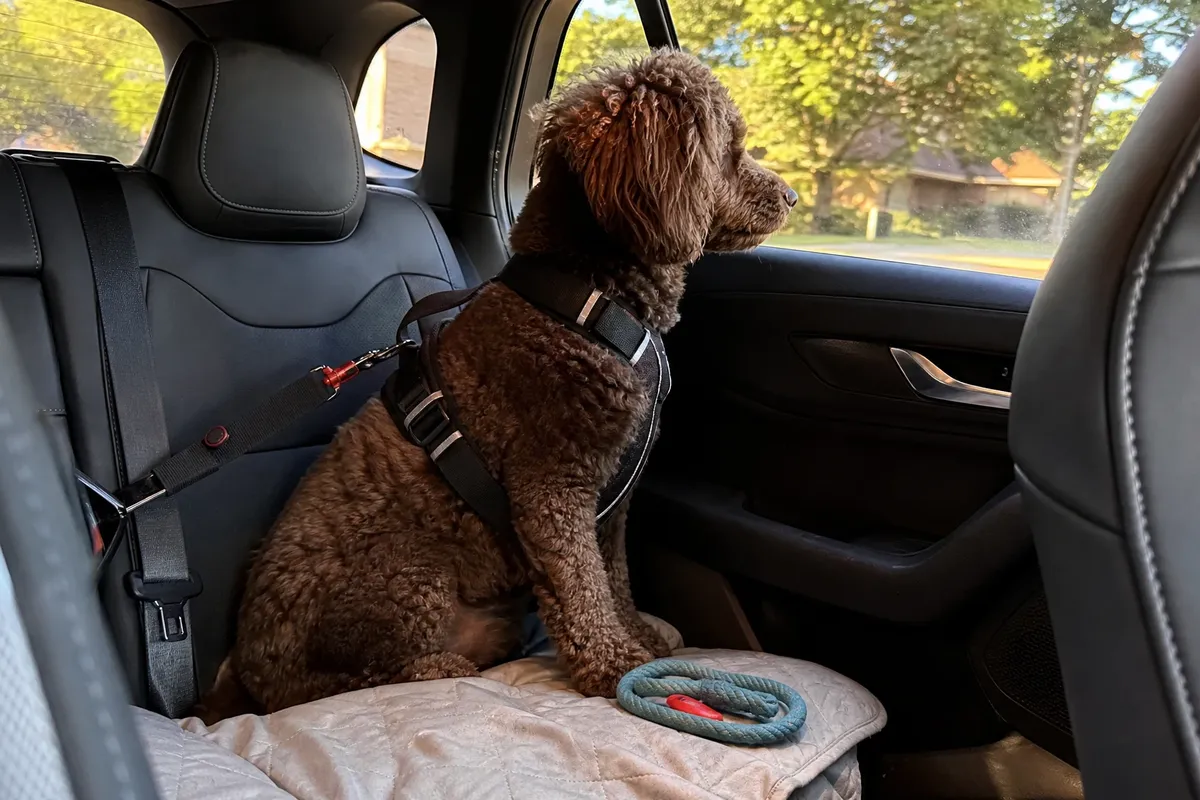
- Build the ride. Slightly longer trips, always ending somewhere good, with a mat or secured crate for safety.
Dogs should travel secured, in a crate or with a harness that is made for car restraint. The pace depends on the dog and on how consistently you practice, so we adjust each step to your dog's body language instead of a calendar.
When should I involve my vet?
Involve your vet if your dog vomits, drools heavily or shows signs of motion sickness, since a medical fix may be part of the plan. Anti-nausea options and other medical support are the vet's decision, not ours. For a dog with severe panic that injures itself, tell your vet and tell us on your application so we can plan together.
In-person training is the better fit when we need to see how your dog loads into your car and how you handle the steps. Online training can work well for the gradual practice routine and check-ins once the first steps are in place.
Frequently asked questions
Why does my dog throw up in the car?
It can be motion sickness, anxiety, or both. Puppies are especially prone to nausea. Check with your vet, because treating the nausea often makes the training easier.
Can I train car anxiety without driving?
Yes, the first steps happen with the car parked. Feeding near the car, then on the seat, then with the engine on, builds comfort before any driving.
Is it safe to train in Texas heat?
Only at cool times of day and never with the dog left in a parked car. We schedule early-morning or evening practice and keep the engine-off steps short in summer.
How long until my dog rides calmly?
It depends on the dog, its history and how consistently you practice. Some dogs improve in a few weeks; others need a slower plan. We set small goals and review them each session.
Do you offer car anxiety help online?
Yes. Online coaching suits the step-by-step practice and troubleshooting. In-person is better when we need to watch your dog load into the car. You can tell us which you prefer on your application.
Keep reading
- Apply for car anxiety trainingRead more →
- private in-home dog training in ArlingtonRead more →
- online dog training for gradual practiceRead more →
- help for separation anxietyRead more →
- Arlington vets and emergency vetsRead more →
Sources
- NWS Fort Worth, DFW annual normals (last verified 2026-11-11)
- City of Arlington, Heat Safety Tips (June 2026) (last verified 2026-11-11)
- I-20 Animal Medical Center (24-hour emergency statement) (last verified 2026-11-11)
- City of Arlington, Tails 'N Trails Dog Park (last verified 2026-11-11)
- City of Arlington, Rush Creek Dog Park (last verified 2026-11-11)
- City of Arlington, Animals and Pets (last verified 2026-11-11)
Tell us about your dog's rides, from the vet to Rush Creek Dog Park
- In-person training in Arlington and nearby areas
- Online training anywhere
- Reward-based methods only