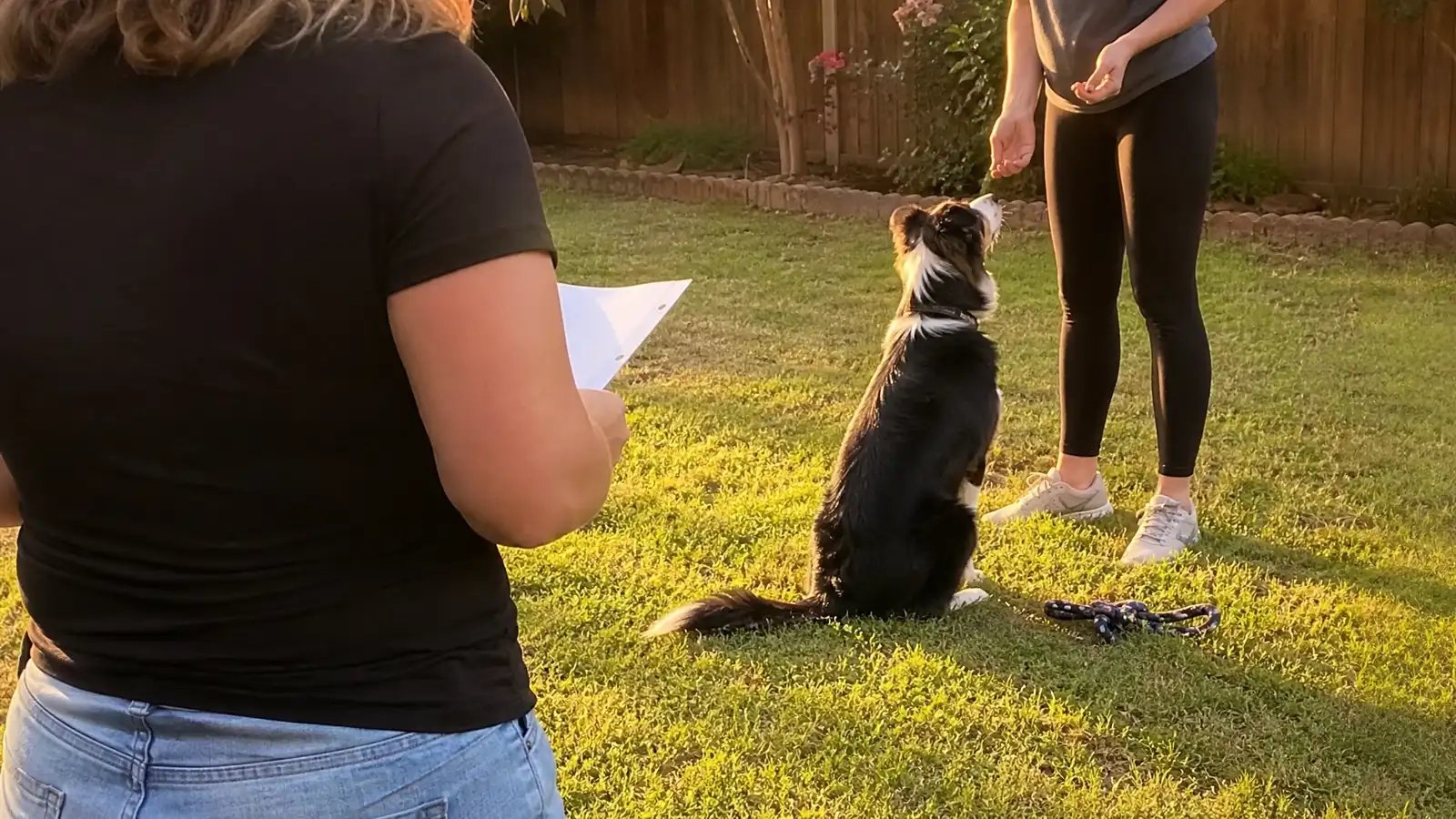
We are trainers, and these are the questions we would ask before hiring anyone, us included. The most useful ones are about methods, what happens when your dog gets it wrong, and what you will be asked to do between sessions. Here is what a good answer sounds like and what should make you pause.
Have your questions ready? Ask us the same ones, then choose in-person or online
- In-person training in Arlington and nearby areas
- Online training anywhere
- Reward-based methods only
What should you ask about training methods?
Ask any trainer, us included, what happens when your dog makes a mistake. The answer shows the whole method, and ours is in the first row below.
| Ask | A good answer sounds like | Pause if you hear |
|---|---|---|
| What happens when my dog gets it wrong? | We reset, make it easier and reward the right choice | Corrections, "fixing" or "showing who is boss" |
| What tools do you use? | Treats, toys, harness or flat collar, long line | Prong, choke or shock collars as the default |
| How do you handle fear or reactivity? | Gradual exposure from a distance where the dog stays calm | Flooding the dog with the trigger |
| How will you coach me? | We show you the skills and timing, and you practice with us | "Leave your dog with us and we will handle it" |
Veterinary behavior groups such as AVSAB and AAHA advise against aversive methods, so it is fair to ask directly. We use rewards and humane tools only. See methods and red flags for more.
What should you ask about credentials and experience?
Ask any trainer, us included, which credentials they hold, who issued them and what experience they have with your dog's specific problem. Then verify with the issuing organization.
- Which organization issued each credential, and is it current?
- How many dogs like mine have you worked with, and what did you change when it did not work?
- Do you carry liability insurance?
- Do you work with a veterinarian if the problem may be medical?
We have not confirmed whether Texas requires a general trainer license, so we do not state that as fact. Ask the trainer and check with the state. Our certifications guide explains the common credentials.
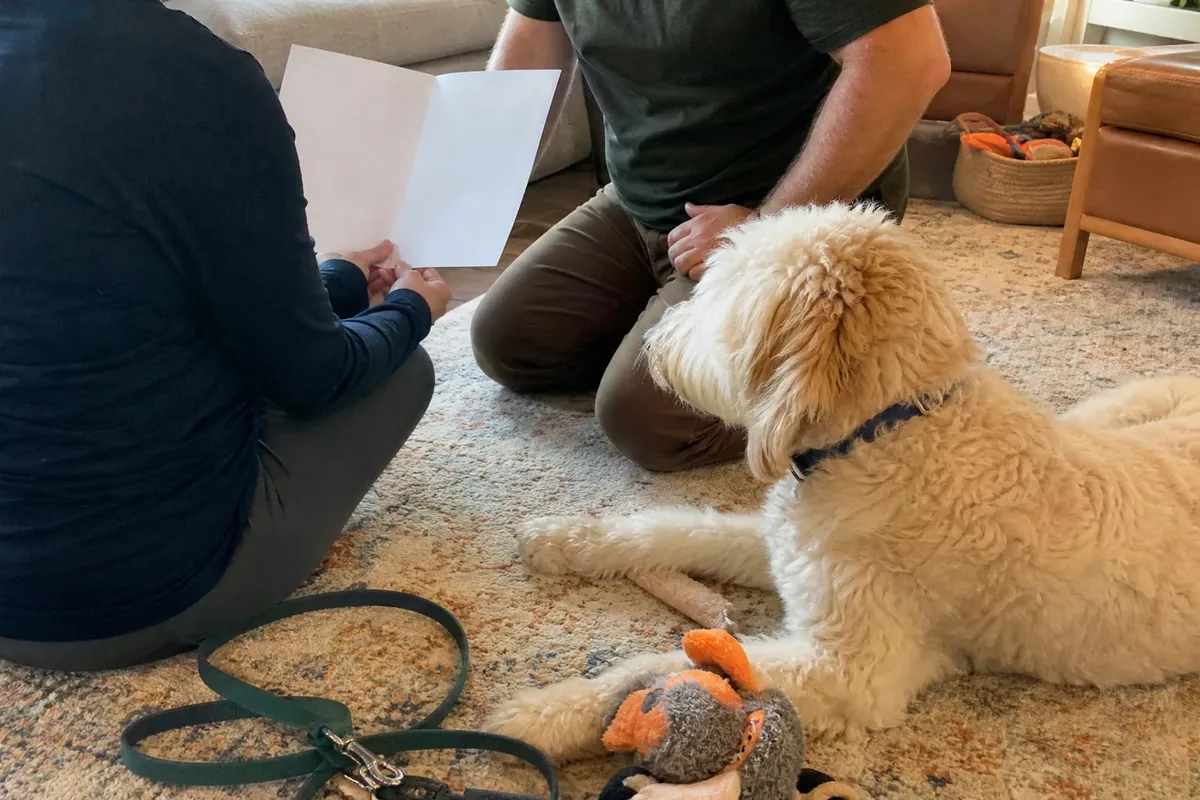
How much should dog training cost, and what should you ask about price?
There is no single price. The local published ranges we reviewed on 2026-11-11 came from only a handful of businesses, and they are not our prices.
| Service | Local published market range | Notes |
|---|---|---|
| Private lessons | $90 to $200 per hour-class | 4 businesses; the high end is derived ($800 for four lessons) |
| Private lesson packages | $500 to $1,500 | 4-lesson and 8-lesson packages; sizes differ |
| Board-and-train | $850 to $5,800 total | 2 businesses; 1 to 4 weeks; indicative only |
| Group classes | Not established | Ask for a written quote |
Ask any trainer what the price includes (evaluation, equipment, follow-up), whether there is a refund policy and what happens if you need extra sessions.
What should you ask about results and the plan for home?
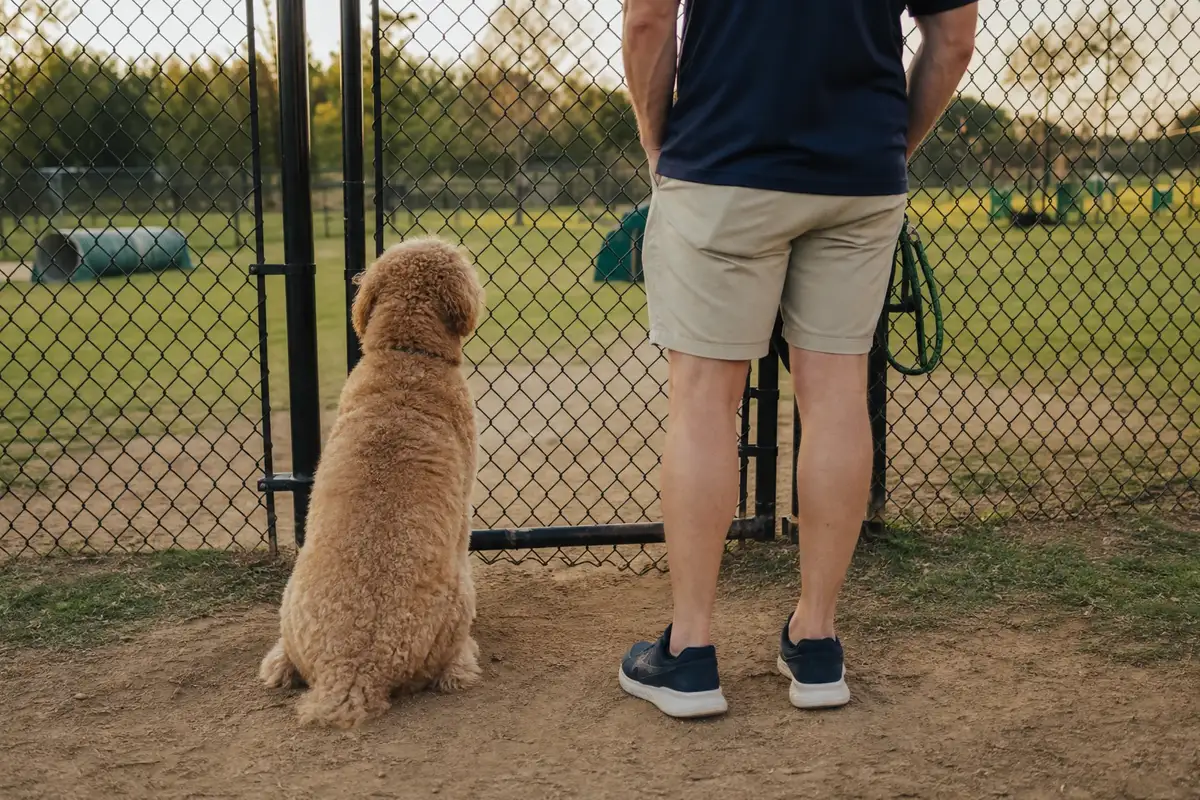
Ask how any trainer, us included, will measure progress, and be wary of promises. Progress depends on the dog and on your consistency, and no honest trainer can promise a specific outcome.
- What will I practice between sessions, and how long will it take each day?
- How will we know it is working, and what is the plan if it is not?
- Will you coach everyone in the household?
- What will you do if my dog seems stressed or unwell?
A common situation Arlington owners face: a renter signs up for a prepaid package after one quick web inquiry, then learns the trainer only works on a schedule that clashes with their job. Asking about scheduling and what is included first avoids it.
What local questions matter in Arlington?
Ask how any trainer, us included, adapts to Arlington summers and to your housing. The city advises morning or evening outings in hot weather and testing pavement with the back of your hand (June 2026), so a trainer who schedules midday outdoor work in July deserves a question.
Audience insight: with about 45% of households renting, per a third-party summary of Census data (last verified 2026-11-11), many owners need quiet indoor practice that will not bother neighbors. The city's barking complaint process begins with neighbors talking, so ask how a trainer handles noise.
Also ask about practice spaces. Rush Creek Dog Park asks owners to keep dogs leashed until inside the double-gated entry, and Tails 'N Trails is a 5.7-acre fenced off-leash area. A good trainer will tell you when your dog is ready for either.
How we train, and what you can ask us
Ask us anything on this page. We use reward-based training, management and prevention, gradual desensitization and counter-conditioning, short consistent sessions, owner coaching and humane tools only.
We will tell you plainly if a problem needs a veterinarian first or if a different kind of help would serve you better.
Bring the same questions to every trainer you consider, and compare the answers side by side. Write down what each one says about methods, tools, session length, what is included in the price and what you will practice at home. Then sleep on it. A trainer who encourages you to take your time and compare is usually more confident in the work than one who pushes a same-day decision.
If you are weighing in-person against online help, our comparison of training types sets out the tradeoffs.
Frequently asked questions
What is the first question I should ask a dog trainer?
Ask what they do when your dog gets something wrong. The answer reveals their method, their tools and how they treat dogs under stress.
Is it normal for a trainer to require an evaluation first?
Some do. One local business we reviewed publishes a one-hour evaluation required before its programs. Ask what it costs and whether it is credited toward training.
Should I worry if a trainer will not explain how a session runs?
Yes, ask why. Owner coaching is central to lasting results, and a trainer who will not explain their methods is a red flag. We explain ours: rewards, humane tools only and a plan you practice at home.
How can I compare prices between trainers?
Compare per-lesson cost, what is included and the total plan. Use the local published market ranges as context and ask each trainer for a written quote.
Do I need a certified trainer?
A credential can help, but it is not enough alone. Ask any trainer, us included, about methods and experience too, and verify credentials with the issuing organization.
Keep reading
- how to choose a dog trainer in ArlingtonRead more →
- methods and red flagsRead more →
- the cost of dog training in ArlingtonRead more →
- private in-home dog training in ArlingtonRead more →
- online dog trainingRead more →
- choose in-person or online trainingRead more →
Sources
- Purdue Canine Welfare Science Center, AVSAB humane dog training position statement (last verified 2026-11-11)
- AAHA 2015 Behavior Management Guidelines, take-home messages (last verified 2026-11-11)
- CCPDT, dog trainer certification (last verified 2026-11-11)
- City of Arlington, Heat Safety Tips for Enjoying Arlington Parks This Summer (June 2026) (last verified 2026-11-11)
- City of Arlington, Barking Dogs Complaint Process (last verified 2026-11-11)
- RentCafe, Arlington TX rental market (third-party summary of Census data) (last verified 2026-11-11)
- City of Arlington, Rush Creek Dog Park (last verified 2026-11-11)
- City of Arlington, Tails 'N Trails Dog Park (last verified 2026-11-11)
- Local trainer price pages used for the published market ranges (see research file for the list) (last verified 2026-11-11)
Have your questions ready? Ask us the same ones, then choose in-person or online
- In-person training in Arlington and nearby areas
- Online training anywhere
- Reward-based methods only