Canine Good Citizen (CGC) is a ten-skill good-manners test for dogs, and it is a common first step toward therapy-dog work. We prepare dogs and owners for both goals, and we are clear about what each does and does not mean. Details last verified 2026-11-11.
Aiming for a CGC test or therapy visits? Tell us about your dog and where you plan to practice.
- In-person training in Arlington and nearby areas
- Online training anywhere
- Reward-based methods only
What is the Canine Good Citizen test?
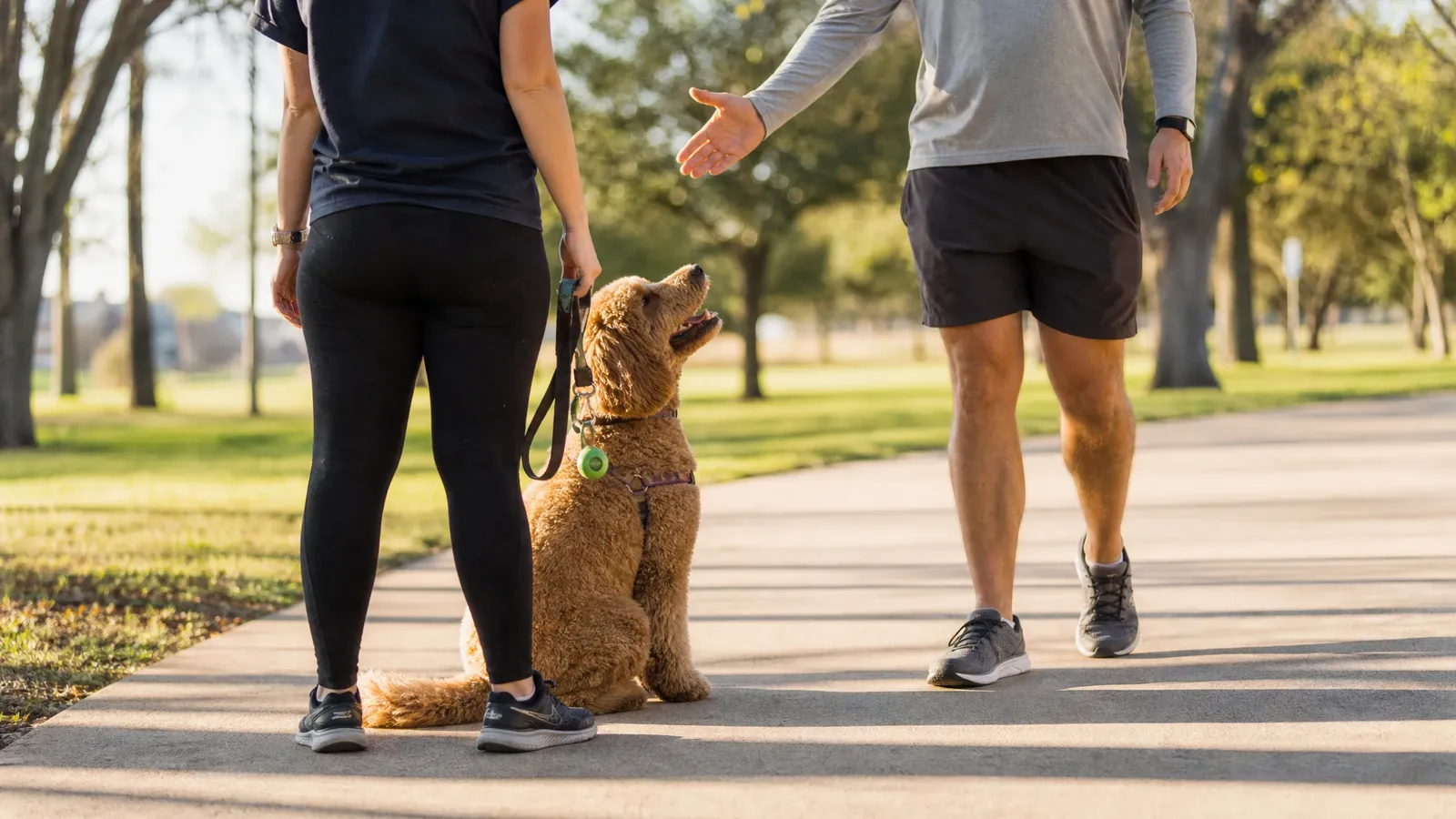
It is a ten-skill program that rewards dogs for good manners at home and in the community. The test is done on leash, and the AKC's test items include accepting a friendly stranger, walking on a loose lead and walking through a crowd. Handlers may praise the dog, but food, treats and toys are not permitted during testing, so dogs need to be practiced without constant rewards.
We use the AKC's published test items as our checklist and send you to the AKC for the current rules and how to find an evaluator.
How do we prepare a dog skill by skill?
We break each item into small steps, teach it with rewards and then fade the rewards, because treats are not allowed in the test itself.
| Skill (AKC test items) | What we practice |
|---|---|
| Accepting a friendly stranger | Calm stand or sit while a stranger greets the handler |
| Out for a walk (loose lead) | Loose-leash walking with turns and stops |
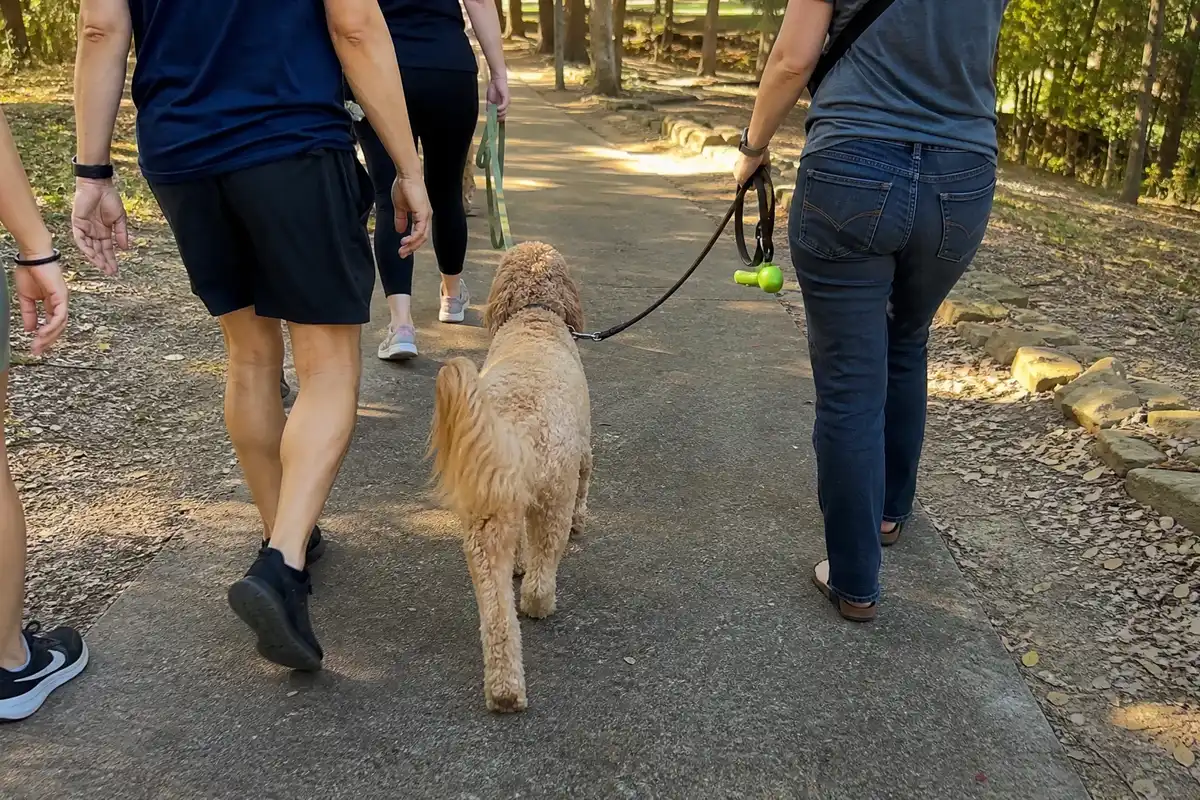
| Walking through a crowd | Passing people at close range without pulling or jumping |
| Supervised separation | Staying calm with a stranger while the handler steps out of sight |
| The other six items | We use the AKC's published list as our checklist; read the exact items on its page |
The AKC lists ten items. Check its page for the exact wording and any updates before test day.
Most dogs need the same ingredients for all ten: a reliable response to their handler, comfort with strangers and other dogs, and the ability to stay calm when something unexpected happens. We work on those foundations first and the individual items second. A dog that is calm and focused tends to pass the individual items almost as a side effect.
Plan for a rehearsal or two before test day. We simulate the test layout in a quiet space, then in a busier one, with a helper playing the friendly stranger and another dog and handler passing at a distance. Practicing without food in hand for the final run-throughs, as the test requires, is often the biggest adjustment for owners.
What is the difference between CGC, therapy dogs and service dogs?
CGC is a test. Therapy work is a volunteer role where a handler and dog visit people in settings such as hospitals or schools, and each organization sets its own requirements. A service dog is something else under the ADA: a dog individually trained to do work or perform tasks for a person with a disability. Staff in public places may ask whether the dog is a service animal required because of a disability and what task it performs, and they may not require documentation. A CGC or therapy credential does not make a dog a service animal.
If you are interested in therapy work, check each organization's own requirements and age rules first. We prepare the manners; we do not issue credentials.
What does preparation look like around Arlington?
A common situation Arlington owners face: a well-behaved dog at home that gets excited when a crowd walks by. The skills the test measures, such as walking through a crowd and reacting calmly to another dog, are hard to practice in a living room. UT Arlington reported fall 2024 enrollment of 41,613 on a 420-acre campus at the southern edge of downtown (Wikipedia, a secondary source), so people-heavy outings are a feature of daily life in the area, and we use busy-but-manageable places to build calm.
Practice spots we plan around include Veterans Park (city lists a 1.44-mile hike/bike trail) for passing walkers and cyclists, and Doggie Depot downtown for calm entry to a dog space. The city tells visitors to look up park-specific rules about pets before going, and neither park page says what its pet rules are, so check posted signs. Summer heat matters too: the city advises morning or evening outings and a five-second hand test on pavement.

How we train for CGC and therapy readiness
Reward-based, gradual and short. We add real-life noise, crowds and handling slowly, using gradual desensitization and counter-conditioning for anything the dog finds scary.
- Teach each item with rewards, then fade food as the test requires
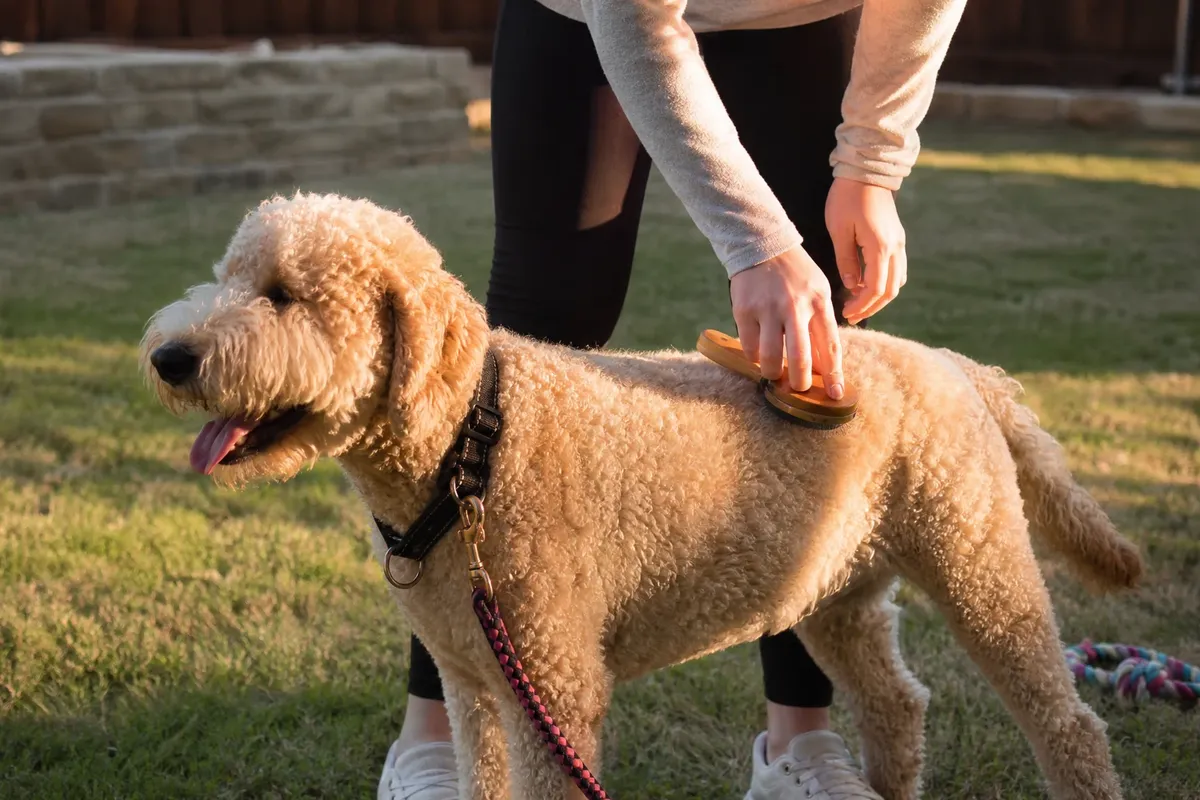
- Practice handling and grooming in tiny steps, so touch becomes comfortable
- Build in realistic distractions such as dropped items, carts and passers-by
- Coach the owner on calm body language, because dogs read the handler
- Humane tools only
Who is CGC or therapy prep not for?
It is not a good fit for dogs that are fearful, reactive or uncomfortable with strangers, because forcing a dog into those situations can set it back. Therapy work in particular should only be a goal for dogs that genuinely enjoy meeting people. Not every good dog wants this job, and that is fine. We would rather tell you that after the first evaluation than after months of practice.
It is also not the right goal for a very young puppy; focus on socialization and basic manners first and revisit CGC when the dog is mature enough to focus for several minutes at a time.
Frequently asked questions
Can any dog take the CGC test?
Check the AKC's page for current requirements and how the test is run. We prepare dogs that are comfortable around strangers and other dogs.
How long does CGC prep take?
It depends on the dog and your practice. Dogs with solid basics move faster; dogs that need to build comfort around people or dogs need more time.
Will CGC make my dog a therapy dog?
No. CGC is a test, and therapy organizations set their own requirements. Many ask for CGC or similar skills as a starting point.
Can CGC make my dog a service dog?
No. Under the ADA a service dog is individually trained to do work or perform tasks for a person with a disability, and online certificates convey no ADA rights.
Keep reading
- Basic obedience firstRead more →
- Advanced obedienceRead more →
- Service dog and ESA basics in TexasRead more →
- Private in-home dog trainingRead more →
- Online dog trainingRead more →
- Apply for CGC prepRead more →
Sources
- AKC, Canine Good Citizen test items (last verified 2026-11-11)
- ADA.gov, Frequently Asked Questions about Service Animals and the ADA (last verified 2026-11-11)
- Wikipedia, University of Texas at Arlington (secondary source) (last verified 2026-11-11)
- City of Arlington Park Finder, Veterans Park (last verified 2026-11-11)
- City of Arlington news, Doggie Depot grand opening (March 2025) (last verified 2026-11-11)
- City of Arlington, How To Responsibly Enjoy Arlington Parks This Summer (June 2025) (last verified 2026-11-11)
- City of Arlington, Heat Safety Tips for Enjoying Arlington Parks This Summer (June 2026) (last verified 2026-11-11)
- AVSAB Humane Dog Training Position Statement (Purdue Canine Welfare Science Center) (last verified 2026-11-11)
Aiming for a CGC test or therapy visits? Tell us about your dog and where you plan to practice.
- In-person training in Arlington and nearby areas
- Online training anywhere
- Reward-based methods only