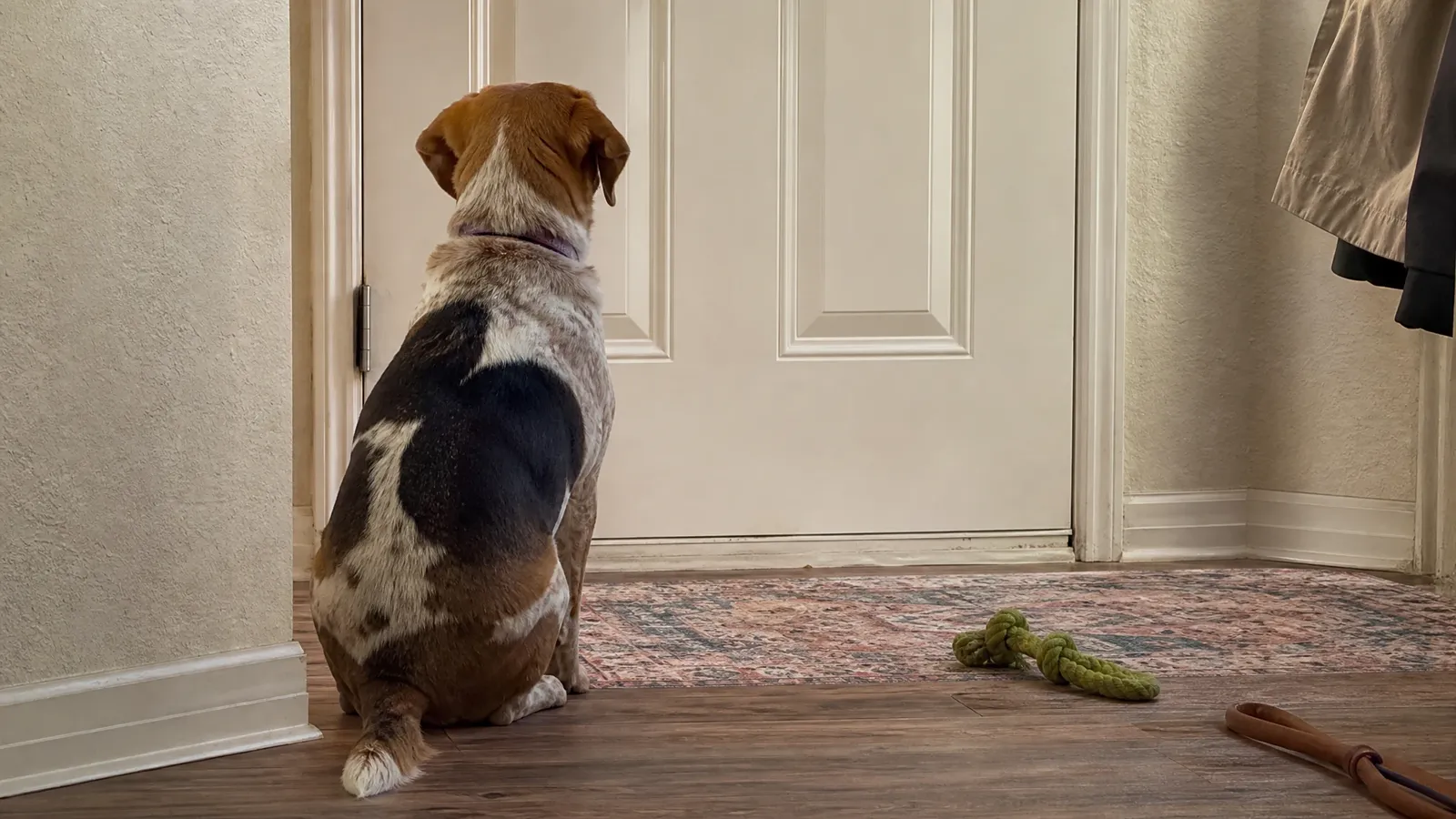
Separation anxiety is a panic response to being alone, not spite, and it improves with a slow, step-by-step plan that keeps your dog under its stress limit. We coach Arlington owners through that plan, including apartment dwellers worried about noise complaints and students whose schedules keep changing.
Tell us what happens when you leave, whether you live Downtown or near UT Arlington
- In-person training in Arlington and nearby areas
- Online training anywhere
- Reward-based methods only
Is it separation anxiety or just boredom or a puppy habit?
Look at when the behavior starts and how intense it is. Separation anxiety usually begins within minutes of your leaving, and the dog shows real panic. Boredom or lack of exercise tends to look calmer and happens at any time of day.
| Sign | More likely anxiety | More likely boredom or habit |
|---|---|---|
| Timing | Starts as you prepare to leave or right after | Builds later or while you are home |
| Body | Drooling, panting, trembling, refusing food | Relaxed, chews or digs, still eats |
| Damage | Doors, windows, crate bars | Shoes, pillows, trash |
| Greeting | Frantic and long-lasting | Happy but settles quickly |
| Following | Shadows you room to room | Mixed |
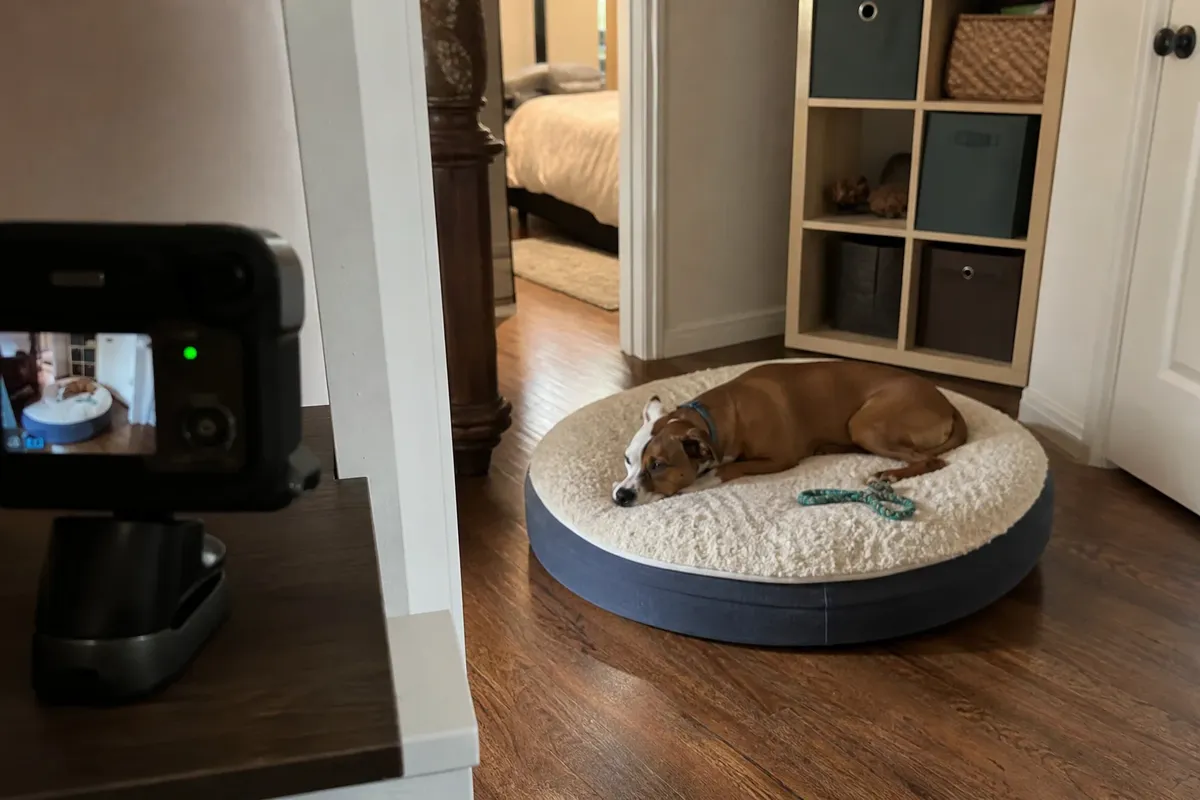
Not sure? Set up a camera to record for a short absence and share it in your application. A video tells us more than a description does.
What should I do right now while we plan?
Reduce the number of times your dog panics, because every panic episode rehearses the response. If you can, do not leave the dog alone beyond its limit until you have a plan.
- Find your dog's current limit, for example 30 seconds, and stay inside it.
- Arrange coverage with a family member, friend or a sitter for the rest of the day.
- Exercise and feed before you leave, and keep departures and returns low-key.
- Do not punish messes or noise. It adds stress.
- Check with your vet, especially for new onset in an older dog.
A dog that scratches at doors or windows can injure itself. A 24-hour clinic like I-20 Animal Medical Center in Arlington lists emergency care around the clock if a dog is hurt; confirm hours before you travel.
What does separation anxiety look like for Arlington dogs and owners?
Last verified 2026-11-11. Here is a common situation Arlington owners face: a dog adopted during a work-from-home stretch is suddenly alone eight hours a day, in an apartment with shared walls. The dog howls, a neighbor writes a complaint, and the owner feels trapped between work and their pet.
The city's Barking Dogs Complaint Process recommends neighbors try open communication first and then, if that fails, file a notarized affidavit with Animal Services listing dates, times and duration of the noise. That makes a proactive plan more important in shared buildings, and a short note to neighbors about your training plan can help. Third-party figures from RentCafe, citing Census data, put the share of renter households in Arlington around 45% (RentCafe Arlington summary), and the 2020 Census count is similar (Wikipedia summary of 2020 Census), so many Arlington dogs live close to neighbors.
Student households near the University of Texas at Arlington, a large campus at the southern edge of downtown (Wikipedia, UT Arlington), may see big schedule swings between semester, break and finals. Dogs who are used to a student's constant presence can struggle when routines change, so we build a gradual plan before the schedule shifts.
If your dog panics, bolts easily or has been lost before, update its microchip contact details. The city urges microchips and current registry information, because the July 4 period is historically when more pets go missing than at any other time (City of Arlington, Independence Day pet safety).
How we train separation anxiety
The plan is built around your dog's actual limit, not a one-size schedule. The AVSAB position says reward-based methods are recommended for all training (AVSAB statement via Purdue), and punishment has no place with a panicking dog.
- Baseline. We measure how long your dog can be alone calmly, using video.
- Tiny steps. Short absences at or below the limit, increased gradually, with calm returns.
- Counter-conditioning. Leaving cues like keys and shoes become neutral through repetition.
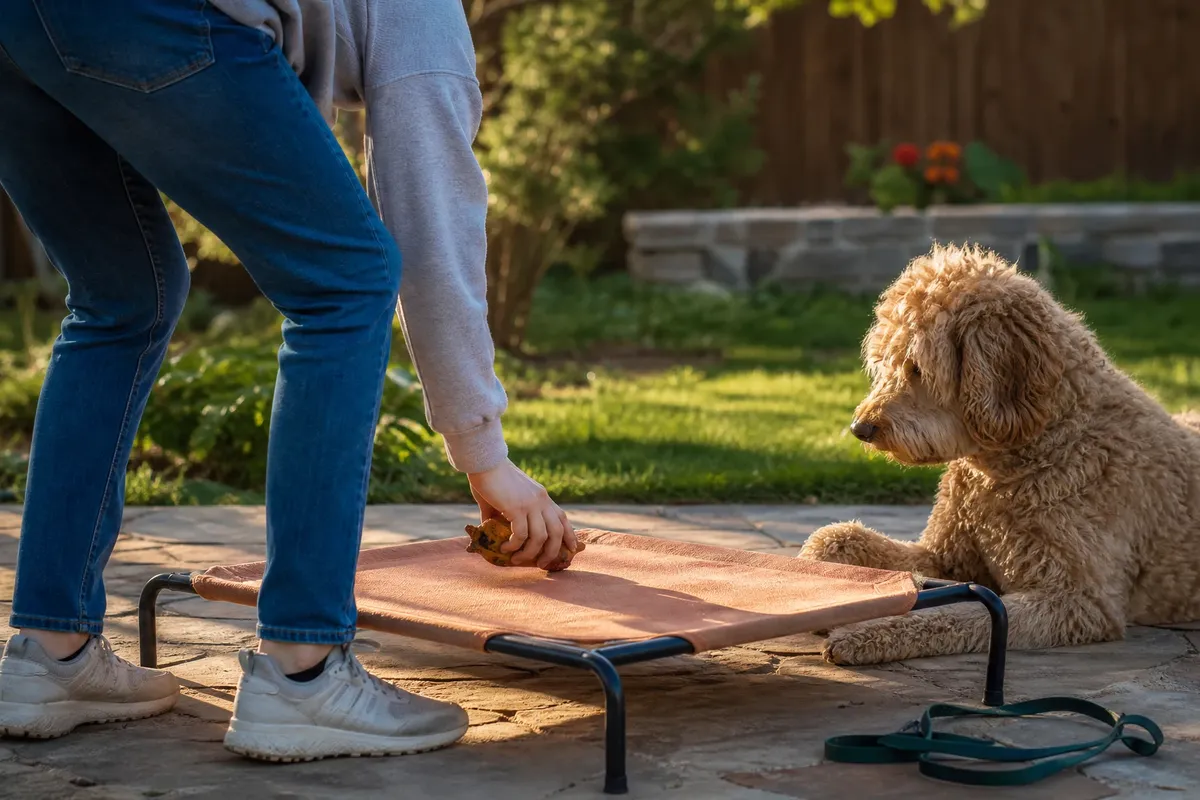
- Independence skills. Settle on a mat, chew toys and time in a safe space, practiced while you are home.
- Schedule support. A daily plan that fits your work, so your dog is not pushed past its limit.
- Owner coaching. You practice timing and learn when to repeat a step and when to move ahead.
We work with your veterinarian when medication might help. We do not promise a date for a calm dog alone, since that depends on the dog and your consistency.
Expect the early sessions to feel slow. We may ask you to practice leaving for only a few seconds, or to open and close the door without leaving at all. That is deliberate: the plan only works if your dog stays calm at each step, and moving too fast is the most common reason progress stalls.
Is in-person or online training better for separation anxiety?
Both work, and video makes online coaching practical here, because the dog needs to be recorded while alone. In-person helps with the first assessment, the home setup and your handling of departures. See in-person private training and online dog training, then apply and share your dog's history.
Frequently asked questions
Will a crate fix separation anxiety?
Not by itself. Some anxious dogs panic harder in a crate and can hurt themselves. We check how your dog handles confinement before we recommend one.
Should I get a second dog to keep mine company?
Usually it does not solve the problem, because the dog is anxious about being apart from you. It can also add cost and workload, so try a training plan first.
Can I leave my dog at daycare instead?
Daycare can cover time while you train, but check requirements first. For example, PetSmart's published day camp rules list vaccine and age requirements. Daycare does not teach your dog to be comfortable alone, so keep the training plan going at home.
How long until my dog can stay home alone?
It depends on the dog, the severity and how consistently you follow the plan. Some dogs improve in weeks and others take months, and setbacks are normal.
Do you recommend medication?
That is a decision for your veterinarian. For some dogs medication can lower panic enough to let training work, and we are happy to coordinate.
Keep reading
- Excessive barking training in ArlingtonRead more →
- Potty and crate training in ArlingtonRead more →
- Apartment dog training in ArlingtonRead more →
- In-person private dog training in ArlingtonRead more →
- Online dog training with video coachingRead more →
- Apply for trainingRead more →
Sources
- City of Arlington, Barking Dogs Complaint Process (last verified 2026-11-11)
- RentCafe, Arlington TX rental market (third-party summary of Census data) (last verified 2026-11-11)
- Wikipedia, Arlington, Texas (2020 census; secondary summary) (last verified 2026-11-11)
- Wikipedia, UT Arlington (secondary) (last verified 2026-11-11)
- City of Arlington, Prioritize Pet Safety During Independence Day Celebrations (June 2026) (last verified 2026-11-11)
- I-20 Animal Medical Center (last verified 2026-11-11)
- AVSAB humane dog training position (via Purdue Canine Welfare Science Center) (last verified 2026-11-11)
- PetSmart, Doggie Day Camp requirements (last verified 2026-11-11)
Tell us what happens when you leave, whether you live Downtown or near UT Arlington
- In-person training in Arlington and nearby areas
- Online training anywhere
- Reward-based methods only