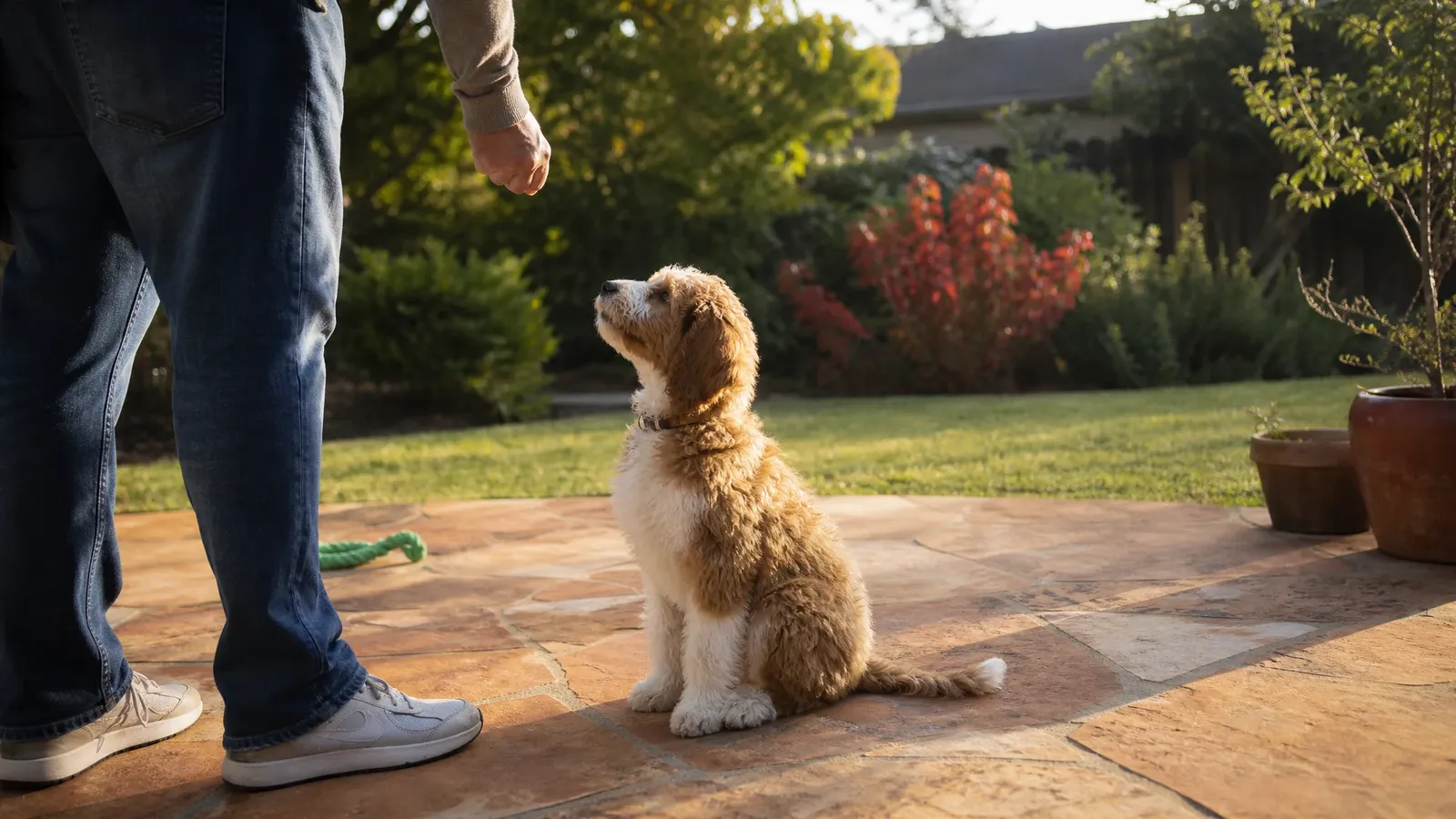
Puppy training works best when it starts the week your puppy comes home, with short reward-based sessions on potty routine, name response, handling and leash basics. This page was last verified on 2026-11-11 and covers what we teach, how a plan unfolds and Arlington details that affect puppies.
Bringing a puppy home? Tell us about the first walks near your Arlington apartment or yard
- In-person training in Arlington and nearby areas
- Online training anywhere
- Reward-based methods only
What does puppy training cover?
It covers the skills that make daily life easy: where to potty, how to settle in a crate or pen, how to take treats gently, how to walk on a leash and what to do instead of nipping. The foundation is the same for every puppy, but the order depends on your home and your puppy.
| Skill | What we teach | Practice at home |
|---|---|---|
| Potty routine | Regular trips out, a reward for going in the right place | Take your puppy out after sleeping, eating and play |
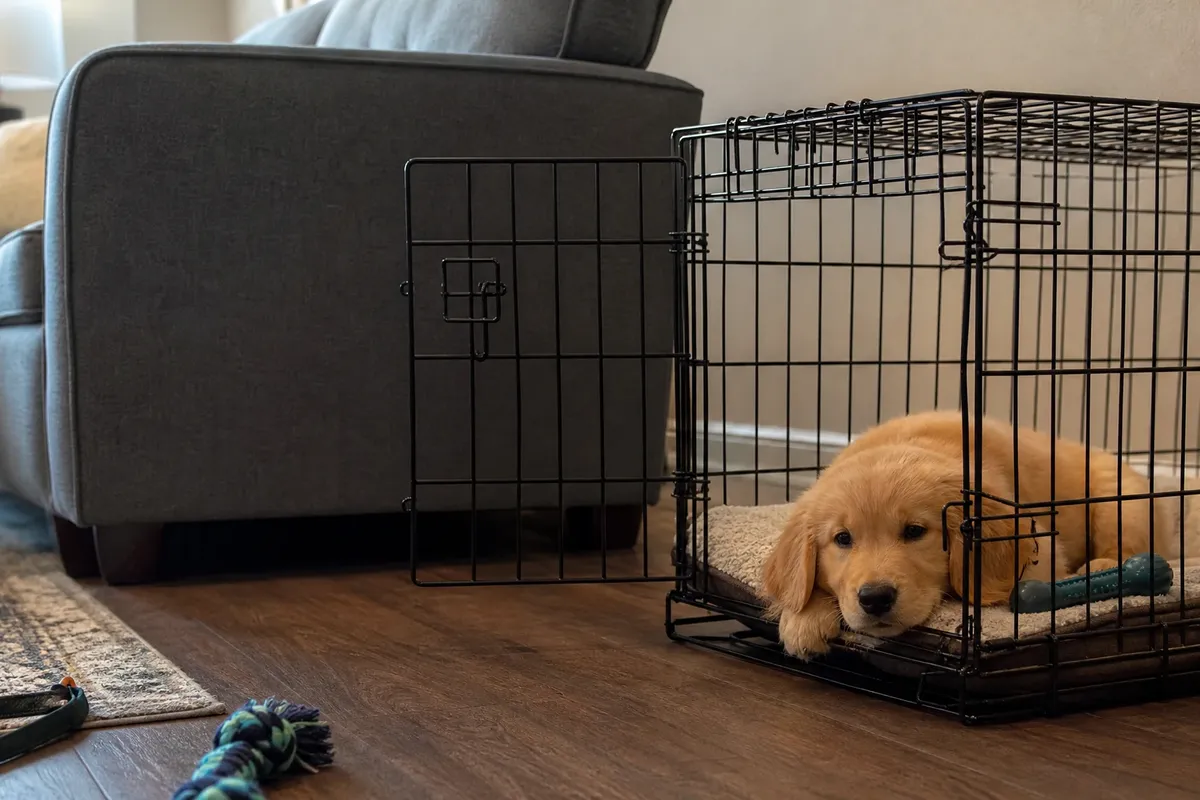
| Crate or pen comfort | A calm, positive place to rest | Short stays with a chew; build up slowly |
| Name and attention | Looking at you when called | Several short rounds a day |
| Sit and settle | Lure and reward, then a calm "settle" on a mat | Reward calm behavior unprompted |
| Gentle mouth | Redirect to toys; reward soft mouths | Keep chews handy; end play when teeth get hard |
| Handling | Touching paws, ears and collar with a treat | A few seconds a day |
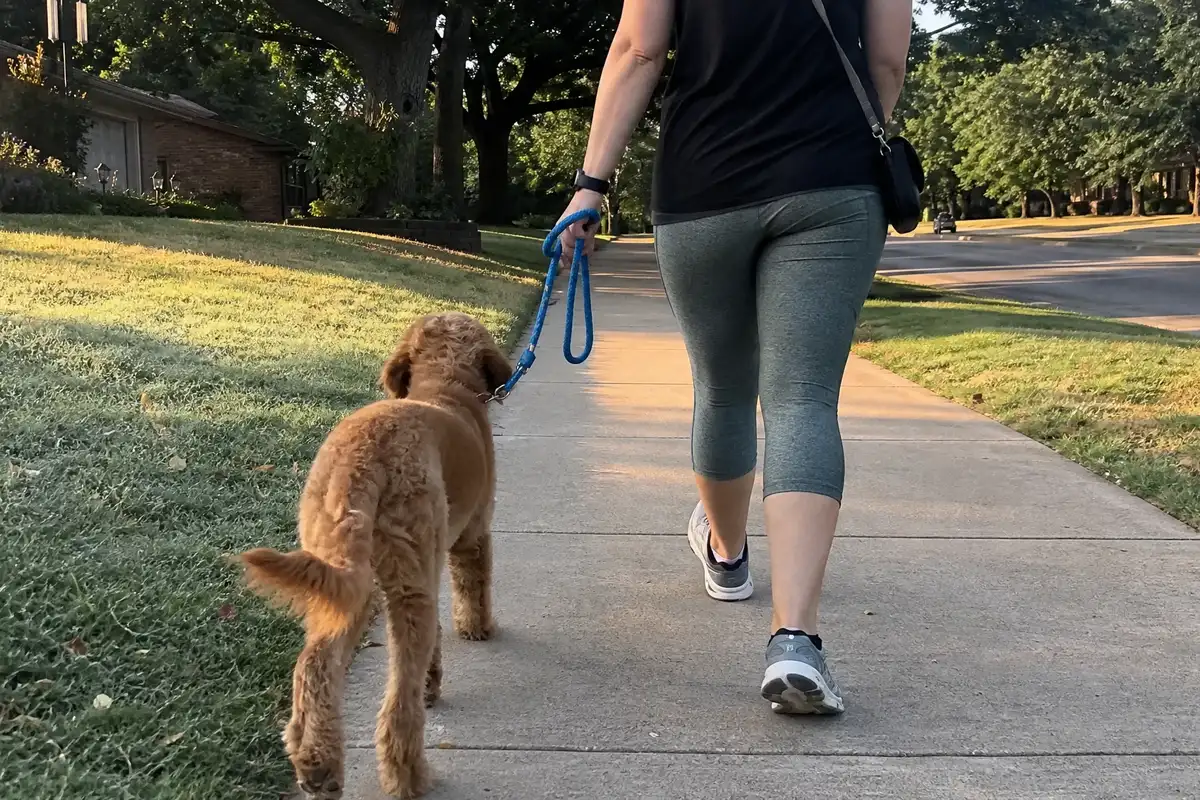
| Leash basics | Walking beside you, loose leash | A hallway or yard before the sidewalk |
For biting in particular, see puppy biting. For potty and crate details, see potty and crate training.
How does a puppy training plan unfold, session by session?
We move from the simple and calm to the busy and distracting, one step at a time. The plan below is an example; we adjust it to your puppy and to your answers on the application.
- Session 1: the first-week setup. Routine, potty plan, crate or pen, name game and a first look at your puppy's mouthing and energy.
- Session 2: manners and handling. Sit, settle and gentle-mouth games, plus practice with collar and paw touches.
- Session 3: leash basics. Loose-leash walking indoors, then outside the door, then the block.
- Session 4: real-life practice. Doorbell, visitors, sidewalk sounds and other realistic distractions, kept at a level your puppy can handle.
- Later sessions: recall games, longer waits, polite greetings and troubleshooting what has come up.
How fast a puppy progresses depends on the puppy and on how consistent you are. Some puppies pick up a skill in days and some need weeks, and that is normal.
How do we train a puppy?
We reward what we want, manage the environment and keep sessions short and fun. A puppy cannot learn from a rule it cannot understand, so we make the right choice easy and rewarding and prevent chances to practice the wrong one.
That means gates, pens and leashes so your puppy cannot rehearse chewing the couch, plus food, play and praise for everything you do want. If your puppy seems nervous about a person, a noise or a surface, we use gradual desensitization and counter-conditioning: we start far enough away that your puppy stays relaxed, and we pair the trigger with something wonderful. We coach you through every step because you are the one who will be there at 6 a.m. We use humane tools only, with no pain, fear or intimidation.
What should Arlington puppy owners know about local conditions?
Heat, wildlife and vaccine timing shape the first months. Arlington summers are hot: DFW averages 20.2 days a year at or above 100F, and the nearest official station is DFW rather than Arlington. The city advises testing the pavement with the back of your hand and scheduling outdoor time for morning or evening, which matters even more for small paws and small bodies.
The city also advises watching small pets closely in backyards, especially from dusk to dawn, and keeping dogs on a leash during walks. That is worth building into your puppy's potty routine, with a leash and a light for late-night trips, rather than letting a puppy roam the yard alone.
On vaccines, the city lists TCAP as a community partner offering low-cost sterilization and, on published walk-in days, low-cost vaccines, microchips and nail trims; check the city page for the current schedule and prices. Your own vet decides which vaccines your puppy needs and what is safe before they are done. Last verified 2026-11-11.
A common situation Arlington owners face: a new puppy in a second-floor apartment where every potty trip means stairs, a hot lot or a wet lawn after a storm. Plan the route, carry the puppy down at first, use a consistent spot and reward right away. About 46% of occupied housing units in Arlington were renter-occupied in the 2020 census (a secondary summary), so many puppies are raised in small homes with close neighbors, and calm settling matters as much as sit.
Is puppy training right for your puppy, and who is it not for?
It suits puppies from the first week at home until they are well into adolescence, and owners who can practice a few minutes several times a day. Pick the format that matches you: private in-home training works in your own space, and online training suits owners who like video coaching.
It is not a substitute for vet care. If your puppy has sudden changes in appetite, energy or toilet habits, see your vet first. If you are choosing between a class and private help, read puppy classes vs private lessons. For exposure to people, places and sounds, see puppy socialization.
Frequently asked questions
When should I start training my puppy?
Start the day your puppy comes home with potty routine, handling and short reward games. Veterinary behavior experts say socialization can begin as early as 7 to 8 weeks, with your vet advising on what is safe before vaccines are complete.
How long are puppy training sessions?
Short. A few minutes at a time, several times a day, works better than one long session. Puppies tire quickly, so we stop while they are still succeeding.
Can puppy training be done online?
Yes, for many puppies. Online coaching suits potty routine, manners and handling when the owner practices consistently. Some problems benefit from in-person help, and a trainer can tell you which after reviewing your application.
How fast will my puppy learn?
It depends on the puppy and on how consistent you are at home. Some skills come in days and others take weeks. We do not promise timelines.
Keep reading
- Apply for puppy trainingRead more →
- private in-home puppy trainingRead more →
- online puppy trainingRead more →
- puppy socialization in ArlingtonRead more →
- puppy biting helpRead more →
- potty and crate trainingRead more →
Sources
- dvm360, AVSAB position: puppy socialization should start before vaccinations are complete (last verified 2026-11-11)
- Purdue Canine Welfare Science Center, AVSAB Puppy Socialization Position Statement (last verified 2026-11-11)
- City of Arlington, Heat Safety Tips for Enjoying Arlington Parks This Summer (June 2026) (last verified 2026-11-11)
- NWS Fort Worth, DFW annual normals and first/last 100F dates (last verified 2026-11-11)
- City of Arlington, Coexisting Safely with Arlington's Urban Wildlife (September 2026) (last verified 2026-11-11)
- City of Arlington, Low-Cost Vet Services (TCAP) (last verified 2026-11-11)
- Wikipedia, Arlington, Texas (2020 census; secondary summary) (last verified 2026-11-11)
Bringing a puppy home? Tell us about the first walks near your Arlington apartment or yard
- In-person training in Arlington and nearby areas
- Online training anywhere
- Reward-based methods only