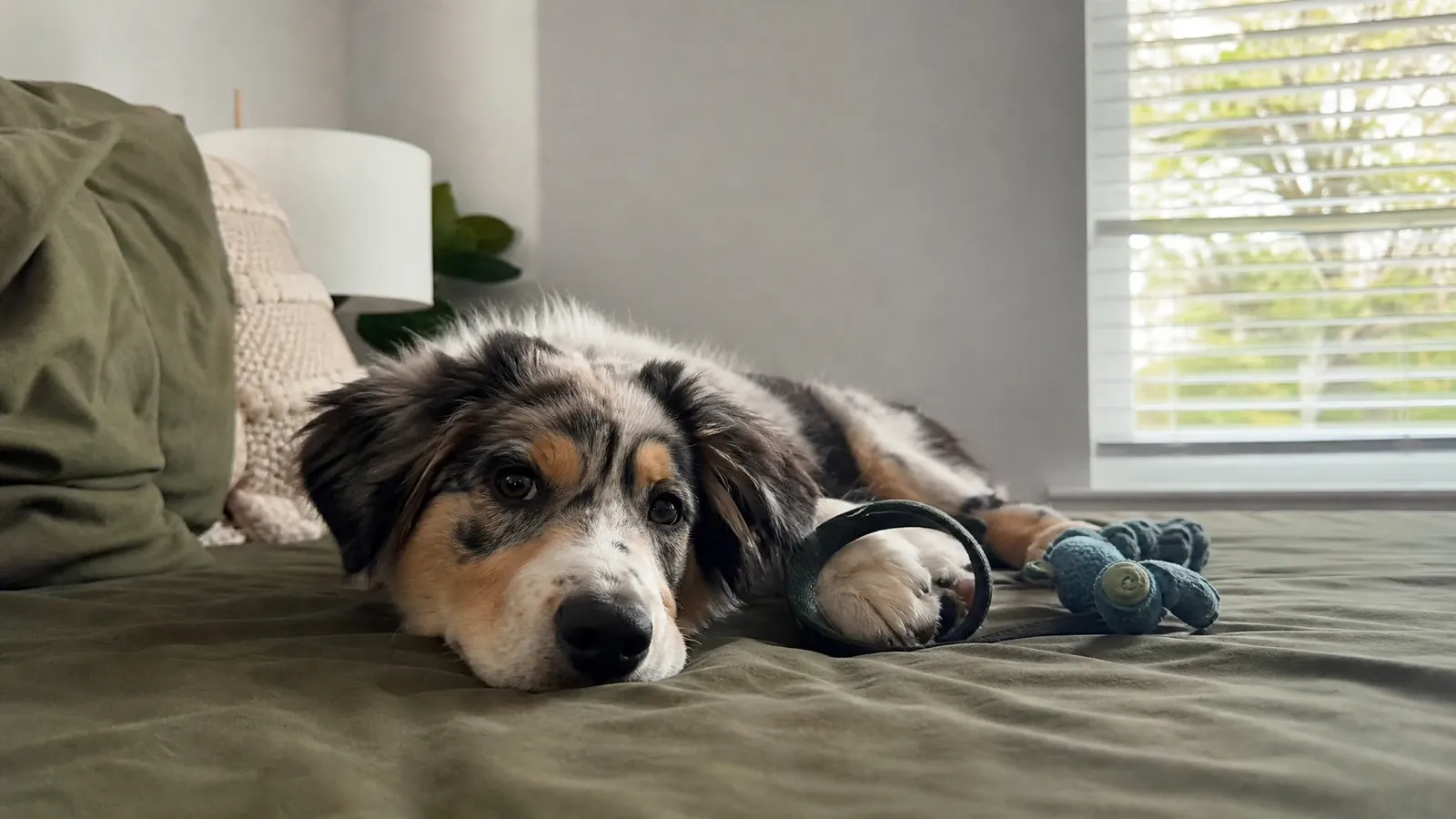
For the first 30 days, keep life calm and predictable, teach a few small skills with rewards, and add new places slowly. This plan is a general framework for Arlington owners, and how fast your dog moves through it depends on the dog and on your consistency.
Bringing a new dog home? Tell us about them, and how soon you will visit Tails ’N Trails
- In-person training in Arlington and nearby areas
- Online training anywhere
- Reward-based methods only
What should the first 30 days look like?
Think of it as four stages: settle, teach, stretch, review. Every dog is different, so treat the weeks as a guide, not a deadline.
| Week | Focus | Daily practice | Arlington note |
|---|---|---|---|
| 1 | Settle in and build routine | Set meal, potty and rest times; a quiet space; hand-feed some meals | Book a vet visit; confirm rabies status and license (the city requires proof of current rabies vaccination) |
| 2 | Name, sit, hand targets, loose-leash basics indoors | 3 to 5 short sessions of a few minutes | Practice in the hallway or yard; apartment noise starts to matter |
| 3 | Short outings and mild distractions | Short walks on a harness and leash; rewards for looking at you | Walk in the morning or evening in summer; test pavement with the back of your hand |
| 4 | Longer duration and new places; review | Practice settling at a patio or on a mat; plan next skills | Visit a fenced park only if your dog is ready, at a quiet time |
How do you set up the first week at home?
Keep it boring on purpose. A new dog is learning your home, your routine and you, and extra visitors, outings and play dates can pile on stress.
- One safe space with a bed or crate and water, away from foot traffic.
- A set schedule for meals, potty trips and rest, which makes house training easier.
- Leashed potty trips until you know whether your dog will bolt. The city says July 4 is when more pets go missing than any other time, and it urges microchips with current contact details.
- A vet visit and a check of license and rabies paperwork. Arlington requires a license with proof of current rabies vaccination; check the city's current fee schedule for the fee.
A common situation Arlington owners face: someone brings home a dog from the city Animal Services Center. Per the city page, adoption includes spay or neuter, a city license for Arlington residents, a microchip and core vaccines (last verified 2026-11-11). The paperwork is handled, but the dog's first quiet weeks are still on you.
What skills should you teach first?
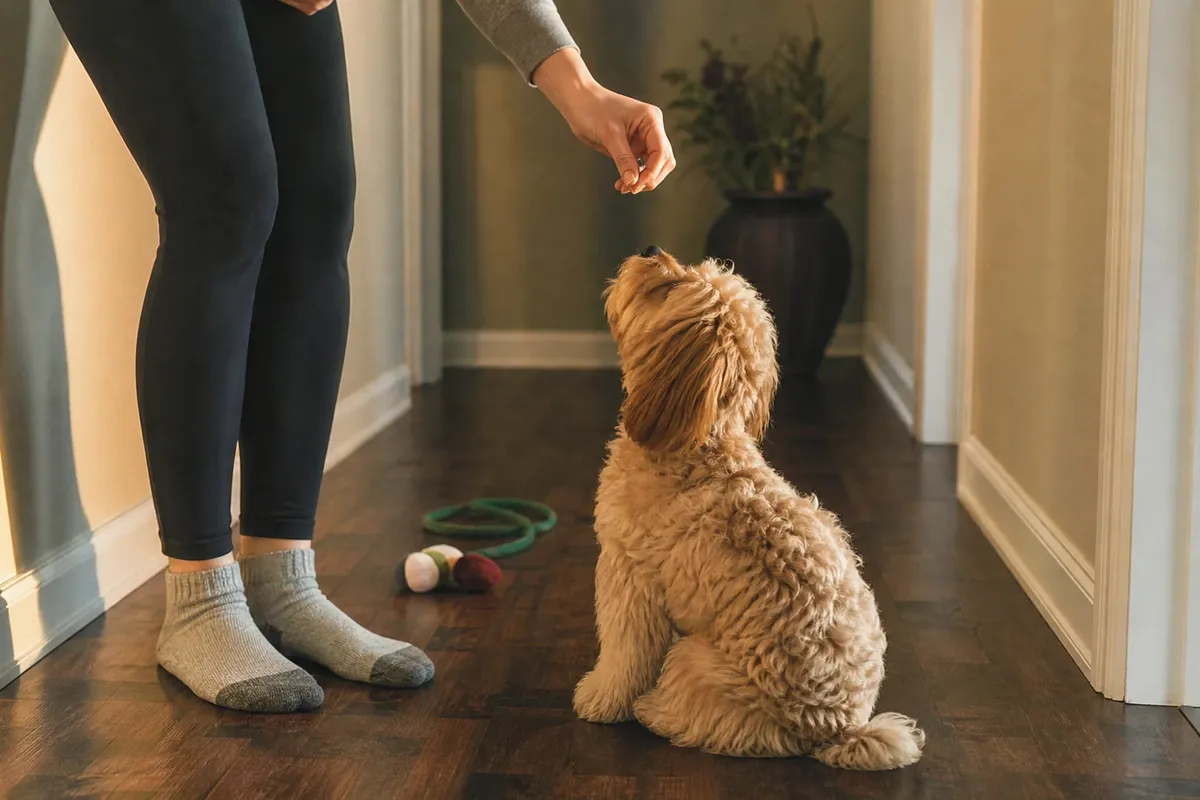
Start with the ones that make daily life easier and are easy to reward. We suggest this order, and a few minutes a day beats an hour once a week.
- Name response: say the name, reward a glance.
- Sit and down for food or attention, rewarded each time.
- Settling on a mat for a few minutes with a chew.
- Loose-leash walking indoors, then in a yard or hallway.
- Come when called, practiced indoors on a long line first.
- Handling: touching paws and collar gently, followed by treats.
These steps form the base of basic obedience, and the same approach carries into potty and crate training.
How do heat, wildlife and parks change the plan in Arlington?
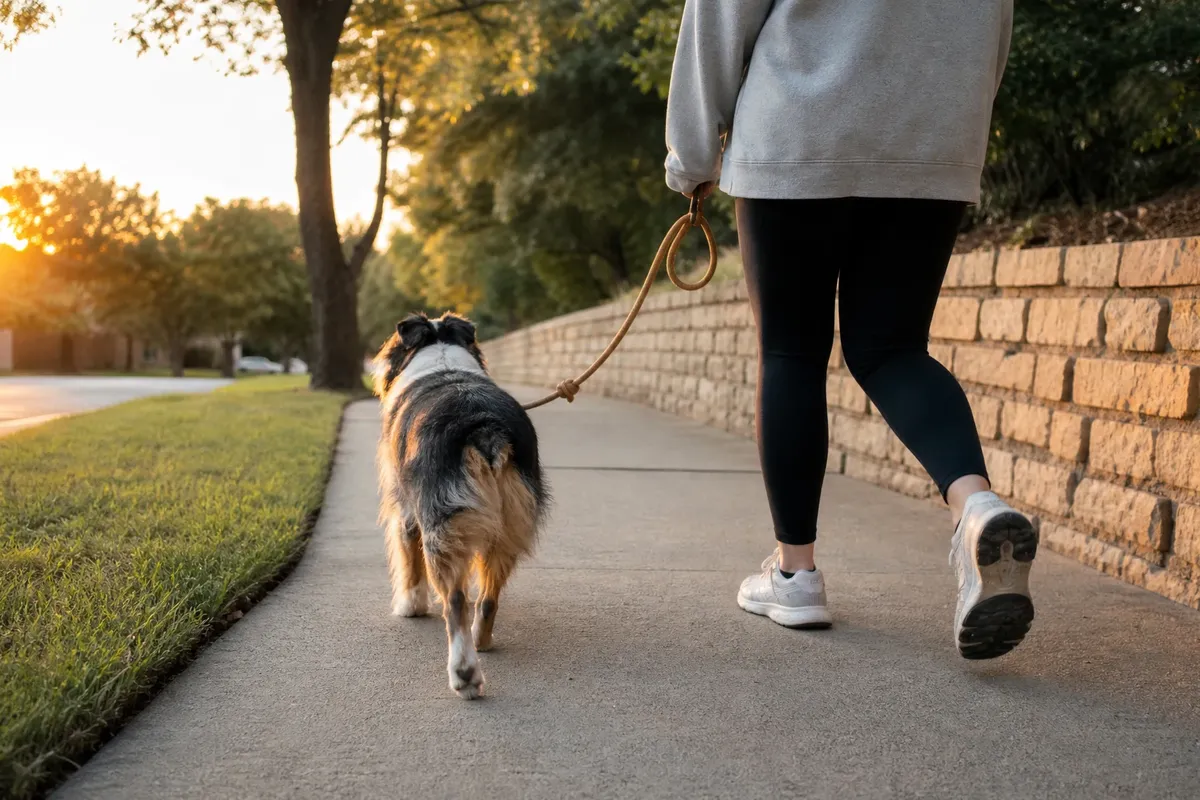
They change the timing and the order. The city advises outdoor activity in the morning or evening, and NWS normals show DFW averaging 20.2 days a year at or above 100F, so summer afternoons are for indoor practice.
The same city guidance says to keep dogs leashed on walks, and to watch small pets in backyards between dusk and dawn, when nocturnal wildlife is most active. Late-evening potty trips should be leashed and supervised.
Dog parks come later. Rush Creek Dog Park asks owners to keep dogs leashed until inside the double-gated entry, and Tails 'N Trails is a 5.7-acre fenced off-leash area. Both close one morning a week for maintenance, so check the city page. A new dog may be stressed by other dogs, so watch from outside the fence first and go only when your dog stays relaxed.
Audience insight: with about 45% of Arlington households renting, per a third-party summary of Census data, a lot of the first 30 days happens in shared buildings, so practice quiet routines and hallway manners early.
How we train
We use reward-based training, management and prevention, gradual desensitization and counter-conditioning, short consistent sessions, owner coaching and humane tools only. For a new dog, that means we slow everything down, pay for calm and small wins, and build confidence before asking for more.
If your dog shows fear, guarding or aggression in the first weeks, it is not a sign you failed. It is information. Tell us early, and see rescue and shelter dog training or aggression for how we approach it.
When should you get help during the first 30 days?
Get help sooner if something worries you; you do not need to wait out the month. Reach out if your dog is not eating, shows sudden changes, bites or snaps, or is destructive or panicking when left alone.
- Medical first. A vet should see sudden changes, since pain and illness affect behavior. If it is an emergency, one Arlington-based 24-hour option is I-20 Animal Medical Center, which says emergencies are welcome anytime.
- Behavior help. Apply for private in-home training or online training.
Frequently asked questions
Is 30 days enough to train a dog?
It is enough to build a routine and a handful of basic skills, but not to finish. How much progress you see depends on the dog and on how consistently you practice.
When can I take a new dog to a dog park?
When your dog is relaxed around other dogs from a distance, fully vaccinated according to your vet, and you know the park's rules. Many owners wait beyond the first month.
What if my new dog seems shut down?
That is common. Keep life calm and predictable, avoid pushing, and reward small steps. If it continues or worsens, talk to your vet and a trainer.
Should I license my dog right away?
Arlington requires annual licensing with proof of current rabies vaccination. City adoption includes a license for Arlington residents; otherwise check the current fee schedule and portal.
Do I need a trainer in the first 30 days?
Not always. Many owners manage with a plan like this one. If you see fear, aggression or constant barking, coaching sooner helps.
Keep reading
- puppy training in ArlingtonRead more →
- rescue and shelter dog trainingRead more →
- potty and crate trainingRead more →
- private in-home dog training in ArlingtonRead more →
- online dog trainingRead more →
- apply for trainingRead more →
Sources
- City of Arlington, Pet Adoption Process (last verified 2026-11-11)
- City of Arlington, Animal Services Fee Schedule (last verified 2026-11-11)
- City of Arlington, pet registration portal (last verified 2026-11-11)
- Texas Health and Safety Code 826.021 (texas.public.law mirror) (last verified 2026-11-11)
- City of Arlington, Heat Safety Tips for Enjoying Arlington Parks This Summer (June 2026) (last verified 2026-11-11)
- City of Arlington, Prioritize Pet Safety During Independence Day Celebrations (June 2026) (last verified 2026-11-11)
- City of Arlington, Coexisting Safely with Arlington's Urban Wildlife (Sept 2026) (last verified 2026-11-11)
- City of Arlington, Rush Creek Dog Park (last verified 2026-11-11)
- City of Arlington, Tails 'N Trails Dog Park (last verified 2026-11-11)
- I-20 Animal Medical Center (last verified 2026-11-11)
- RentCafe, Arlington TX rental market (third-party summary of Census data) (last verified 2026-11-11)
Bringing a new dog home? Tell us about them, and how soon you will visit Tails ’N Trails
- In-person training in Arlington and nearby areas
- Online training anywhere
- Reward-based methods only