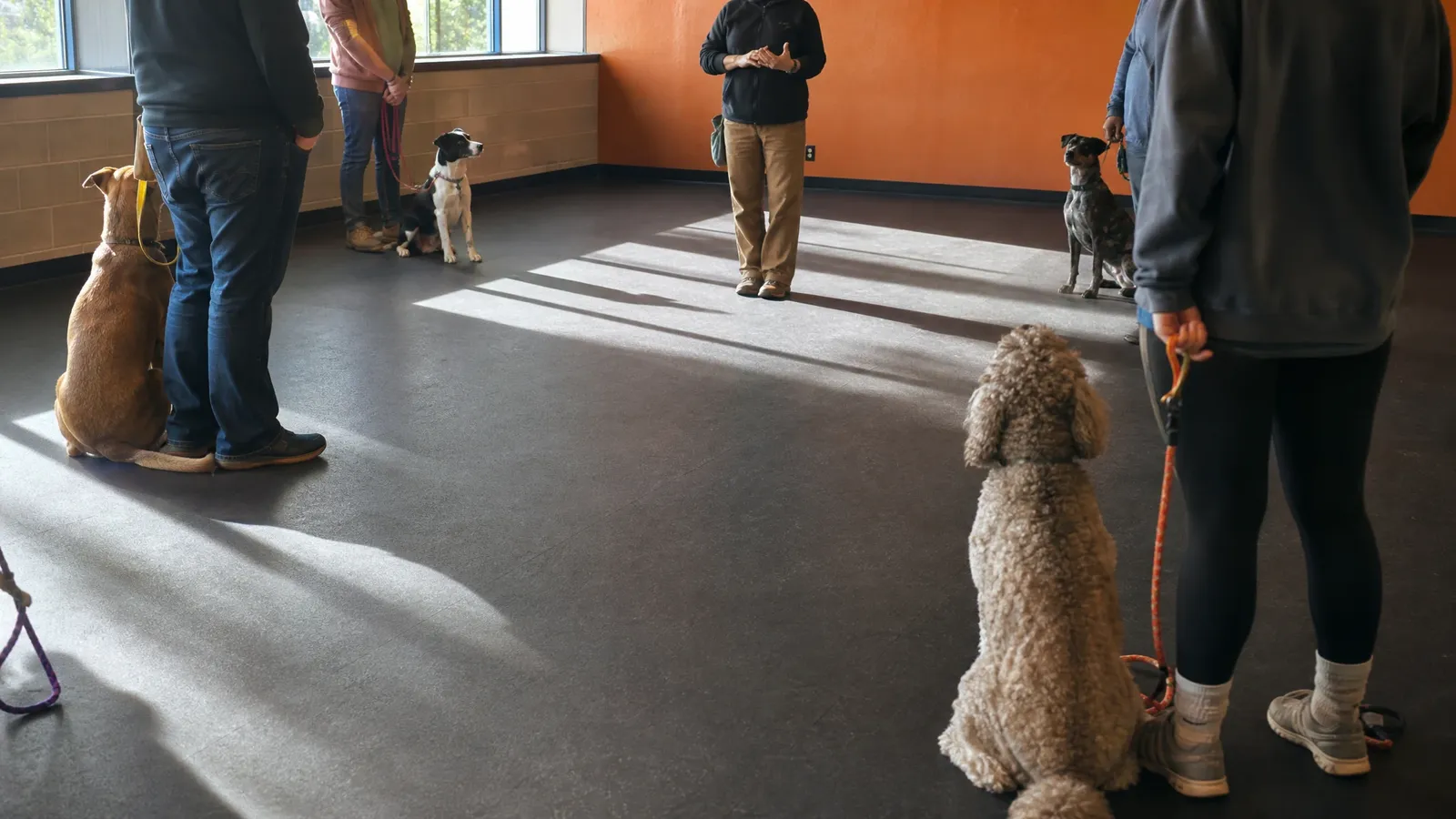
A group class suits dogs that can learn near other dogs and owners who want structure and practice with real distractions. This page explains who benefits, how to judge a class and what Arlington details to plan around, last verified 2026-11-11.
Wondering if your dog is ready for a class setting? Tell us about your dog and we will say honestly.
- In-person training in Arlington and nearby areas
- Online training anywhere
- Reward-based methods only
Is a group dog training class right for my dog?
It is right when your dog can focus on you with other dogs nearby, even at a distance, and you want to practice that. It is wrong when your dog is too stressed to learn, or when the real problem lives at home.
| Signs a class fits | Signs to start with private lessons |
|---|---|
| Dog is curious and recovers quickly after a surprise | Dog freezes, hides, lunges or barks at other dogs |
| You want practice with sit, down, stay and loose leash around distractions | The main problem is potty, crate, barking at the door or chewing |
| You can commit to a weekly time and daily practice | Your schedule changes week to week |
| Vet has cleared your dog for group settings | Your dog is in the middle of a medical recovery |
What happens in a good group class?
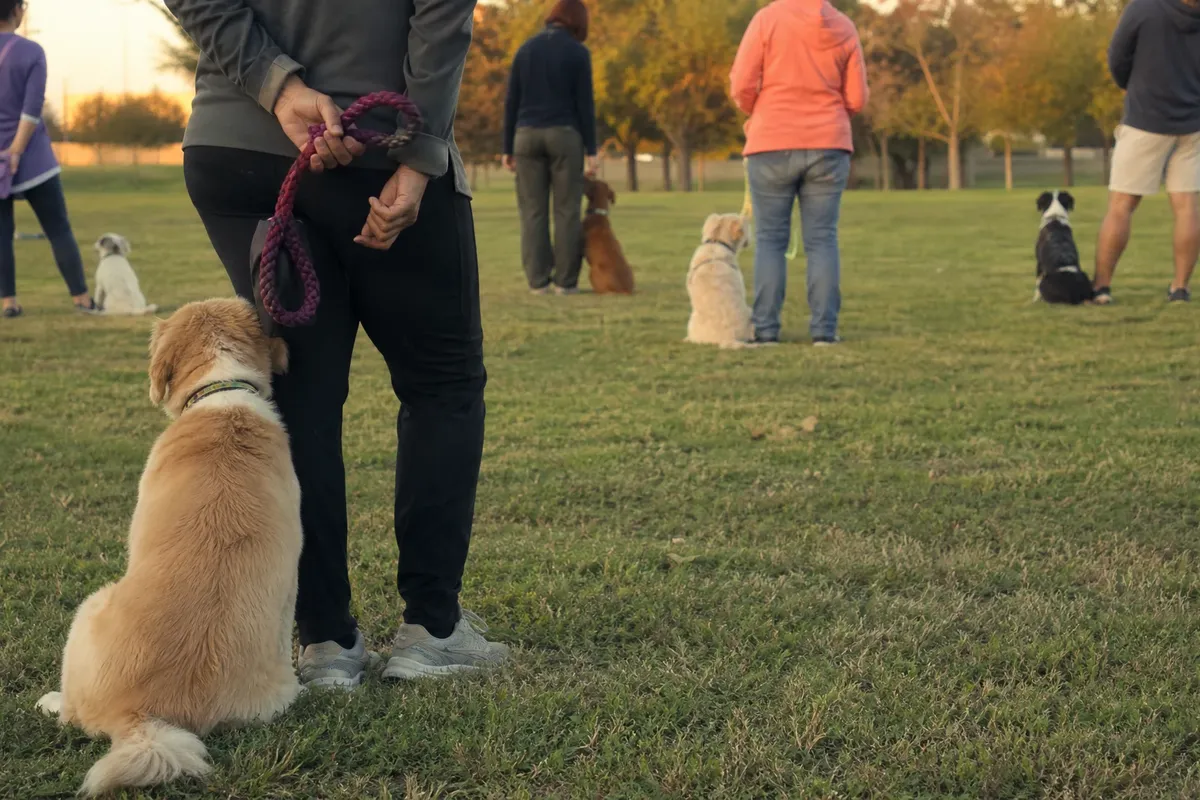
A good class is small, structured and calm. Each week has a short skill block, practice in pairs or at a distance, and time for questions. The trainer should step in early when a dog is overwhelmed, not after.
- Clear class size and a stated plan for dogs that need more space
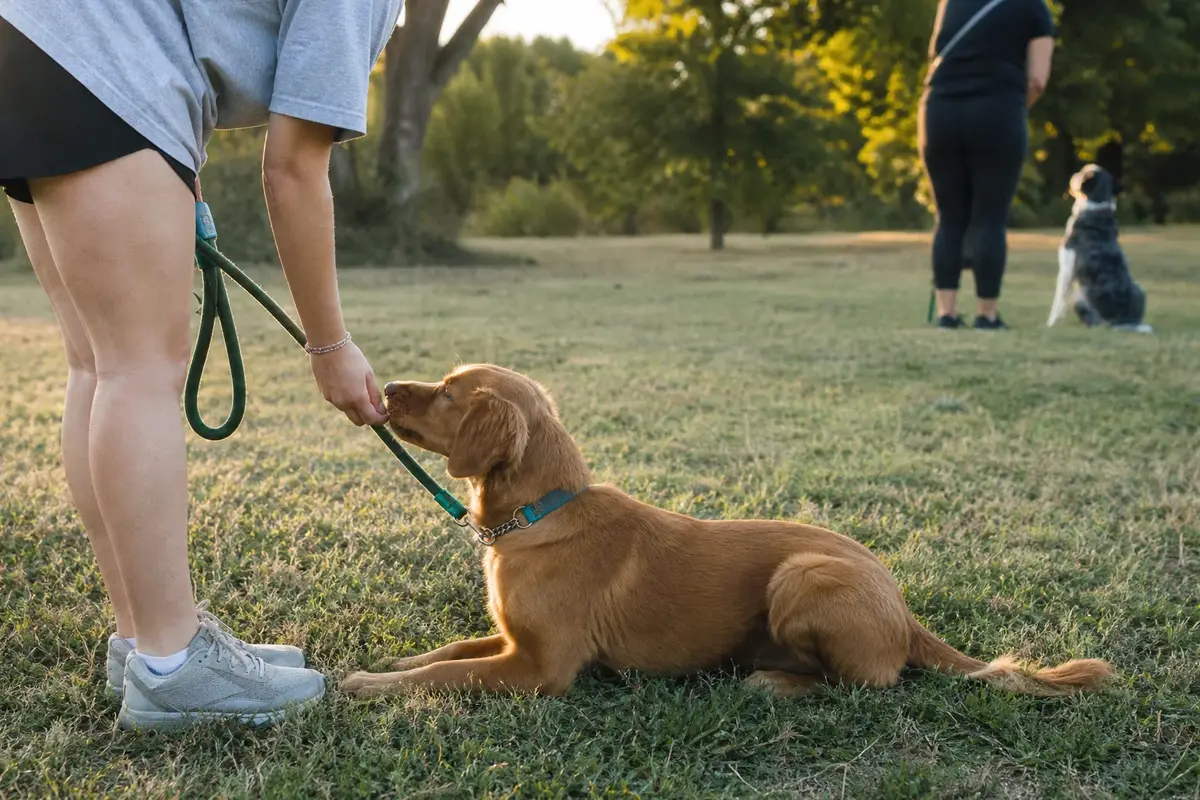
- Reward-based teaching with food and play; no shock, prong or choke tools
- Short homework each week so practice carries over
- Owner coaching, not just demonstrations
We recommend watching or asking about a class before enrolling, so you know how dogs are managed and how the trainer responds to a struggling dog.
How much do group classes cost, and what should I ask?
We cannot give a verified local range. Our research found no standalone group-class price on a local trainer's own page, only packages that bundle group sessions with private lessons, so we leave a figure out rather than guess. Ask for a written quote and compare these points.
- Number of weeks and length of each class
- Maximum class size and number of trainers or assistants
- Vaccination requirements and what documents to bring
- Make-up policy if your dog or you miss a class
- Whether tools such as electronic collars are used or sold
Be wary of any provider who will not answer the tool and method questions plainly. Veterinary behavior groups advise reward-based methods for all training.
What about vaccines and health before class?
Ask your vet before enrolling. For puppies, the AVSAB position (as reported by dvm360) supports early socialization, perhaps in a puppy class, as early as 7 to 8 weeks with vaccines started and kept up to date. For all dogs, Texas requires rabies vaccination by 4 months of age.
If you adopted from Arlington Animal Services, the city lists core vaccines including distemper, parvovirus and bordetella, plus a rabies vaccine, among the items included with adoption. Bring those records to any class so the instructor can check them.
How does Arlington shape class and park practice?
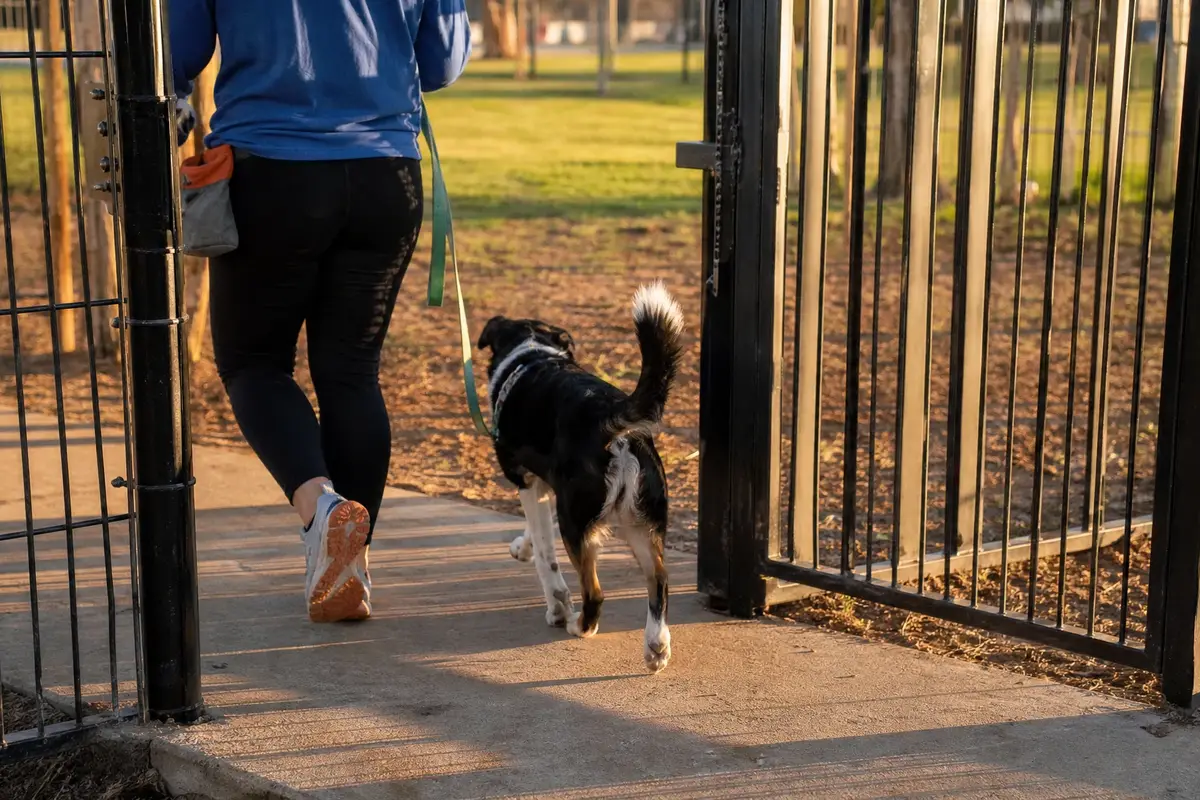
A common situation Arlington owners face: a dog that behaves in a class but is excited at a park. Class skills are the base; the park is the real test. The city lists two fenced off-leash dog parks. Rush Creek is free with a three-dog limit per visit, and dogs stay leashed until inside the double-gated entry; it is closed Wednesdays until noon for maintenance. Tails 'N Trails is free during daylight hours, and closed Tuesdays until noon for maintenance. Check the city pages for current details.
The same census summary that counts 46.0 percent of Arlington's occupied housing units as renter-occupied (Wikipedia, a secondary source) hints at who joins classes: many people in apartments, townhomes and smaller homes who do not have a yard to practice in and want a structured place to start. Group classes can fill that gap; we tell owners to treat the park as a practice step, not a replacement.
For many households the best sequence is a class or private lessons first, then a park visit with a plan: arrive when it is quiet, keep the first visits short, watch your dog's body language and leave while things are still going well. Summer adds one more rule from the city: test the pavement with the back of your hand and plan outings for morning or evening.
How we train in group settings
We teach in small steps, reward calm and keep every dog under threshold. If a dog is struggling, we increase distance or take a break rather than push through. Where a group setting is not right yet, we use private lessons or online coaching first and bring dogs into a group later.
Our methods are reward-based, with management and prevention, gradual desensitization and counter-conditioning, and short consistent sessions. We use humane tools only.
Group work is also a chance to watch other owners handle the same struggles. Seeing a dog that jumps or pulls in another household helps many people stop feeling alone with the problem. We ask owners to use the break time to watch the other teams, because noticing how another handler times a reward is often where the "aha" comes from.
Before you enroll in any class, ask whether you may observe first, how the trainer separates dogs that need more room and what happens if your dog is not a fit. A provider that welcomes those questions is usually one that runs a calm room.
Frequently asked questions
How big should a group class be?
Small enough that the trainer can see every dog. We do not set a universal number here, so ask any provider for the maximum class size and how many trainers are present.
Can a reactive dog do a group class?
Usually not at first. Dogs that lunge or bark at other dogs often do better with private lessons and gradual desensitization before joining a group.
What should I bring to a first class?
Vaccine records, small soft treats, a flat collar or harness and a standard leash. Retractable leashes are usually discouraged in classes, so check with the provider.
Is a class enough to fix a home problem?
Rarely. Potty, crate and barking problems depend on routines at home, which private lessons or online coaching address more directly.
Keep reading
- Private in-home dog trainingRead more →
- Online dog trainingRead more →
- Puppy classes vs private lessonsRead more →
- Arlington dog parksRead more →
- Types of dog training comparedRead more →
- Apply for trainingRead more →
Sources
- AVSAB puppy socialization position, as reported by dvm360 (last verified 2026-11-11)
- Texas Health and Safety Code 826.021 (texas.public.law mirror) (last verified 2026-11-11)
- City of Arlington, Pet Adoption Process (last verified 2026-11-11)
- City of Arlington Park Finder, Rush Creek Dog Park (last verified 2026-11-11)
- City of Arlington Park Finder, Tails 'N Trails Dog Park (last verified 2026-11-11)
- Wikipedia, Arlington, Texas (2020 census summary; secondary source) (last verified 2026-11-11)
- City of Arlington, Heat Safety Tips for Enjoying Arlington Parks This Summer (June 2026) (last verified 2026-11-11)
- AVSAB Humane Dog Training Position Statement (Purdue Canine Welfare Science Center) (last verified 2026-11-11)
Wondering if your dog is ready for a class setting? Tell us about your dog and we will say honestly.
- In-person training in Arlington and nearby areas
- Online training anywhere
- Reward-based methods only