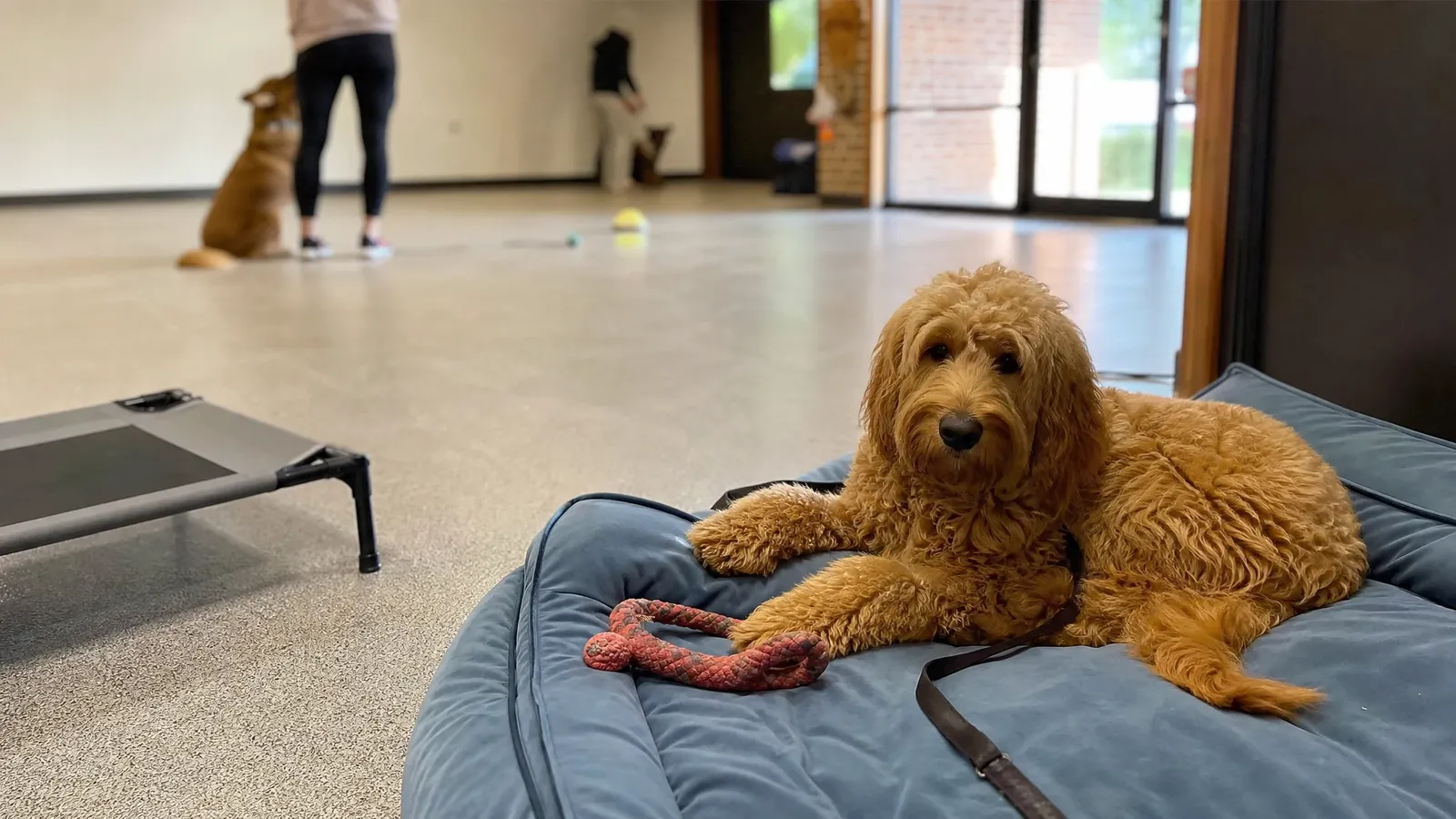
Board-and-train means your dog stays with a trainer for days or weeks and you learn the results at a handoff. It can fit some households, but it is not magic, and the follow-through at home decides how well it lasts. Below are local published price ranges, the questions to ask and the Arlington details worth planning around, last verified 2026-11-11.
Considering a stay-away program? Tell us about your dog and we will say honestly if it fits.
- In-person training in Arlington and nearby areas
- Online training anywhere
- Reward-based methods only
Is board-and-train worth it for my dog?
It can be, when the dog is healthy, comfortable away from home and the owners are ready to learn the plan. It is a poor fit for dogs with separation distress, serious fear or aggression, or owners who cannot practice after the dog returns.
| Consider it if | Look at other options if |
|---|---|
| You cannot fit daily practice into the first weeks | Your dog panics when separated from you |
| Your dog needs basic manners and you want a kickstart | The main issue is aggression, guarding or severe fear |
| You will attend owner lessons at handoff and keep practicing | You expect the dog to come home finished with no follow-up |
| Your dog is vaccinated, healthy and used to other people | Your dog is elderly, ill or on a medical routine |
How much does board-and-train cost in Arlington?
Prices vary widely, and we do not publish our own here. As local published market ranges, two DFW-area businesses that post prices list one-week programs from about $850, two-week programs from about $2,200 to $3,000, and a four-week program at $5,800. Another published set runs $1,500 for 7 days, $3,000 for 14 and $4,200 for 21, plus a separate paid evaluation. Dividing totals by days (derived) gives roughly $121 to $214 per day. All figures were retrieved 2026-11-11 and published prices change.
What drives price: program length, whether owner lessons are included, how many dogs a trainer handles at once and what the dog's basics already look like. Ask for a written quote that lists every fee.
What happens during and after the stay?
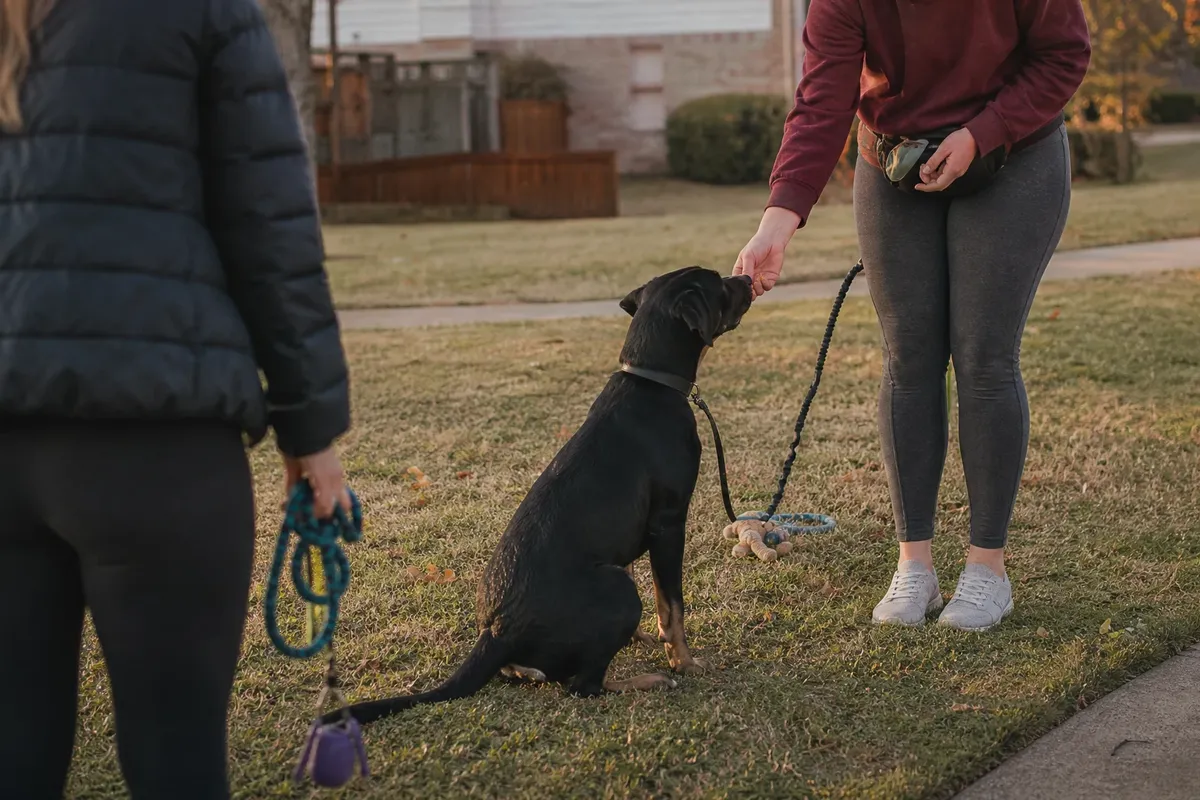
In our approach the stay is the start, not the finish. A dog learns new habits with a trainer; the household has to learn how to ask for them.
- Intake: health, vaccines, history, feeding, medications and goals reviewed in writing
- During the stay: short, reward-based sessions, rest, exercise and daily notes on progress
- Handoff: owner lessons with the trainer, a written practice plan and equipment fitting
- Follow-up: a check on how things are going at home, because behavior often slips when routines change
Progress depends on the dog and on the owner's consistency afterward.
What should I ask any board-and-train provider?
Ask the questions that reveal methods and safety. A good provider answers them plainly and in writing.
- What tools do you use, and will you use shock, prong or choke collars? We do not, and veterinary behavior groups advise against aversive methods.
- Where will my dog sleep, how many dogs are there and who is on site overnight?
- What vaccines do you require, and what happens if my dog gets sick?
- Which vet and which 24-hour emergency hospital do you use?
- Is there an owner lesson at handoff, and is it included in the price?
- What happens if the program does not suit my dog?
Red flags: refusal to say what happens during the day, guaranteed results, no written plan, or secrecy about tools.
What should Arlington owners plan around?
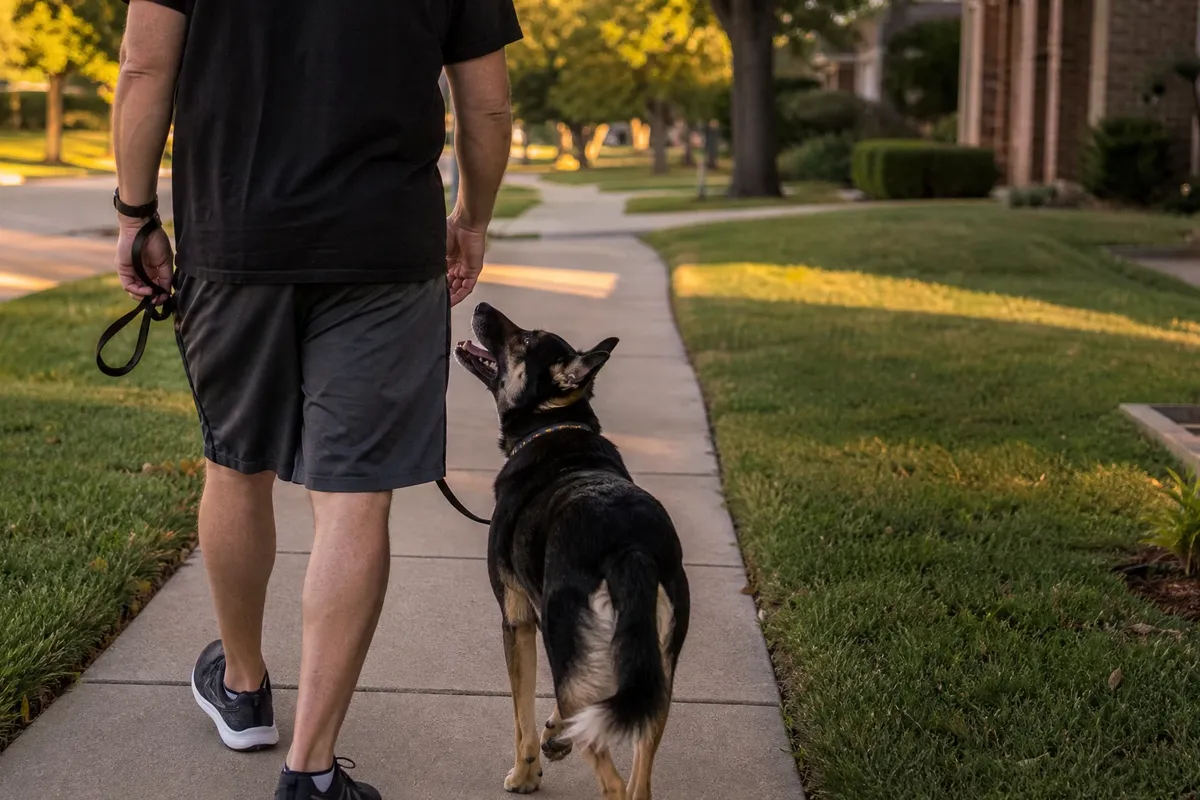
A common situation Arlington owners face: a household with a rental lease, a work schedule that keeps the dog home alone and a dog that has never been away overnight. A stay away can sound like a relief, but unfamiliar kennels and strangers are stressful for some dogs, so we suggest a short trial of separation first.
Three local details matter. First, health: Arlington has at least one clinic that states it takes emergencies 24 hours a day (I-20 Animal Medical Center) and VEG Grand Prairie lists 24/7 emergency care next door, so ask any provider which hospital they would use. Second, heat: DFW averages 20.2 days a year at or above 100 degrees (NWS normals, 1991-2020), and the city advises outdoor activity in the morning or evening in summer, so ask how a facility handles midday exercise. Third, timing around July 4: the city says that period is historically when more pets go missing than at any other time, so a nervous dog may be safer with a plan than at home alone.
How we train, and what we do instead of board-and-train
We teach through reward-based work, management and prevention, gradual desensitization and counter-conditioning, and short consistent sessions. Whether the dog stays with a trainer or at home, humane tools only: no shock, prong or choke devices.
For many families, private in-home lessons or online coaching reach the same goals while the dog stays in its own routine. Ask us in your application and we will say honestly which format looks best for your dog.
If a stay does look right, we suggest starting with a clear goal list, such as "walks without pulling, settles when guests arrive, comes when called in the yard," rather than a vague "make him good." Specific goals let you judge what was actually taught, and they give the trainer something concrete to hand back to you.
Before any stay we also suggest a vet visit, so a limp, an upset stomach or a medication need does not get mistaken for a behavior problem. Bring vaccine records, the food your dog eats and a short note about triggers: noises, other dogs, being handled, being left alone. The better the intake notes, the better the plan.
Frequently asked questions
Does board-and-train guarantee a trained dog?
No. A dog learns skills with a trainer, but habits only hold when the household practices them. Treat any promise of guaranteed results as a red flag.
How long should a stay be?
It depends on the goals and the dog. Published local programs run from one to four weeks, and many owners find a shorter stay plus owner lessons is enough for basic manners.
What vaccines will my dog need?
Published daycare policies commonly list DHPP, rabies and bordetella, but requirements vary by facility. Ask your provider for their list in writing and check with your vet.
Is board-and-train right for a fearful or aggressive dog?
Usually not as a first step. Those dogs often do better with a behavior-specific plan at home, with veterinary input, so we would discuss that with you first.
Keep reading
- Private in-home dog trainingRead more →
- Online dog trainingRead more →
- Types of dog training comparedRead more →
- What dog training costs in ArlingtonRead more →
- Questions to ask before hiring a trainerRead more →
- Apply to find the right formatRead more →
Sources
- Published board-and-train price pages of two DFW-area trainers (provenance only; indicative) (last verified 2026-11-11)
- I-20 Animal Medical Center (states 24-hour emergencies) (last verified 2026-11-11)
- VEG Grand Prairie (states open 24/7) (last verified 2026-11-11)
- NWS Fort Worth, DFW annual normals (last verified 2026-11-11)
- City of Arlington, Heat Safety Tips for Enjoying Arlington Parks This Summer (June 2026) (last verified 2026-11-11)
- City of Arlington, Prioritize Pet Safety During Independence Day Celebrations (June 2026) (last verified 2026-11-11)
- AVSAB Humane Dog Training Position Statement (Purdue Canine Welfare Science Center) (last verified 2026-11-11)
Considering a stay-away program? Tell us about your dog and we will say honestly if it fits.
- In-person training in Arlington and nearby areas
- Online training anywhere
- Reward-based methods only