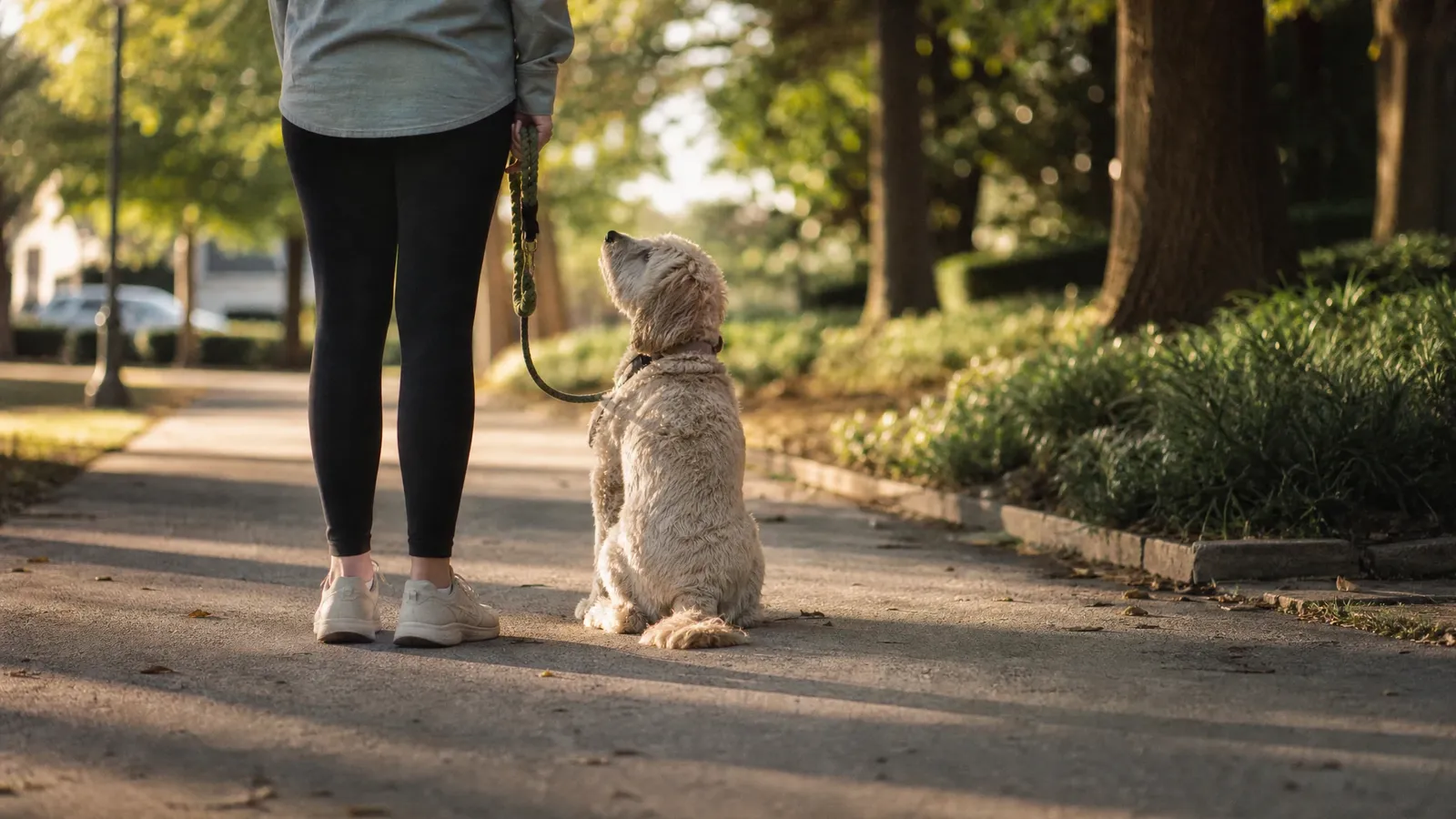
Basic obedience teaches a dog the everyday skills that make life in Arlington easier: sit, down, stay, come, loose-leash walking and calm greetings. This page walks through the session plan, home practice and what the city expects of Arlington dog owners, last verified 2026-11-11.
Ready for a dog who listens on the sidewalk and at the door? Tell us about your dog and your routine.
- In-person training in Arlington and nearby areas
- Online training anywhere
- Reward-based methods only
Who is basic obedience for?
It is for any dog that has not yet learned reliable everyday manners, from adolescent dogs to adults adopted without much training. It also suits owners who want to build a clean foundation before moving to advanced or off-leash work.
- Dogs that pull, jump or ignore their name
- Newly adopted dogs settling into a new routine
- Households with kids, roommates or neighbors who need the same cues used the same way
- Owners preparing for later goals such as Canine Good Citizen practice
What happens session by session?
The pace follows the dog. Here is the usual shape of a basic program, which we adjust as we learn how your dog responds.
| Stage | Focus | Home practice |
|---|---|---|
| Start | Goals, routine, equipment check, name response, marker word, luring a sit and down | Two or three short rounds a day at home |
| Early weeks | Stay, loose-leash basics, settling on a mat, door manners | Hallway or yard walks with a loose leash |
| Middle weeks | Come when called on a long line, leave it, polite greetings | Practice in the driveway, apartment courtyard or a quiet park corner |
| Later weeks | Adding distance, duration and distraction; fading treats gradually | Real-life use on walks and at the door |
How many weeks a dog needs depends on the dog, its age and history, and how consistently everyone at home follows the plan.
Home practice is where most of the learning sticks. Expect two or three short rounds a day, each a few minutes long, tied to things you already do: before meals, before the leash goes on, before the door opens. A dog that gets ten reps across a normal day learns faster than a dog that gets one long, tiring session on the weekend.
We also ask every adult in the home to use the same cue words and the same rewards. Mixed signals, like one person saying "down" and another saying "off" for the same behavior, are the most common reason a dog seems to ignore training.
What does Arlington expect of me and my dog?
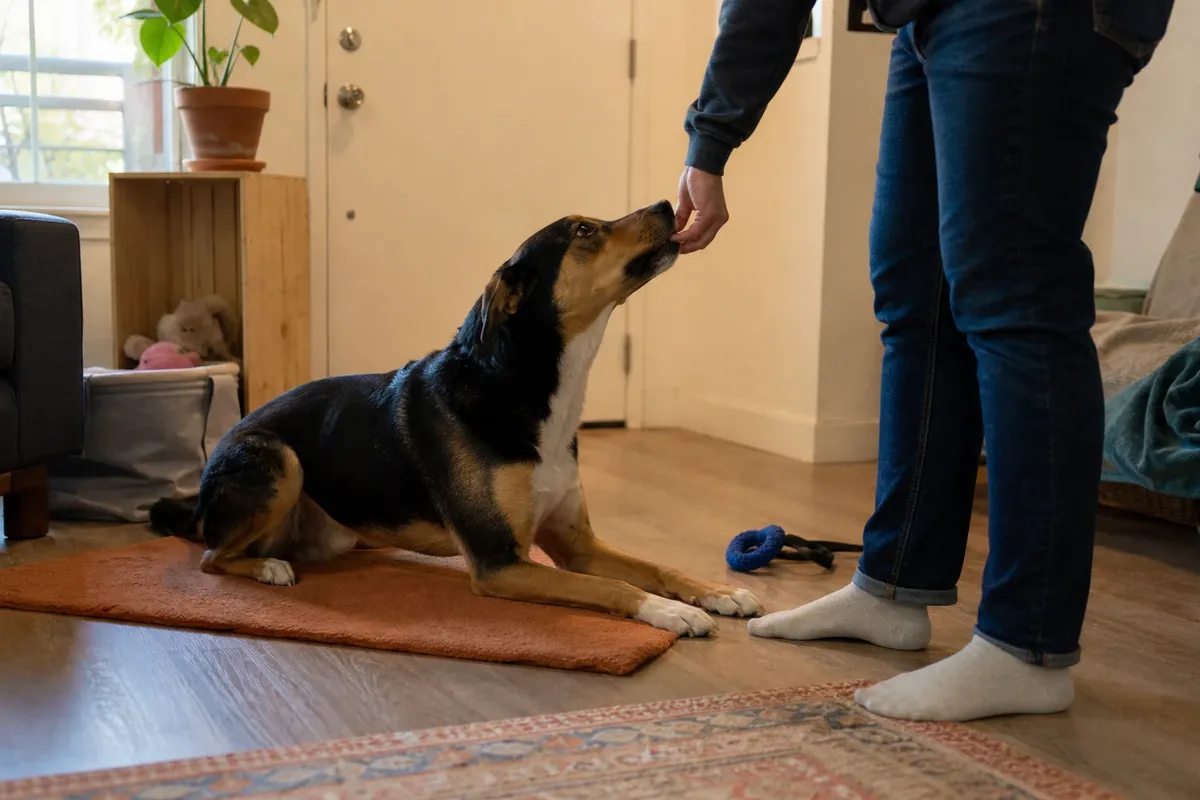
The city publishes a few clear rules. Arlington's Responsible Pet Ownership page says not to chain, rope or otherwise attach a dog to a stationary object or trolley system, while walking a dog on a hand-held leash is fine. It also says to pick up after your pet when you are in public or on property that is not your own.
Dogs and cats must be licensed with proof of current rabies vaccination, and Texas requires rabies vaccination by 4 months of age. License fees are posted on city pages that do not all agree, so check the city's current fee schedule before you apply. We build our lessons around the walking and waste habits those rules assume.
How does basic obedience fit a typical Arlington household?
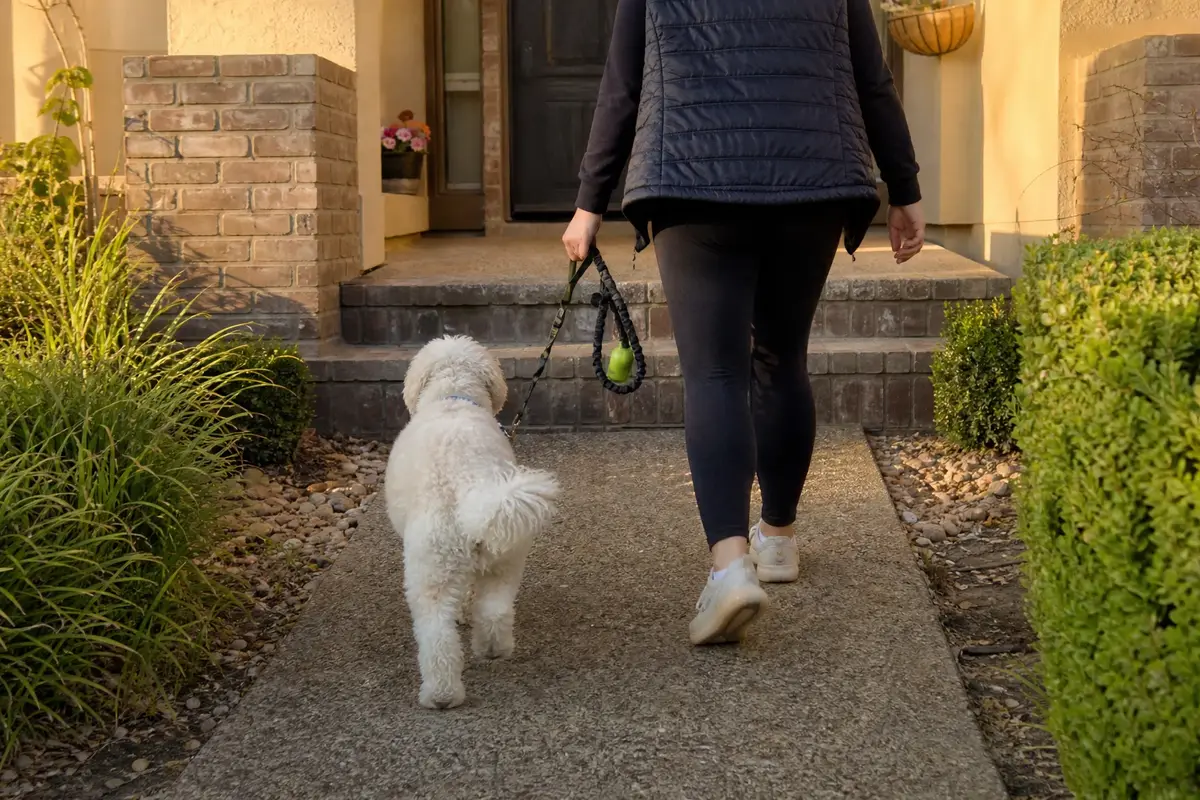
A common situation Arlington owners face: a student renter near the UT Arlington campus area adopts a dog and wants it calm in a shared building. UT Arlington reported a fall 2024 enrollment of 41,613 (Wikipedia, a secondary source), so rental turnover and shared walls are part of life in parts of the city. That makes hallway manners, quiet settling and door calm more useful than any trick.
When the dog is ready for a real outing, the city's fenced off-leash park Tails 'N Trails is free during daylight hours and closed Tuesdays until noon for maintenance, and Rush Creek Dog Park is free with a three-dog limit per visit. We use basic skills there as a checkpoint: can your dog check in with you and leave a distraction? If not, the park is a good place to wait.
How we train basic obedience
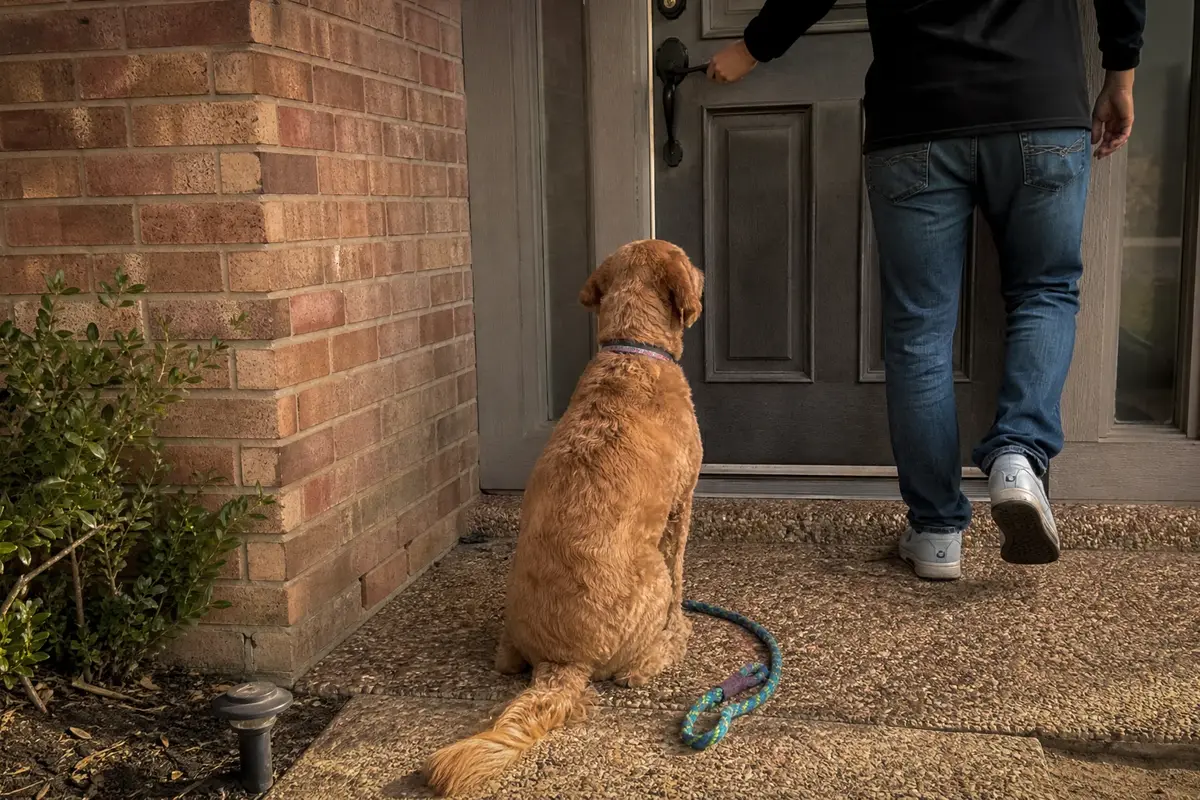
We mark and reward the behavior we want, and we make the right answer easy. If a dog cannot sit when a squirrel is in view, we lower the difficulty rather than repeat a cue louder.
- Short, frequent practice beats long, tiring sessions
- Prevent practice of unwanted habits with leashes, gates and routines
- Teach the owner timing, treat delivery and how to end on a win
- Humane tools only: flat collar or front-clip harness, leash, treats
We use no choke, prong or electronic collars. Veterinary behavior groups recommend reward-based methods for all training.
Owner coaching is half the job. In each lesson we show you the exact hand movements, treat timing and body position, then watch you try it and adjust. We also give you a short written practice plan for the week so you are never guessing what to do between lessons. When a step is not working, the answer is almost always to make the exercise easier or change the reward, not to repeat it more forcefully.
Who is basic obedience not for?
It is not the right first step for a dog showing serious aggression toward people or dogs, or severe separation distress. Those need a behavior-specific plan and often a veterinarian's input, and we will tell you that early. It is also not for owners looking for a quick fix with no daily practice.
Frequently asked questions
How long does basic obedience take?
It depends on your dog's age, history and how consistently you practice at home. We set milestones in the first lesson and adjust them as your dog progresses.
Do I need to bring treats?
Yes, small soft treats your dog already likes, plus the leash and collar or harness you use every day. We help you adjust equipment if it is not working.
Can my dog do basic obedience online?
Many owners do, particularly for loose-leash walking, door manners and settling at home. A short evaluation helps us decide whether online or in-person training is the better fit.
What if my dog is already past puppyhood?
Adult dogs learn basic obedience well. Past habits may take longer to change, so consistency from everyone in the household matters most.
Keep reading
- Private in-home dog trainingRead more →
- Online dog training optionRead more →
- Advanced obedience once the basics are solidRead more →
- Fixing leash pullingRead more →
- A first 30 days dog training planRead more →
- Apply for basic obedienceRead more →
Sources
- City of Arlington, Responsible Pet Ownership (last verified 2026-11-11)
- Texas Health and Safety Code 826.021 (texas.public.law mirror) (last verified 2026-11-11)
- City of Arlington, Animal Services Fee Schedule (last verified 2026-11-11)
- City of Arlington Park Finder, Tails 'N Trails Dog Park (last verified 2026-11-11)
- City of Arlington Park Finder, Rush Creek Dog Park (last verified 2026-11-11)
- Wikipedia, University of Texas at Arlington (secondary source) (last verified 2026-11-11)
- AVSAB Humane Dog Training Position Statement (Purdue Canine Welfare Science Center) (last verified 2026-11-11)
- Published private-lesson price pages of four DFW trainers (provenance only; ranges derived) (last verified 2026-11-11)
Ready for a dog who listens on the sidewalk and at the door? Tell us about your dog and your routine.
- In-person training in Arlington and nearby areas
- Online training anywhere
- Reward-based methods only