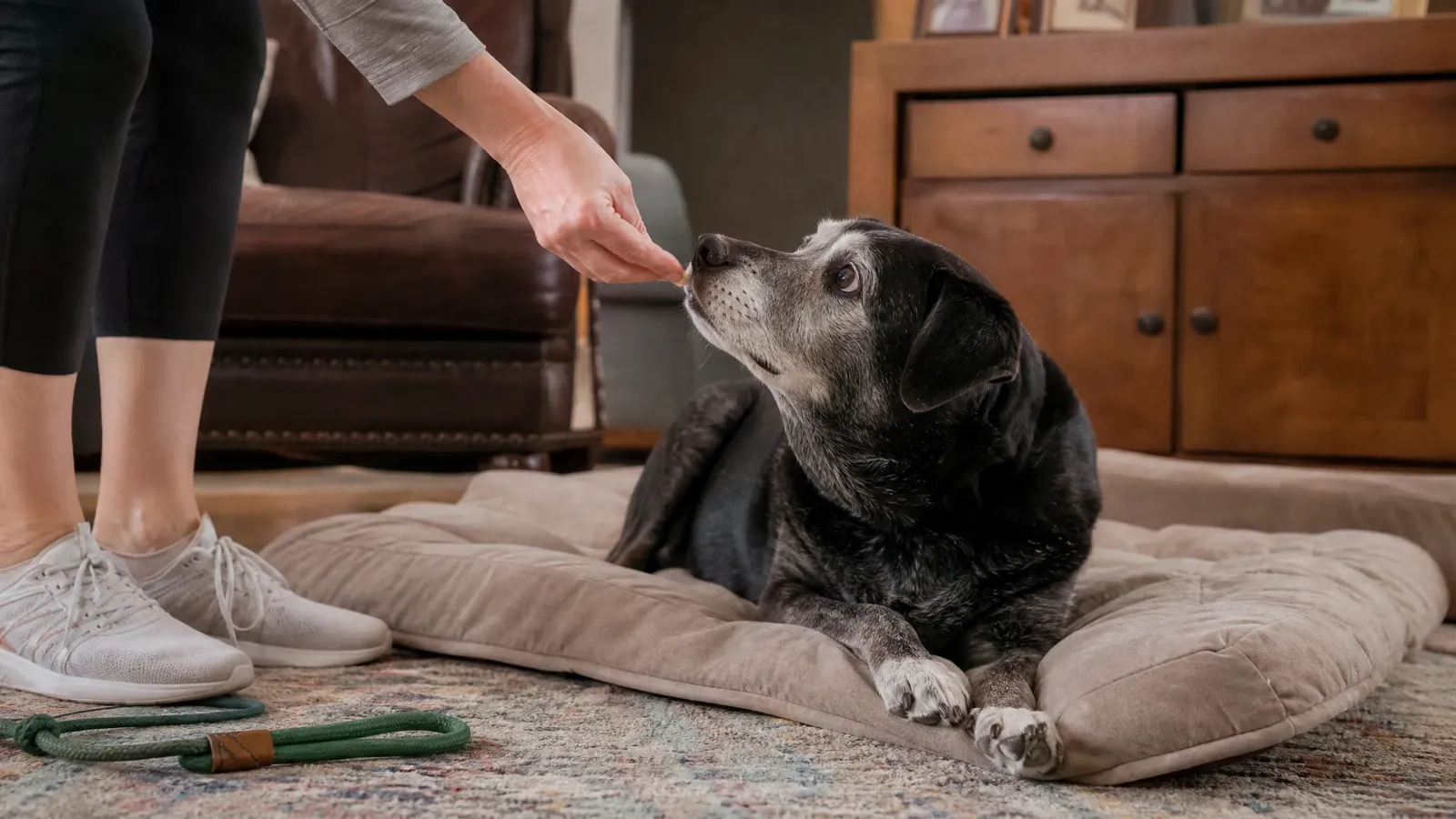
Older dogs can still learn, and reward-based training is often a good fit because it is gentle and builds confidence. This page, last verified on 2026-11-11, covers how we adapt training for senior dogs, why a vet check comes first and what Arlington's heat means for older bodies.
Older dog, new routine? Tell us how your dog handles the walk to Veterans Park or the block
- In-person training in Arlington and nearby areas
- Online training anywhere
- Reward-based methods only
Can you teach a senior dog new things?
Yes. Older dogs can learn new cues and routines, and many enjoy the mental work. What changes is the pace, the surfaces we use and how we read the dog's comfort. The table shows how we adapt common goals.
| Goal | How we adapt it for a senior dog |
|---|---|
| New household or new routine | Slow introductions, a quiet resting spot and rewards for calm choices |
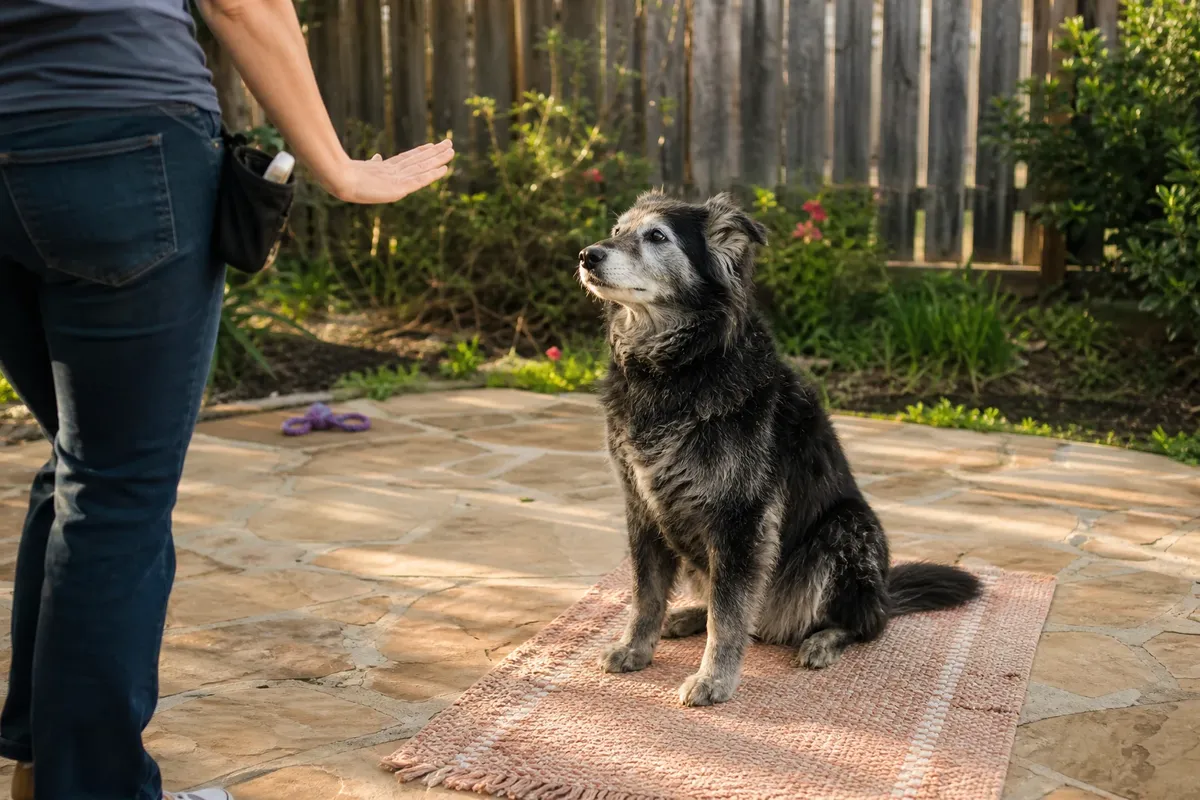
| Cues the dog cannot hear well | Pair verbal cues with hand signals, and reward attention to either |
| Settling and mat work | Teach a comfortable, padded place to relax; reward staying there |
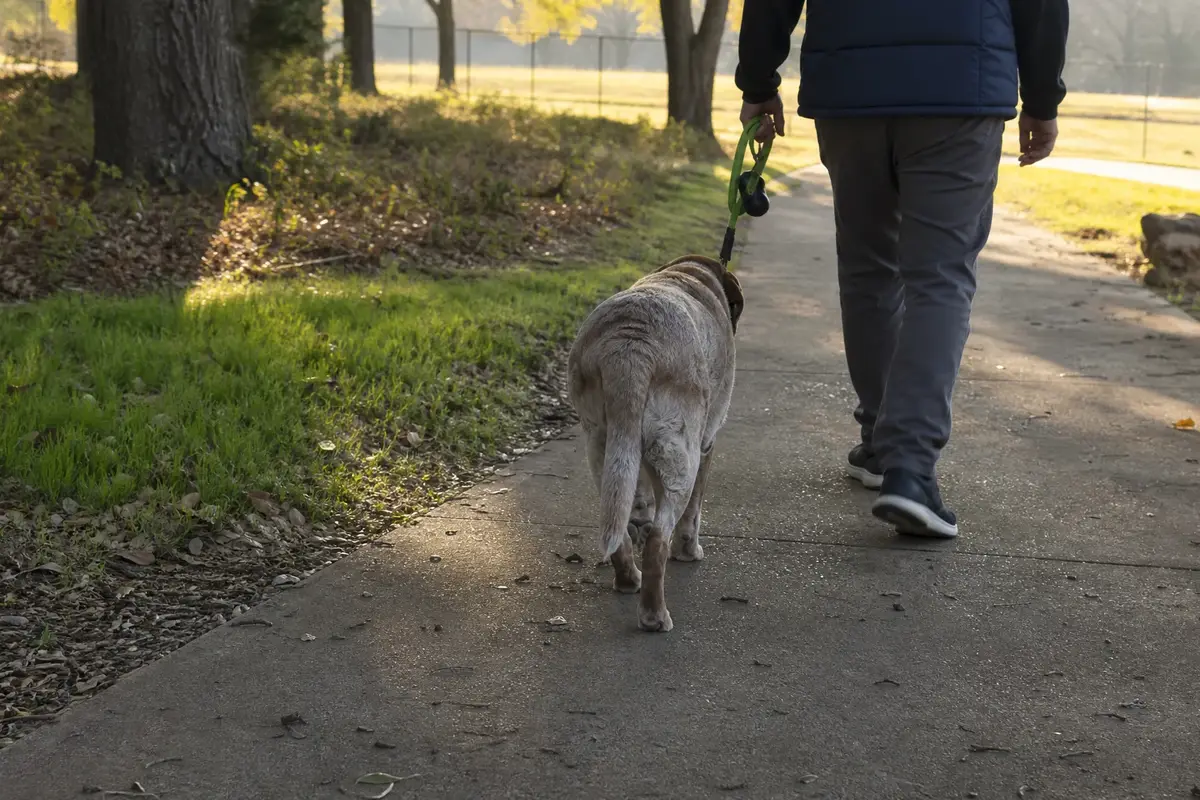
| Walks | Shorter, slower walks on the coolest part of the day; sniffing counts as exercise |
| Changing habits such as barking at the door | Prevention plus a new routine, practiced in brief rounds |
| Mental enrichment | Scent games and easy puzzle feeders instead of long drills |
Pain, hearing loss, vision changes and cognitive changes can all look like "bad behavior". Check with your vet before you decide it is training.
What is a senior dog training session like?
A session is calm and short, with rests, and everything is geared to your dog's comfort. We do not ask a dog to hold positions that are hard on the body. A plan often follows this order:
- Session one: history, vet notes and goals; a gentle first lesson such as attention or a mat settle.
- Next sessions: one or two skills at a time, with short rounds and plenty of rewards.
- Real-life practice: your door, your stairs, your car, your usual walk, adapted to what your dog can do comfortably.
- Home practice: two or three brief rounds a day, stopping before your dog is tired.
Progress depends on your dog's health, history and your consistency, so we do not promise timelines.
How do we train senior dogs?
We use the same reward-based approach we use for every dog, with extra attention to comfort and confidence. Management and prevention come first, such as non-slip floors, ramps or gates where needed, then short, consistent sessions that end on success.
For anxiety or sensitivity, we use gradual desensitization and counter-conditioning and keep every step small. We coach you in reading your dog's signals, such as lip licking, a turned head or lagging behind, so you can stop before stress builds. We use humane tools only, with no pain, fear or intimidation.
What should Arlington owners of older dogs plan for?
Heat, emergencies and adoption are the three local topics we hear most. DFW averages 20.2 days a year at or above 100F, and the nearest official weather station is DFW rather than Arlington itself. The city advises testing pavement with the back of your hand and doing activities in the morning or evening. An older dog may overheat or burn paws sooner, so shift walks cooler and keep them short.
It also helps to know your emergency options in advance. An Arlington clinic on Interstate 20 states that emergencies are welcome 24 hours a day, and VEG in neighboring Grand Prairie states it is open 24/7. Confirm hours directly before you rely on either. Last verified 2026-11-11.
If you are adopting a senior, the city's Animal Services lists a $10 "Very Important Pet" rate that can apply to seniors over 8 years, among other reasons. Our guide to rescue and shelter dog training covers the first weeks at home.
A common situation Arlington owners face: an older dog who used to love the long walk to Veterans Park, with its 1.44-mile hike and bike trail, now stops halfway on a warm afternoon. We would shorten the route, move it to early morning, add sniff breaks and reward the dog for choosing to keep going. The city page lists no pet or leash rules for Veterans Park, so check before you go.
Many Arlington dogs live in apartments or townhomes; about 46% of occupied housing units were renter-occupied in the 2020 census (a secondary summary). Stairs and parking-lot potty trips are worth planning around for an older dog.
Is senior dog training right for your dog?
It is right when your vet has cleared your dog for gentle activity and you want a calmer, more comfortable daily routine. It is not right if your dog is in pain or distress that has not been checked. A trainer cannot diagnose a medical problem, and we will tell you when a vet visit should come first.
Choose private in-home training to work in your own space, where an older dog is most comfortable, or online training for lighter coaching. If barking or nighttime restlessness is the concern, start with barking or talk to your vet. Then apply to see which program looks right.
Frequently asked questions
Is my senior dog too old to train?
Probably not. Older dogs can learn new cues and routines with short, gentle, reward-based sessions. Check with your vet first for pain, hearing or vision changes, and adjust the pace to your dog.
Why did my older dog's behavior suddenly change?
Pain, illness and sensory changes can cause sudden behavior changes. See your vet before assuming it is training. We can help with routines once medical causes have been checked.
How long should a senior dog training session be?
Short, with rests. A few minutes at a time, a few times a day, usually suits older dogs. We stop while your dog is still comfortable and succeeding.
Can I adopt a senior dog from the Arlington shelter?
Yes. The city lists a $10 Very Important Pet rate that can apply to seniors over 8 years, among other reasons. Confirm current details and availability directly with Animal Services.
Keep reading
- Apply for senior dog trainingRead more →
- private in-home dog trainingRead more →
- online dog trainingRead more →
- rescue and shelter dog trainingRead more →
- Arlington vets and emergency vetsRead more →
- training in the Arlington climateRead more →
Sources
- NWS Fort Worth, DFW annual normals and first/last 100F dates (last verified 2026-11-11)
- City of Arlington, Heat Safety Tips for Enjoying Arlington Parks This Summer (June 2026) (last verified 2026-11-11)
- I-20 Animal Medical Center (own site) (last verified 2026-11-11)
- VEG Grand Prairie (own site) (last verified 2026-11-11)
- City of Arlington, Pet Adoption Process (last verified 2026-11-11)
- City of Arlington, Veterans Park (last verified 2026-11-11)
- Wikipedia, Arlington, Texas (2020 census; secondary summary) (last verified 2026-11-11)
Older dog, new routine? Tell us how your dog handles the walk to Veterans Park or the block
- In-person training in Arlington and nearby areas
- Online training anywhere
- Reward-based methods only