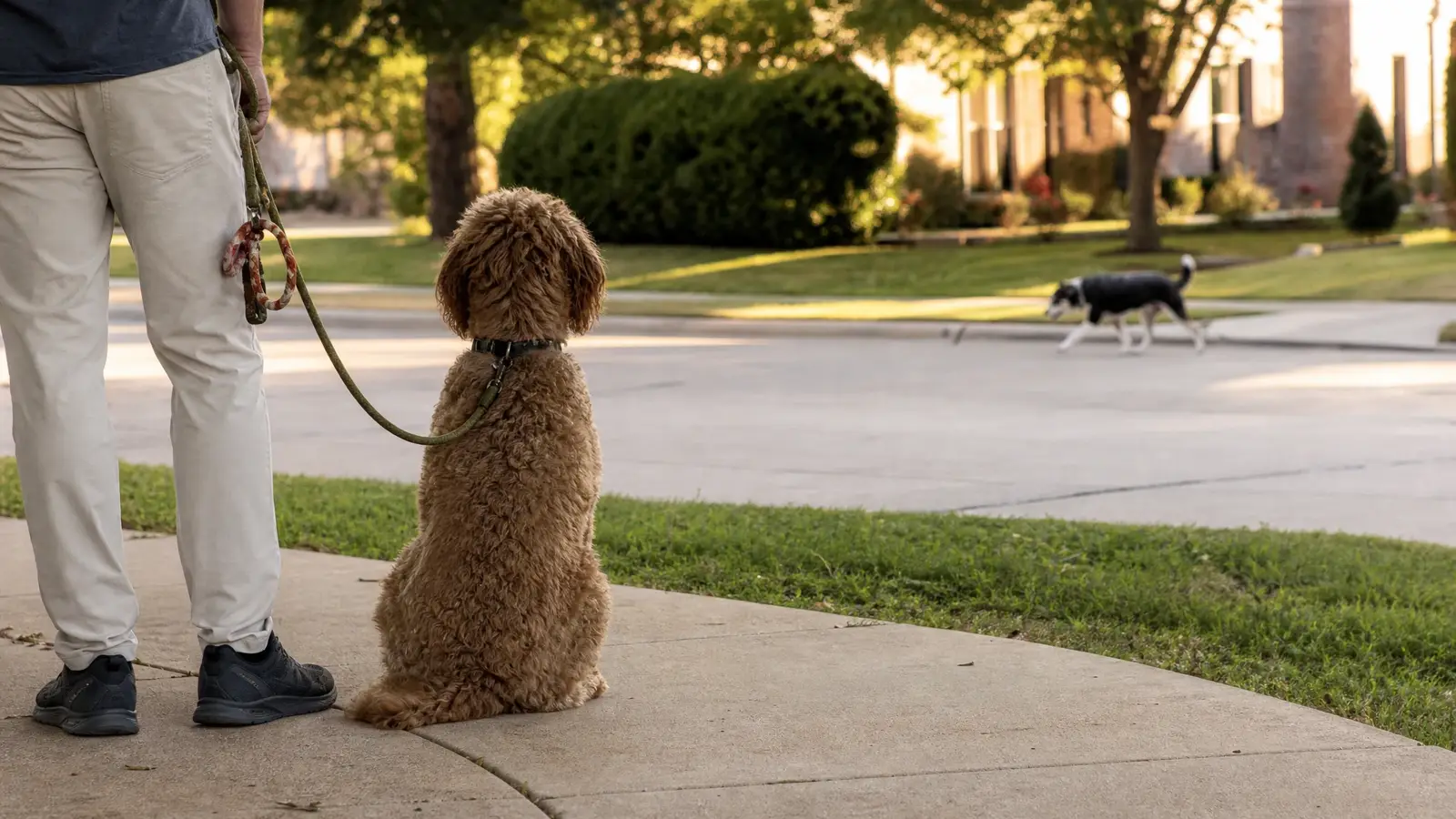
A leash-reactive dog barks, lunges or spins when it sees another dog, person or bike while on leash, and it is usually fixable with distance, rewards and patience. We teach Arlington owners to handle crowded complex walkways, park entrances and neighborhood sidewalks without punishment.
Tell us about your dog's walks, from your block to the Rush Creek gate
- In-person training in Arlington and nearby areas
- Online training anywhere
- Reward-based methods only
Why does my dog lunge and bark at other dogs on leash?
Most leash-reactive dogs are trying to create distance or are over-excited and cannot get to the thing they want. On leash the dog cannot flee or greet normally, so it escalates. Barking and lunging often work, because the other dog walks away, and that makes the habit stronger.
Reactivity is not the same as aggression, though the two can overlap. If your dog has bitten or seriously injured a person or dog, read our dog aggression page first.
| What you see | Common reason | First management step |
|---|---|---|
| Lunging and barking at dogs far away | Frustration or wanting distance | Cross the street early and reward calm looks |
| Freezing, then exploding as a dog nears | Fear, no way to retreat | Increase distance, use U-turns, treat before the freeze |
| Reacts only on leash, fine off leash | Leash tension and no escape route | Loose leash, wider space, practice greeting rules separately |
| Reacts to bikes, skateboards, joggers | Chasing urge or startle | Reward calm watching from far away, avoid close passes |
What does a leash-reactivity walk look like in Arlington?
The same triggers repeat in every part of the city, but the setup differs by where you live. Here is a common situation Arlington owners face: a dog that is fine in the living room lunges the moment the apartment elevator opens onto a shared breezeway and another leashed dog is two steps away. The owner tightens the leash, which makes the dog more tense, and the pattern grows.
The fix starts before the walk. We plan routes with room to turn, pick quieter times and teach you to see a trigger before your dog does.
- Walk the quieter edge of the sidewalk or lawn, not the narrow middle.
- Leave the building at off-peak times when you can.
- Use a short turn-and-treat routine at corners and blind spots.
- Keep the leash loose. A tight leash tells your dog something is wrong.
- Skip crowded paths for now. Your dog does not need to meet every dog it sees.
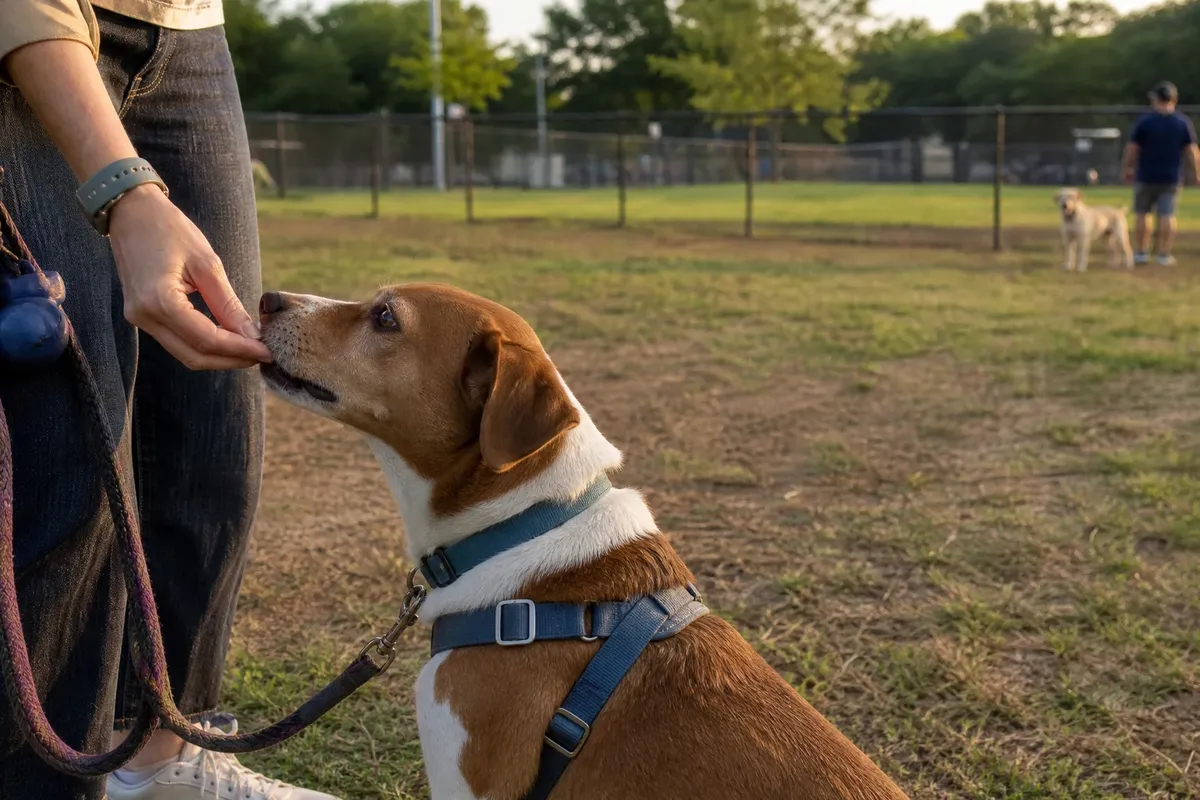
Which Arlington places are good for reactive-dog practice?
Last verified 2026-11-11. The city publishes the following details, so check its pages for current hours and rules before you go.
| Place | What the city publishes | How we use it for training |
|---|---|---|
| Rush Creek Dog Park, 1900 Valleywood Dr. | Free; dogs stay leashed until inside the double-gated entry; closed Wednesdays until noon. | The double gate is a leashed, close-contact moment. We rehearse it from outside the park, not at the gate itself. |
| Tails 'N Trails Dog Park, 950 SE Green Oaks Blvd. | Fully fenced, 5.7 acres, free, daylight hours; closed Tuesdays until noon. | The edge of a fenced area lets us practice watching dogs from a distance. A reactive dog is not ready to go inside. |
| Veterans Park, 3600 W. Arkansas Ln. | 103 acres with a 1.44-mile hike/bike trail. The city page lists no pet or leash rules. | Open space helps us build distance. Check the city's park pages first for any posted rules. |
For the city's rules on dogs outside the fenced parks, read the City of Arlington Animals & Pets pages. We do not quote leash-law wording here because we could not confirm it from the city code.
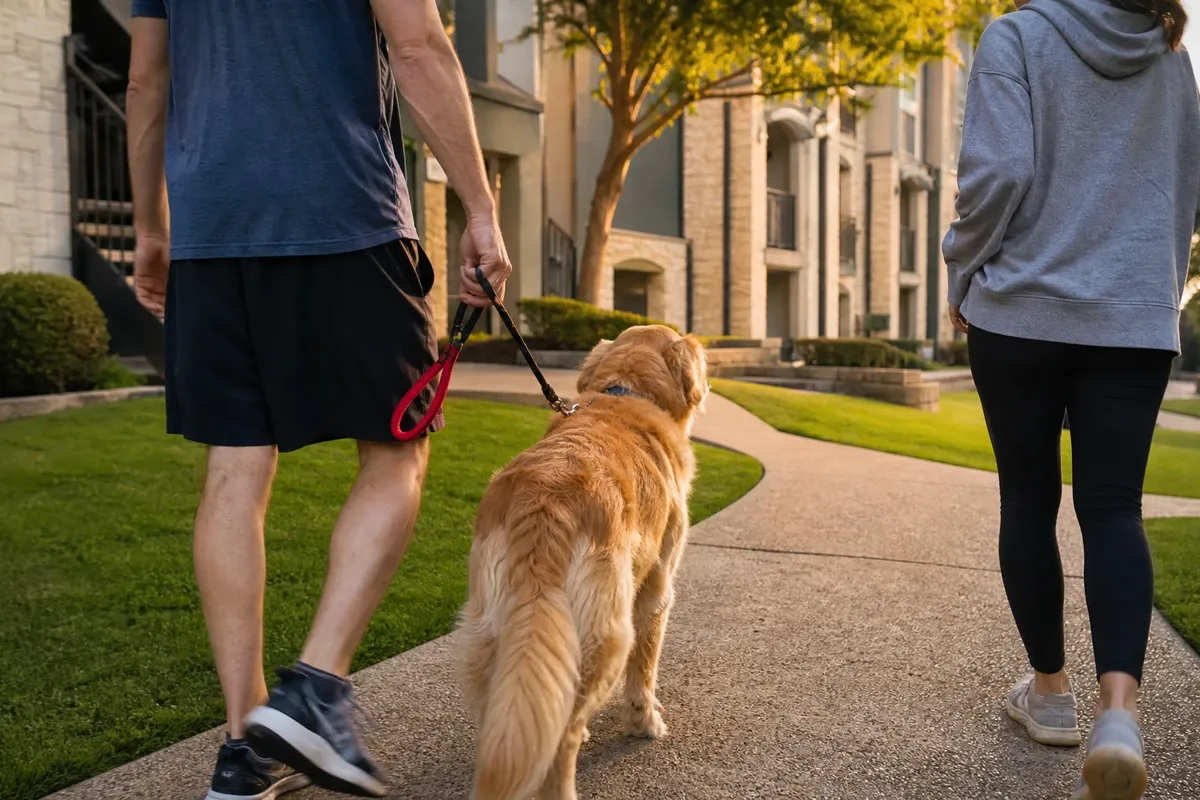
How we train leash reactivity
We use reward-based training only. The goal is a dog that stays under threshold, meaning calm enough to eat a treat and think, around its trigger.
- Management first. We change routes, times and gear so your dog stops rehearsing the reaction every day.
- Find the distance. We find the point where your dog notices a trigger but still takes treats.
- Counter-conditioning. A trigger appearing predicts something good, and over many sessions the emotion shifts.
- Gradual desensitization. We close the distance slowly, only when your dog stays relaxed.
- Alternate behaviors. Look at me, turn, and a loose-leash walk away become the dog's new routine.
- Owner coaching. You learn timing, leash handling and how to read your dog's body language.
Sessions are short and consistent. We do not use prong, choke or shock collars, and the AVSAB position statement advises against aversive methods (AVSAB humane training statement via Purdue). How fast your dog improves depends on the dog and on how consistently you practice.
When should I get help, and is in-person or online better?
Get help if the reactions are getting stronger, if walks have stopped, or if you feel unsafe holding the leash. Ask your vet to rule out pain, because discomfort can make reactivity worse.
In-person fits most reactive dogs, because a trainer can control distance and watch your handling in your real environment. Online works well for follow-up, video review and owners who live outside Arlington. See our in-person private training and online dog training pages to compare, then apply and tell us about your dog.
Frequently asked questions
Is leash reactivity the same as aggression?
Not always. Reactivity is a strong emotional reaction on leash, while aggression involves intent to harm. A reactive dog can still bite if pushed too close, so we manage distance carefully.
Can I take my reactive dog to an Arlington dog park to socialize it?
Usually not as a fix. A fenced park puts your dog in close contact with unfamiliar dogs, which can make fear worse. We start training from outside the fence and decide on park visits case by case.
Will my dog ever walk past other dogs calmly?
Many dogs improve a lot with distance-based reward training, but results depend on the dog, its history and how consistent you are. We set goals after we see your dog.
Do you use correction collars on reactive dogs?
No. We use reward-based methods and humane tools only. Corrections can suppress warning signals and increase fear in a reactive dog.
What if I live in an apartment with shared hallways?
That is a common challenge in Arlington. We plan exit routes, timing and stop-and-turn habits so you can get your dog outside without close encounters.
Keep reading
- Leash pulling training in ArlingtonRead more →
- Dog aggression: when to bring in helpRead more →
- Dog park behavior in ArlingtonRead more →
- In-person private dog training in ArlingtonRead more →
- Online dog training for reactive dogsRead more →
- Apply for trainingRead more →
Sources
- City of Arlington, Rush Creek Dog Park (last verified 2026-11-11)
- City of Arlington, Tails 'N Trails Dog Park (last verified 2026-11-11)
- City of Arlington, Veterans Park (last verified 2026-11-11)
- City of Arlington, Coexisting Safely with Urban Wildlife (Sept 2026) (last verified 2026-11-11)
- City of Arlington, Animals & Pets (last verified 2026-11-11)
- AVSAB humane dog training position (via Purdue Canine Welfare Science Center) (last verified 2026-11-11)
Tell us about your dog's walks, from your block to the Rush Creek gate
- In-person training in Arlington and nearby areas
- Online training anywhere
- Reward-based methods only