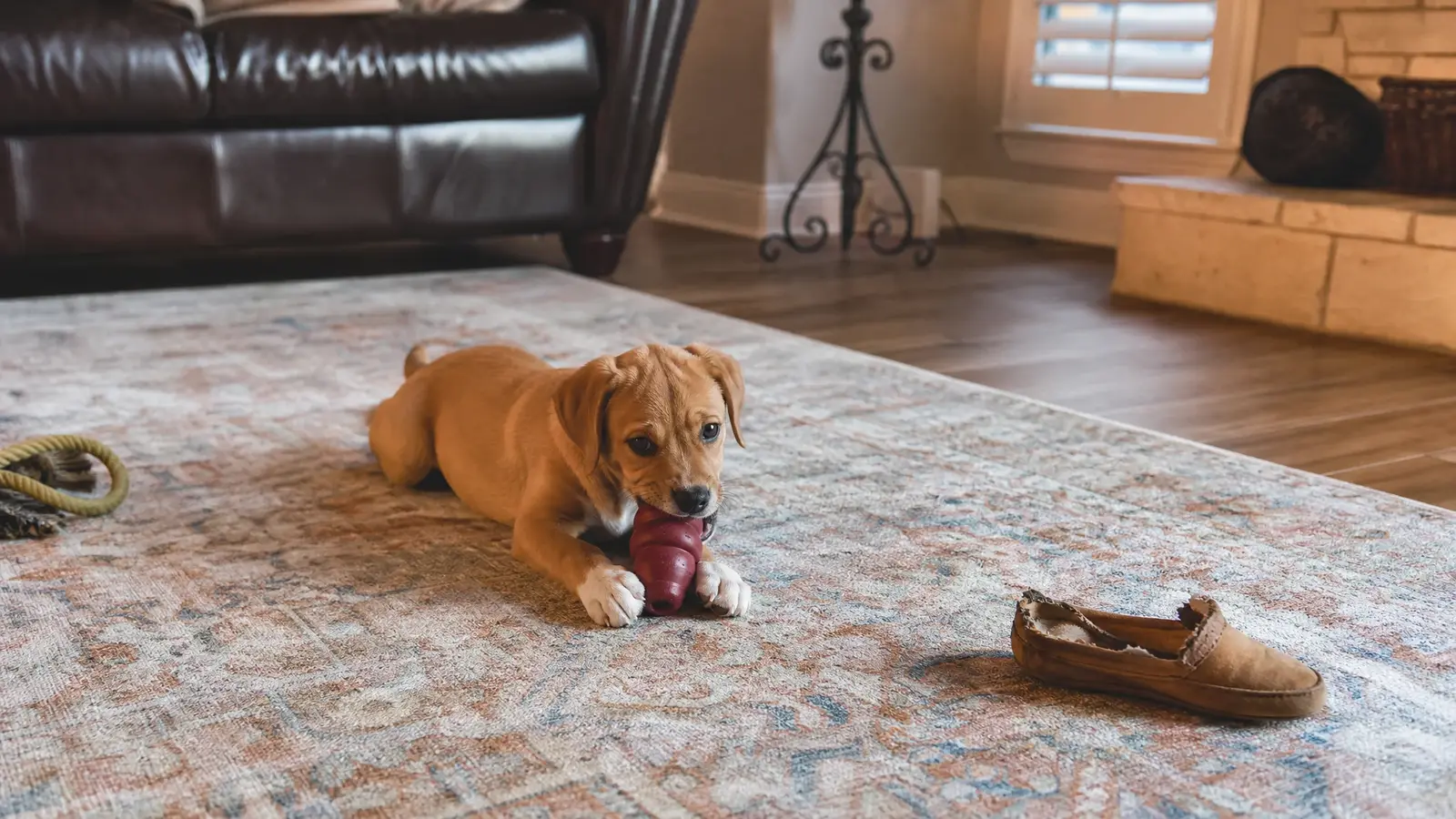
Dogs chew and dig because it is natural, fun and often a way to burn energy or cope with stress, so the fix is to give them better outlets and control access to the wrong ones. We help Arlington owners manage the house, the yard and the heat so that chewing and digging become safe and predictable.
Tell us what your dog chews or digs, indoors or along the backyard fence
- In-person training in Arlington and nearby areas
- Online training anywhere
- Reward-based methods only
Why does my dog destroy things, and is it separation anxiety?
Not always. Destruction can come from boredom, teething or anxiety, and the clues are when, where and what gets damaged. If your dog only destroys things when you leave, panics at departures or targets doors and windows, read our separation anxiety page.
| What the dog destroys | Likely cause | First step |
|---|---|---|
| Shoes, remote controls, furniture | Teething or boredom | Put items away, offer approved chews |
| Doors, windows, crate | Anxiety or panic | Vet check and gradual absence training |
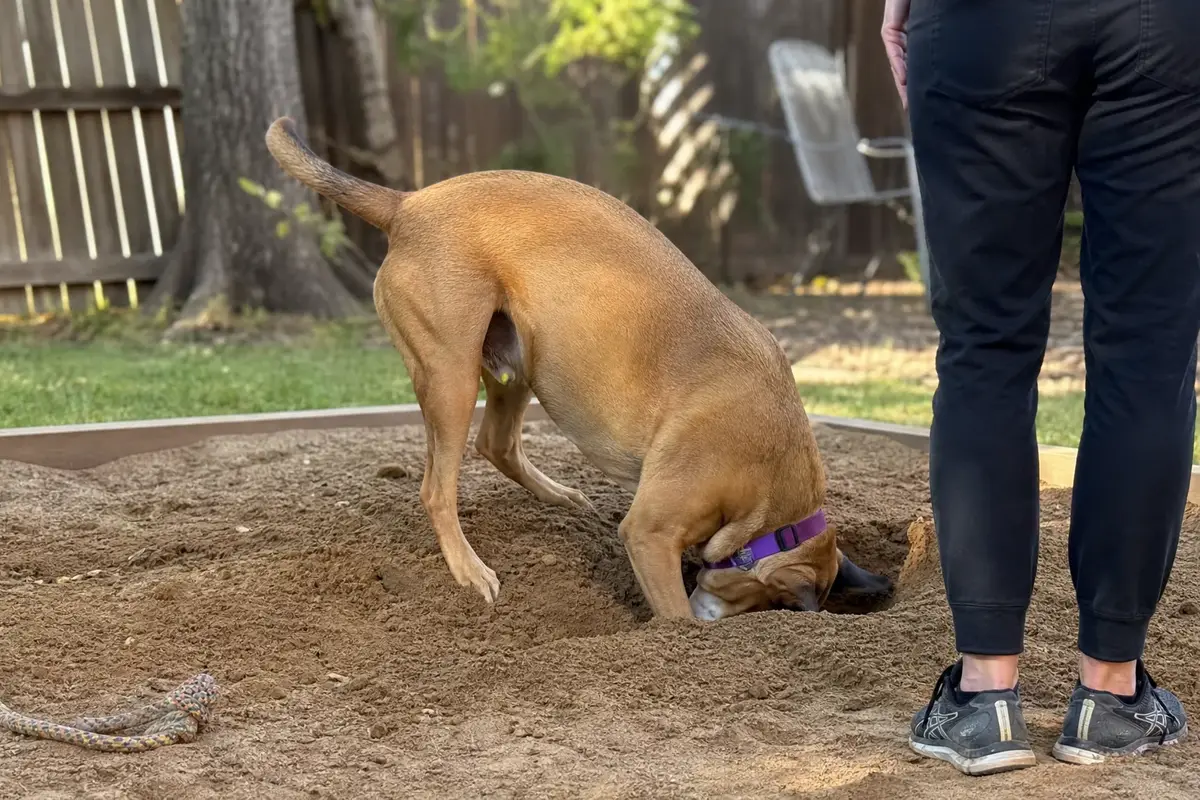
| Garden beds, holes along the fence | Digging to cool, hunt or escape | Supervise, make a dig spot, check fence line |
| Trash, laundry | Scavenging, scent interest | Secure bins, close doors |
| Sprinkler heads, hoses | Play with moving water or boredom | Block access, give water play |
What can I do today to stop chewing and digging?
Control the dog's access, then give it better options. Punishing a dog after you find the damage does not work, because the dog cannot connect it to what it did earlier.
- Dog-proof the house: put shoes, laundry and cords out of reach and use gates.
- Offer several safe chews with different textures and rotate them.
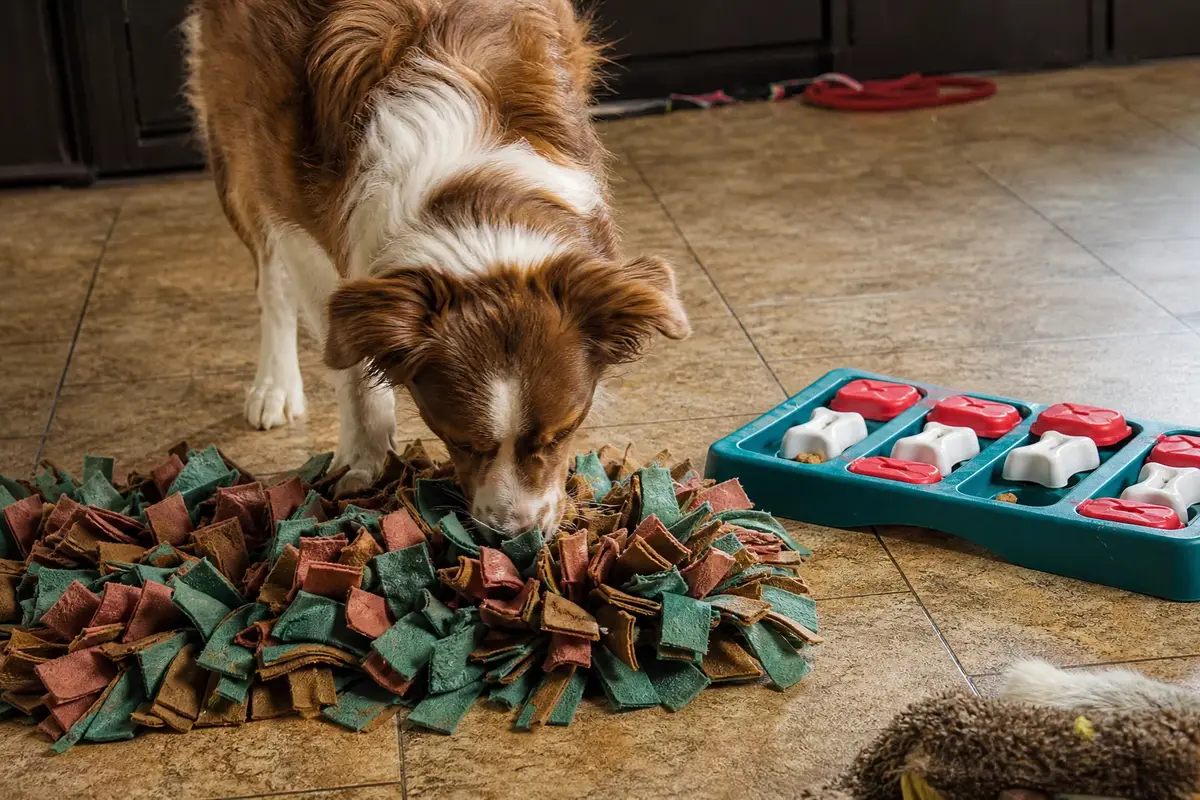
- Use food puzzles and sniffy walks to tire the mind, not just the body.
- Exercise before you leave, and keep departures calm.
- For digging, create a dig box with loose soil or sand and bury treats in it.
- Supervise yard time and interrupt gently when your dog starts digging in the wrong place.
Never leave toys or chews your dog can break into pieces and swallow. If your dog eats something unsafe, contact a vet right away. I-20 Animal Medical Center in Arlington states it welcomes emergencies 24 hours, and VEG in Grand Prairie lists 24/7 emergency care. Confirm hours and directions before you travel.
How do Arlington's heat, storms and backyards affect chewing and digging?
Last verified 2026-11-11. Here is a common situation Arlington owners face: a dog left in a fenced backyard through a hot afternoon digs shaded holes along the fence and chews the sprinkler lines. The nearest official weather station, DFW airport, averages about 20 days a year at or above 100F, with the average first 100F day around July 1 (NWS Fort Worth, DFW annual normals). In that heat, many dogs dig to reach cooler soil, so shade, fresh water and indoor time matter more than punishment.
Spring is the other pressure point. The National Weather Service says severe thunderstorms, large hail and tornadoes occur nearly every year in the Dallas/Fort Worth area, and spring and fall are the wettest seasons (NWS Fort Worth, DFW Climate Narrative). Storm-stressed dogs may chew doors or dig under fences, so see our fireworks and storm fear page if that sounds familiar.
The city's own pet guidance says never to leave a pet outside in inclement weather, to provide proper shelter, and not to tether a dog to a stationary object (City of Arlington, Responsible Pet Ownership). It also advises watching small pets closely in backyards, especially between dusk and dawn, when wildlife is most active (City of Arlington wildlife guidance). A dog digging at night may be responding to wildlife along the fence, so bring it inside after dark.
How we train chewing and digging
We combine management with teaching. The AVSAB position says reward-based methods are recommended for all training and that aversive methods should not be used (AVSAB statement via Purdue), so we never use punishment, spray or shock devices.
- Find the reason. Teething, boredom, anxiety, heat or wildlife.
- Prevent access. Gates, closed doors, secured trash and supervised yard time.
- Teach what to chew. Swap forbidden items for approved ones with a trade.
- Create a dig spot. Bury treats in a box and reward digging there.
- Meet the need. Add exercise, sniffing and food puzzles to the daily routine.
- Coach the household. Everyone follows the same rules, so the dog is not confused.
A typical first week: we set up the chew rotation, mark off the problem areas, and start a two-minute trade game twice a day. For diggers, we bury a few treats in the dig box while you watch, then let your dog find them, and we calmly guide your dog there whenever it heads for the flower bed instead. Keep notes on what your dog destroyed and when, since patterns often point to the cause.
Short sessions and steady routines work best. How quickly your dog settles depends on its age and energy and on how consistently you follow the plan, and many puppies simply need time to outgrow teething.
Is in-person or online training better for chewing and digging?
Online coaching works well for most chewing and digging plans, since the work is a household routine and a yard setup. In-person helps if destruction comes with panic, escape attempts or injuries. Compare in-person private training with online dog training, then apply with a few photos or a video of the problem areas.
Frequently asked questions
Why does my dog chew everything when I leave?
It might be boredom, but it can also be anxiety. If your dog drools, paces or targets doors, consider separation anxiety and see your vet.
Should I show my dog the damage and scold it?
No. Dogs do not link a scolding to something done hours ago, and it just adds stress. Prevent access and reward the right behavior.
Will exercise stop digging?
It helps, but it is not enough on its own. Digging is also instinctive, so a dig spot and supervision are often needed.
Which chews are safe?
It depends on the dog's size and chewing style, so ask your vet. Avoid items that break into chunks or splinter, and supervise new chews.
Can I leave my dog in the yard to dig and play while I work?
In Arlington's summer heat and storm seasons, that is usually risky. The city says never to leave a pet outside in inclement weather without shelter, so indoor management is safer.
Keep reading
- Separation anxiety trainingRead more →
- Puppy training in ArlingtonRead more →
- Training in the Arlington climateRead more →
- In-person private dog training in ArlingtonRead more →
- Online dog training for chewing and diggingRead more →
- Apply for trainingRead more →
Sources
- NWS Fort Worth, DFW annual normals (nearest official station) (last verified 2026-11-11)
- NWS Fort Worth, Dallas/Fort Worth Climate Narrative (last verified 2026-11-11)
- City of Arlington, Responsible Pet Ownership (last verified 2026-11-11)
- City of Arlington, Coexisting Safely with Urban Wildlife (Sept 2026) (last verified 2026-11-11)
- I-20 Animal Medical Center (last verified 2026-11-11)
- VEG Grand Prairie (last verified 2026-11-11)
- AVSAB humane dog training position (via Purdue Canine Welfare Science Center) (last verified 2026-11-11)
Tell us what your dog chews or digs, indoors or along the backyard fence
- In-person training in Arlington and nearby areas
- Online training anywhere
- Reward-based methods only