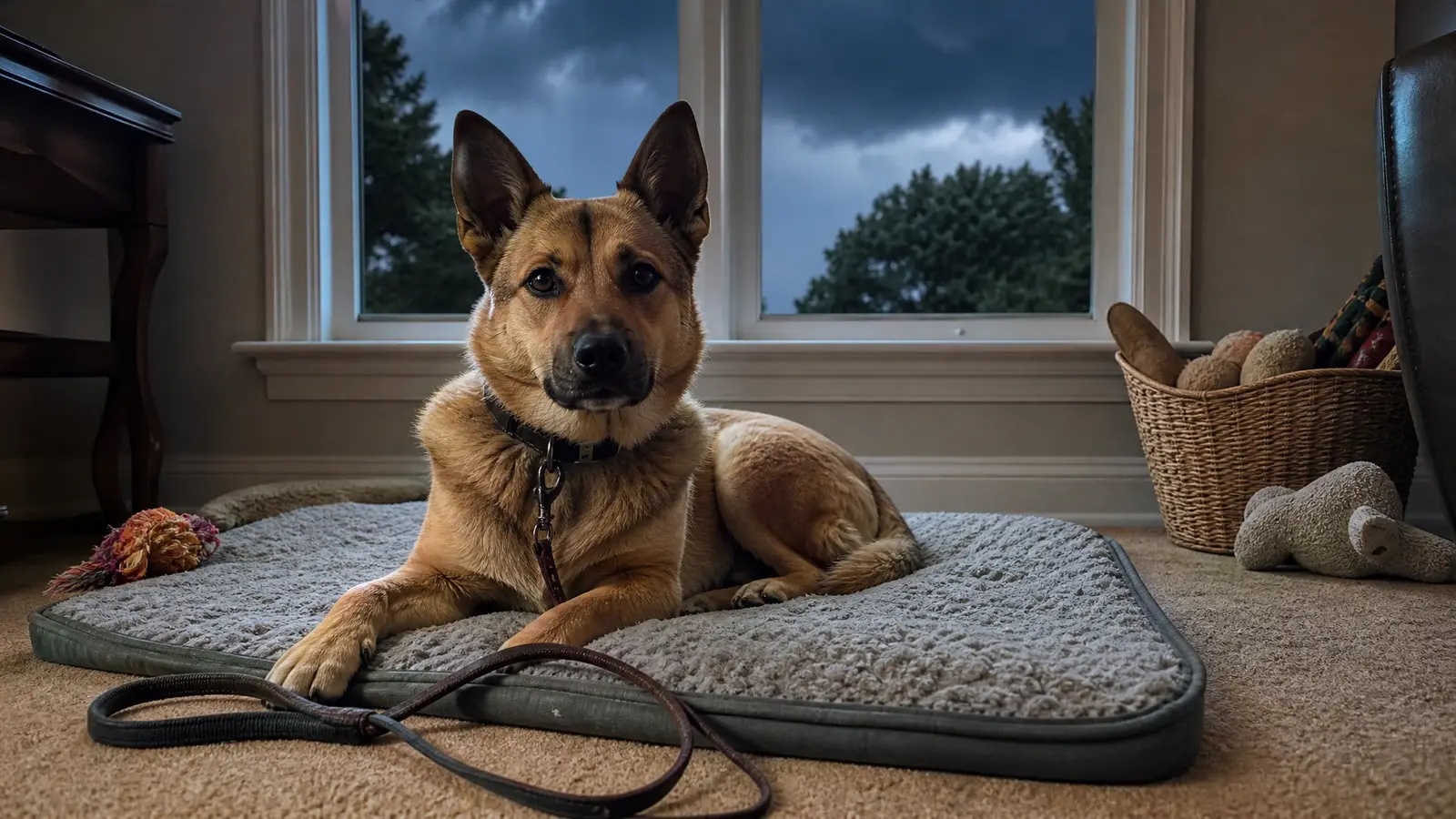
Most dogs afraid of fireworks and thunder can learn to cope, but it starts well before the noise, with management on the night and gradual training in between. Arlington owners get a hard version of this: fireworks are illegal here yet still heard, and spring storms roll through the Metroplex nearly every year.
Tell us about your noise-fearful dog, from Rush Creek walks to July 4 nights
- In-person training in Arlington and nearby areas
- Online training anywhere
- Reward-based methods only
Why is my dog so afraid of fireworks and thunder?
Because the sound is sudden, loud, unpredictable and impossible to escape. Dogs do not understand that a boom is harmless, and each scary night can make the next one worse.
Thunder adds pressure changes, flashes and wind, so storm fear often grows from a dog that was only mildly startled at first. Fear can also spread: a dog afraid of fireworks may start reacting to a dropped pan, a truck door or a distant pop.
Common signs owners see:
- Panting, pacing and trembling well before the noise peaks
- Hiding in a bathtub, closet or behind a toilet
- Refusing food or treats that are normally easy to win
- Trying to dig out, chew out or bolt through a door
- Clinging to you, or going quiet and frozen
If your dog will not eat a treat during the noise, that tells us the fear is high. It does not mean the dog is stubborn.
What should I do on the night itself?
Keep your dog safe and as calm as the situation allows; training comes later. Here is how the night differs from the weeks around it.
| When | Goal | What helps |
|---|---|---|
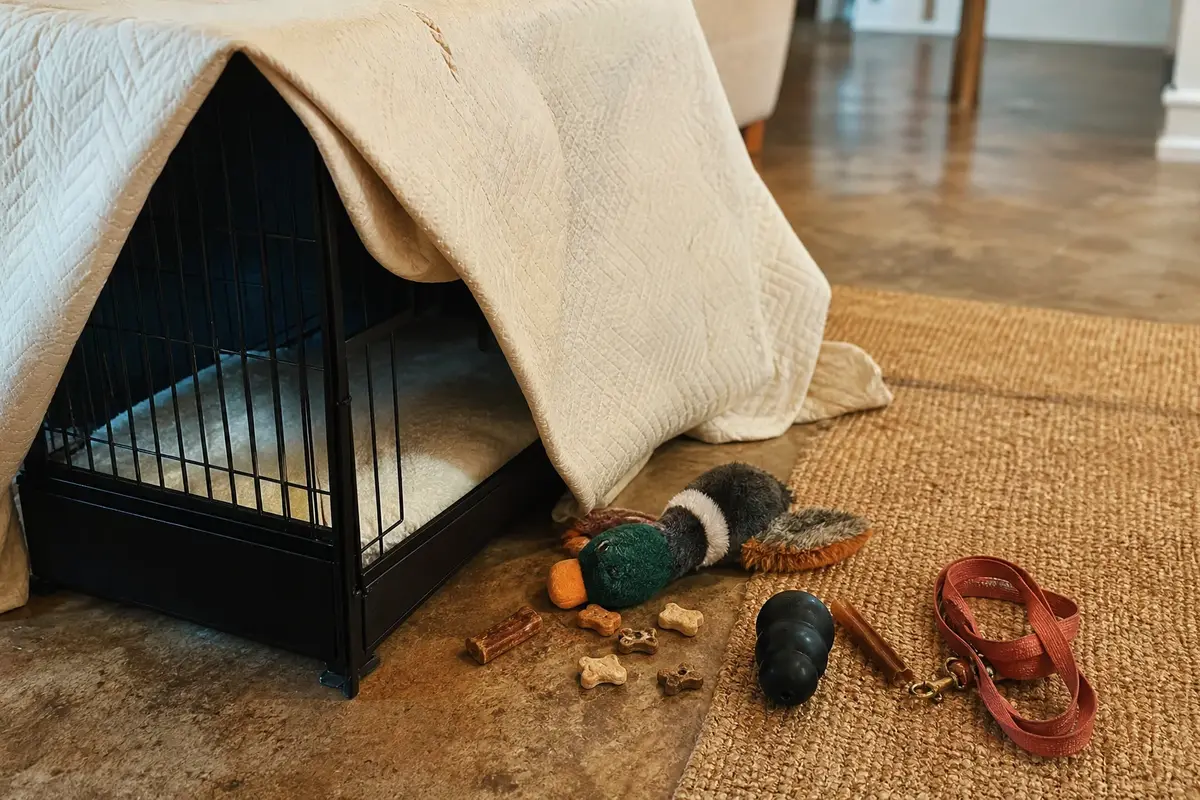
| Night of fireworks or a storm | Safety and comfort | A den-like room with the door shut, background sound or TV, a chew or stuffed food toy, secure windows, a well-fitted collar with ID tags |
| Days before | Prevent escapes | Check fences and gates, confirm microchip details, keep a recent photo |
| Calm weeks in between | Change how the dog feels about sound | Gradual sound practice paired with food, at a volume your dog barely notices |
| Year-round | Build resilience | Predictable routines, enrichment, exercise that suits the season |
Do not punish panting, whining or hiding. Do not drag a frightened dog out of a hiding spot, and do not take a fearful dog to watch fireworks to get used to them. Comforting a scared dog does not make the fear worse; fear is an emotion, not a behavior you can reward.
What does Arlington's fireworks rule mean for my dog?
It means you cannot count on a quiet night. Fireworks use is illegal in the City of Arlington and people caught using them may face a fine up to $2,000, according to the city's June 2026 notice. The same notice says the city ran an online reporting tool July 3 to 6 in 2026. Illegal fireworks still happen, and dogs hear them from neighboring areas too.
The city's Independence Day pet-safety guidance adds two points that matter for training:
- The July 4 period is historically when more pets go missing than at any other time.
- Microchips and current contact details on the registry are the first line of defense, because fireworks can frighten even confident pets.
So for Arlington owners, noise training has two jobs: lower the fear, and make bolting less likely. If your dog does get out, the city's Animals and Pets page lists lost and found pets, and the Animal Services Center in southeast Arlington is where found dogs are taken. Low-cost vaccines and microchips are offered through TCAP, a city community partner, on the schedule posted on the city's low-cost vet page. Check those pages for current details (last verified 2026-11-11).
What does a hard storm evening look like for Arlington owners?
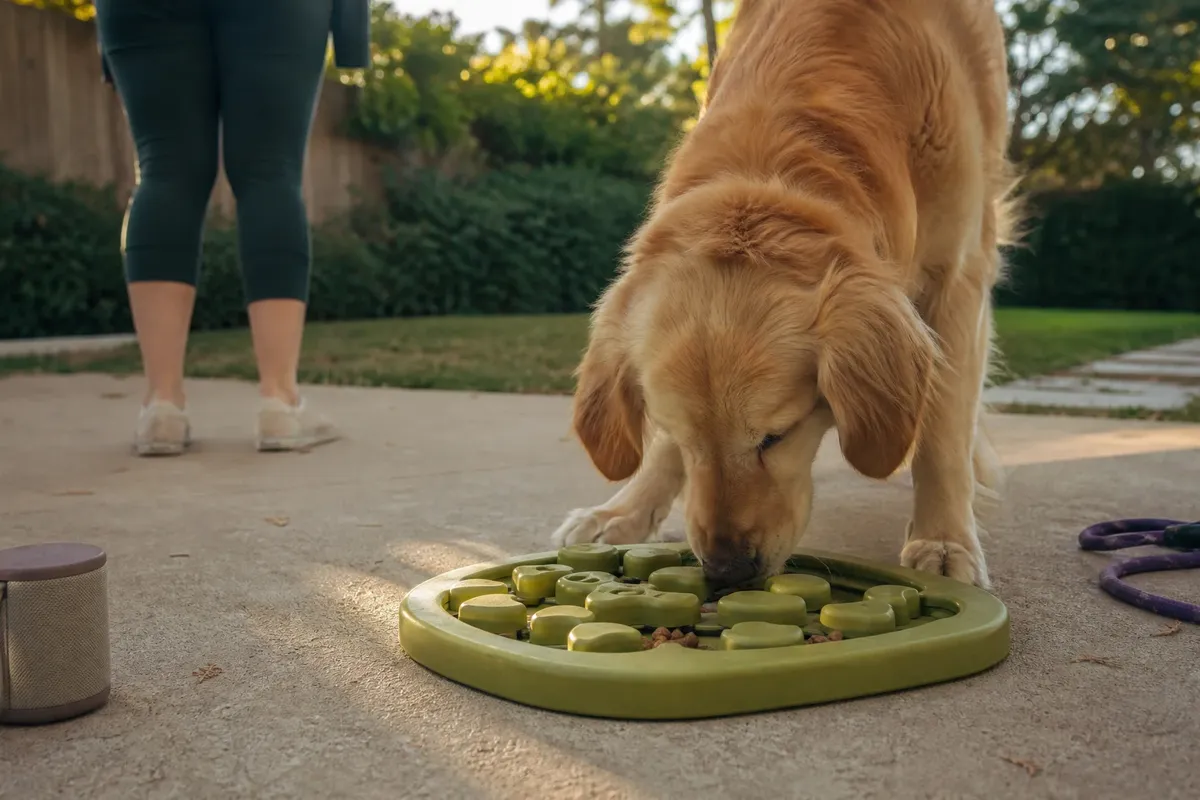
Here is a common situation Arlington owners face. A spring evening storm warning goes off, a dog that was relaxed all afternoon starts pacing, and the owner is deciding whether to go ahead with the usual walk before the weather turns. Everyone in the house is tense, the dog reads it, and the first rumble sends the dog under a desk.
What changes the outcome is what happened earlier in the week. Owners who already have a quiet room set up, a stuffed chew in the freezer, and a sound-practice routine in place get through the same storm with far less drama than owners who are improvising. NWS Fort Worth describes spring as the peak of thunderstorm frequency, and spring and fall as the wettest seasons, so there is a lot of repeat exposure in Arlington. That is bad if the dog is learning fear, and useful if you are teaching calm in small steps.
A local audience insight: many Arlington households mix dogs that can burn off energy at Rush Creek Dog Park with dogs living in townhomes with no yard, so the plan has to work for both. A dog that has exercised earlier in the day usually handles evening noise better, so we plan around the exercise your dog can actually get.
How we train a dog who is afraid of loud noises
We use reward-based methods, gradual desensitization and counter-conditioning, short sessions and owner coaching. We do not use shock, startle devices, or flooding (blasting the sound until the dog gives up).
- Management first. We set up the safe space, the sound masking, the escape-proofing and the ID before anything else.
- Find the threshold. We play a quiet recording at a volume your dog notices but does not worry about, usually quieter than owners expect.
- Pair sound with something good. Sound, then food, every time. The goal is a dog whose face says, 'oh, that again, where is my treat?'
- Raise the volume slowly. Only when the dog is relaxed at the current level, and we step back at the first sign of worry.
- Add real-world triggers. Doors, wind, flashes and other cues that come with storms, one at a time.
- Practice a cue. A settle-on-a-mat routine gives your dog something to do when the sky gets loud.
Sessions are short and boring on purpose. How fast a dog progresses depends on the dog, its history and how consistently the owner practices, so we do not promise a timeline or a result.
When should I talk to my vet about noise fear?
Talk to your vet if your dog injures itself, destroys doors or crates, will not eat or drink for hours, or has fear that spreads to ordinary sounds. Severe noise fear can be a medical and behavioral problem together, and your vet decides whether medication or a behavior referral belongs in the plan. We do not diagnose or prescribe. We work alongside your vet's plan with training and management.
In-person coaching is the better fit when we need to see your home, your windows and your dog's hiding spots. Online coaching works well for sound-practice routines and check-ins once the setup is right. Both use the same reward-based approach.
Frequently asked questions
Can fireworks fear be cured?
Many dogs improve a lot, but we cannot promise a cure. Progress depends on the dog's history, the owner's consistency and how often the dog is exposed to the sound between sessions.
Should I comfort my dog during a storm?
Yes. Calm company, a safe room and a chew are fine. Fear is an emotion, so comforting does not reward it. Stay relaxed yourself, because dogs read tension.
Do thunder shirts or calming sprays work?
Some owners find they take the edge off, but results vary by dog and we treat them as extras, not a plan. They never replace safe management and gradual sound training.
When is the best time to start training for July 4?
Start many weeks ahead, in calm weather, so you are not trying to teach on the night. If it is already close, focus on management, ID and microchip details first.
Is in-person or online training better for noise fear?
In-person is best when we need to see your space and tailor the setup. Online works well for guided sound-practice routines once the basics are in place. You can tell us which you prefer on your application.
Keep reading
- Apply for noise-fear trainingRead more →
- private in-home dog training in ArlingtonRead more →
- online dog training for sound practiceRead more →
- help for dogs that bark at soundsRead more →
- training around Arlington heat and stormsRead more →
Sources
- City of Arlington, Illegal Firework Reporting (June 2026) (last verified 2026-11-11)
- City of Arlington, Independence Day Pet Safety (June 2026) (last verified 2026-11-11)
- NWS Fort Worth, DFW Climate Narrative (last verified 2026-11-11)
- City of Arlington, Rush Creek Dog Park (last verified 2026-11-11)
- City of Arlington, Animals and Pets (last verified 2026-11-11)
- City of Arlington, Low-Cost Vet Services (last verified 2026-11-11)
Tell us about your noise-fearful dog, from Rush Creek walks to July 4 nights
- In-person training in Arlington and nearby areas
- Online training anywhere
- Reward-based methods only