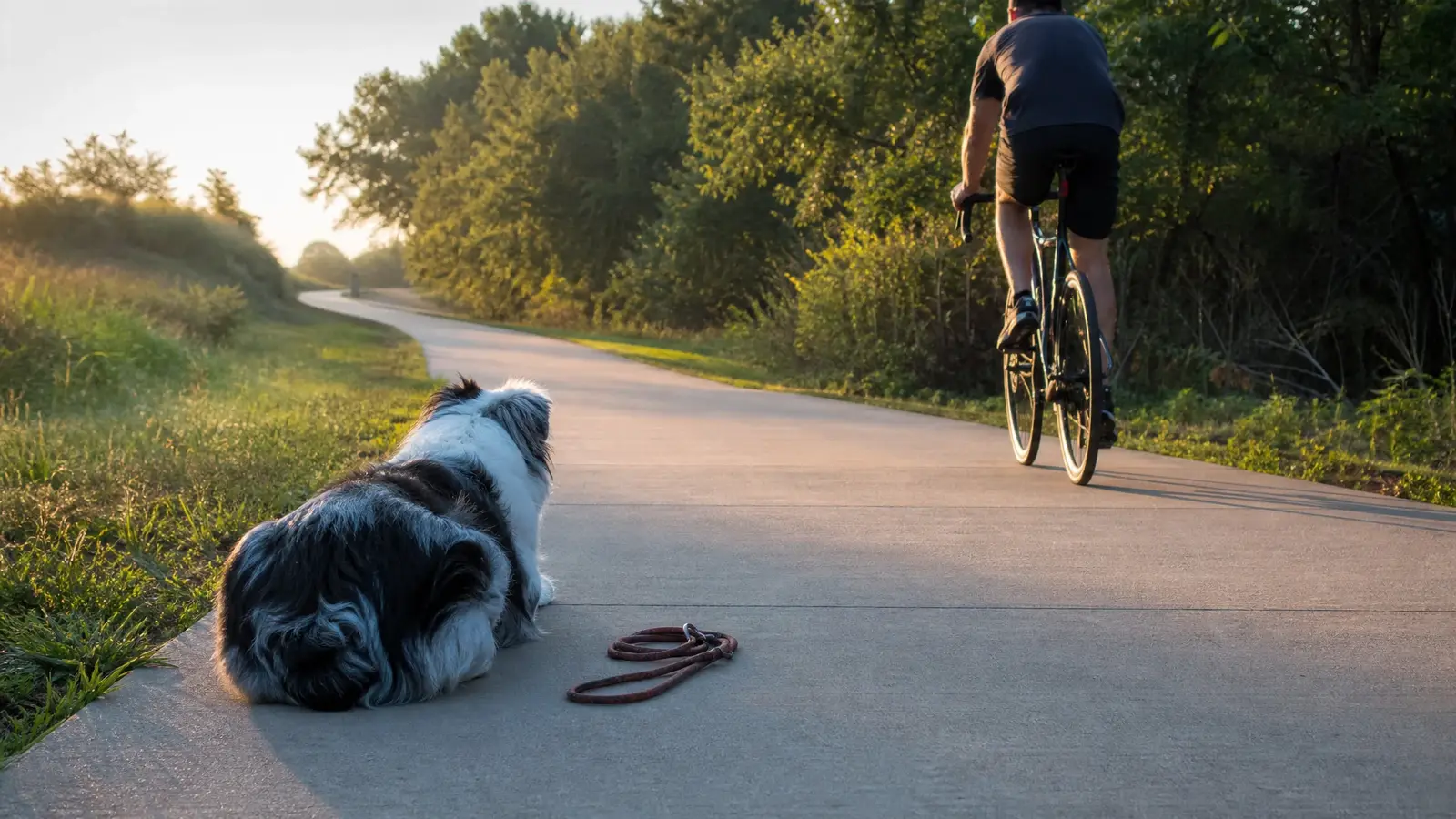
Advanced obedience takes skills your dog already knows at home and makes them hold up around distance, duration and real Arlington distractions. Here is what it covers, how we build it and which city details we plan around, last verified 2026-11-11.
Dog solid at home but unreliable at Veterans Park? Tell us where you want it to work.
- In-person training in Arlington and nearby areas
- Online training anywhere
- Reward-based methods only
Who is advanced obedience for?
It is for dogs whose basics are good in the living room but fall apart outside. If your dog sits perfectly at home and ignores you at a trailhead, this is the next step.
- Dogs that know cues but break stays when something moves
- Owners who want a reliable recall on a long line in open spaces
- Dogs heading toward Canine Good Citizen practice or therapy-dog prep
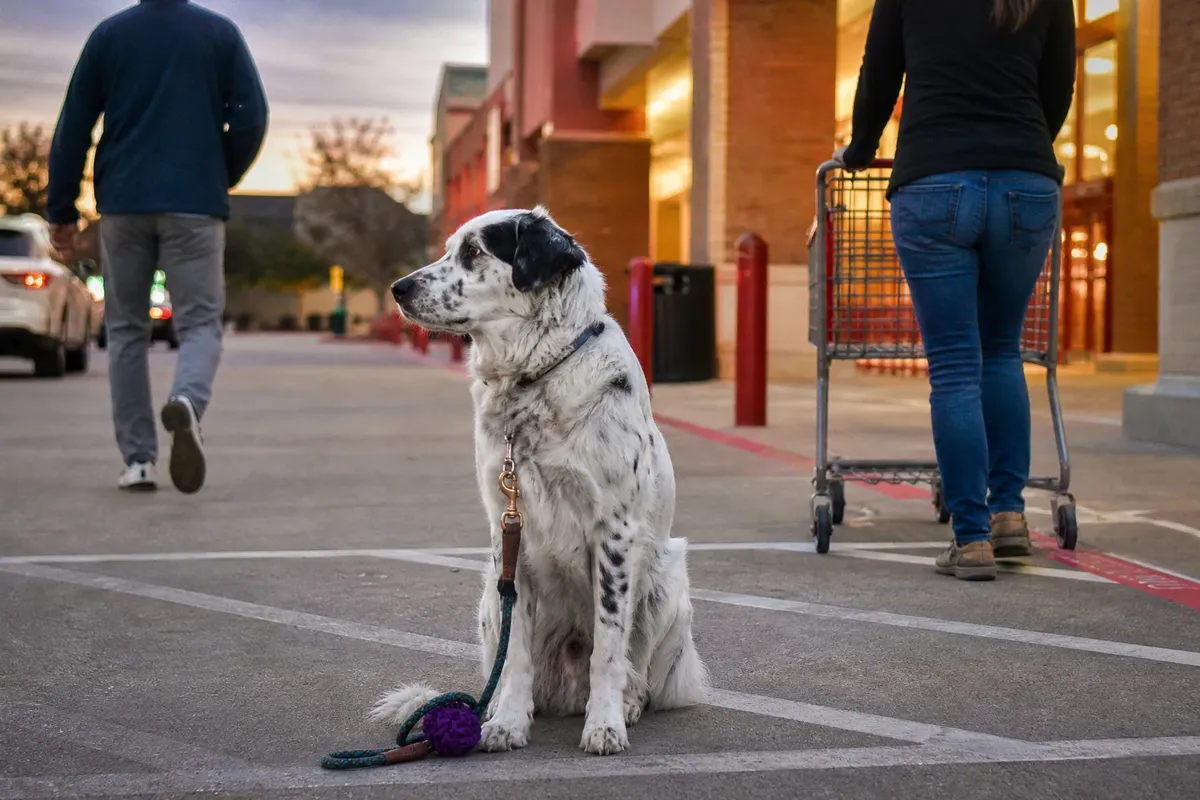
- Households that want calm manners at patios, parking lots and busy sidewalks
What is different from basic obedience?
The cues are the same; the conditions are harder. We raise one variable at a time so the dog keeps winning.
| Skill | Basic target | Advanced target |
|---|---|---|
| Stay | Seconds, in the room | Minutes, with the handler moving away and out of sight, then with distractions |
| Recall | Indoors and yard | On a long line outdoors, past scents, joggers and other dogs |
| Loose-leash walking | Quiet street | Shared trails, parking lots, crowded entrances |
| Settle | On a mat at home | On a mat anywhere, for as long as needed |
| Leave it | Treat on the floor | Food wrappers, squirrels, other dogs at a distance |
Think of it as a ladder. Your dog does not move up a rung until it is succeeding about as often as it fails at the current one, and we step back down whenever the environment surprises us. A loud truck, a dropped sandwich or an off-leash dog in the distance all count as surprises, and none of them is a sign that training failed. They are a sign the setup got too hard for that day.
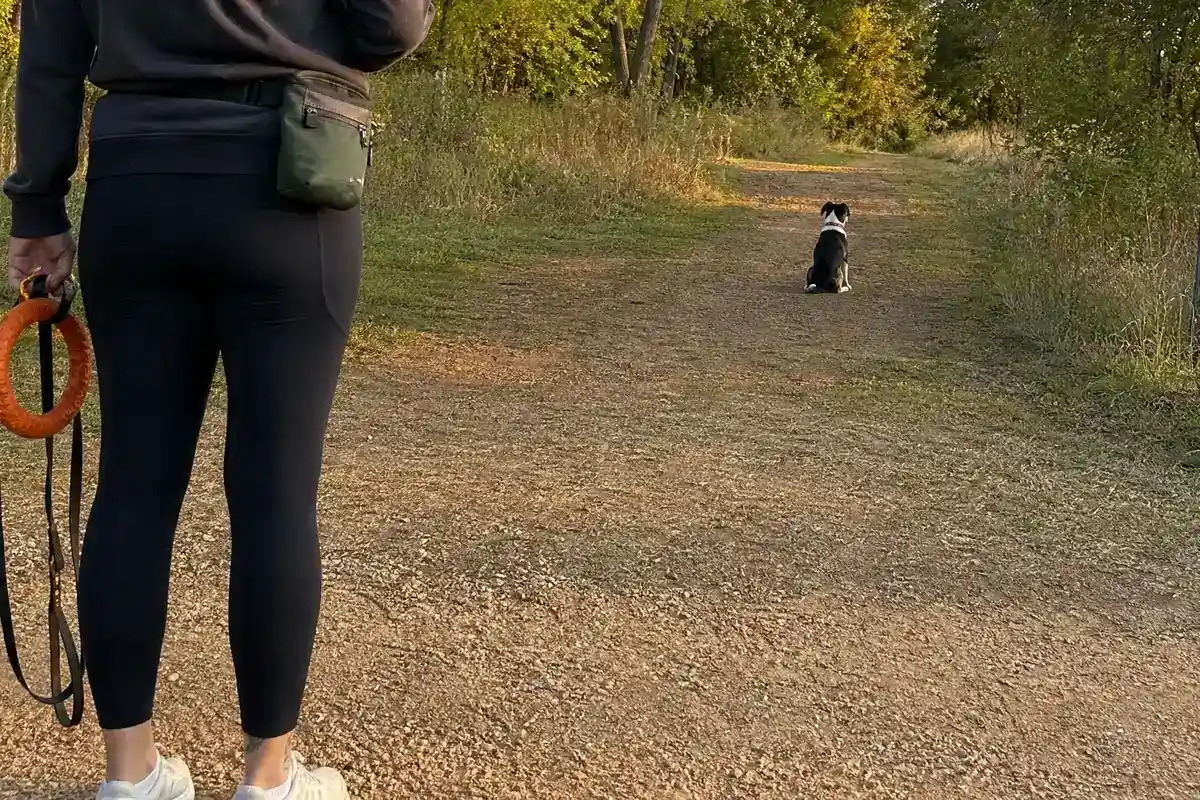
Duration work is the least glamorous and often the most useful. A dog that can hold a down on a mat for fifteen minutes while you sit at an outdoor table is a dog you can take places. We build that with tiny increments and frequent rewards, then space the rewards out as the behavior firms up.
How do we plan around Arlington's parks and trails?
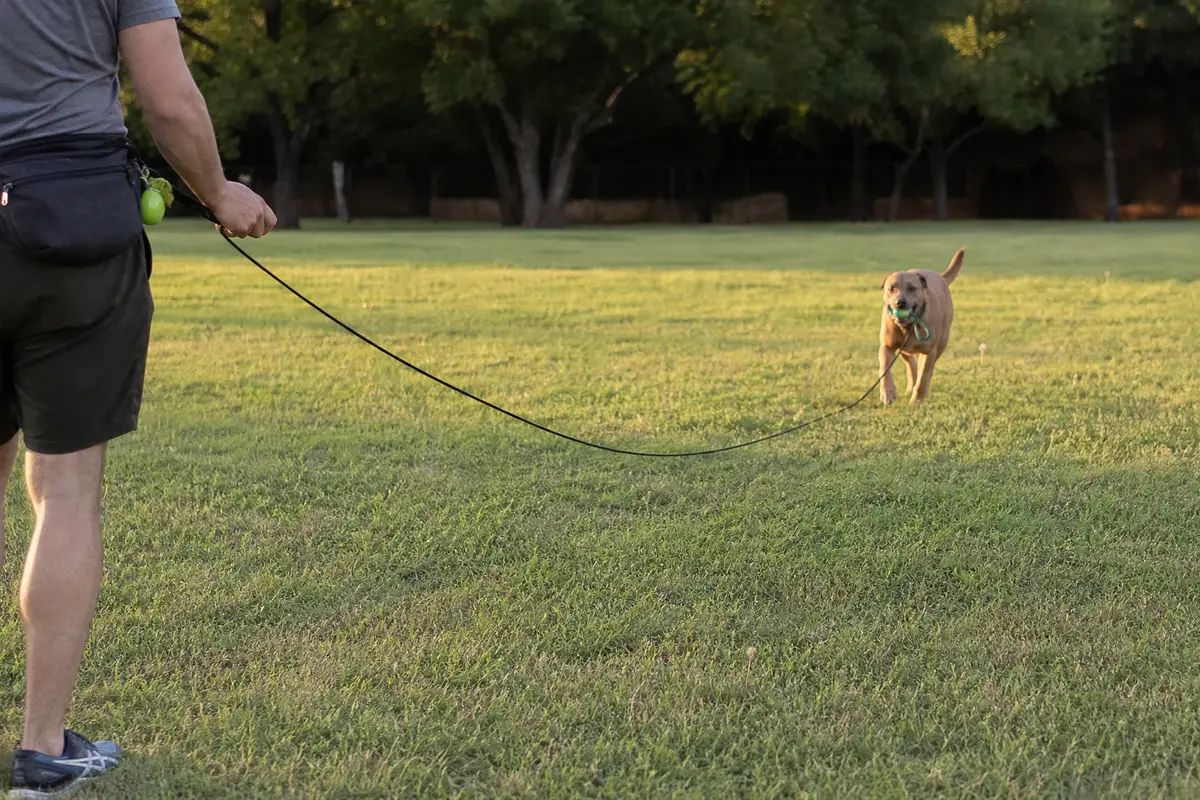
Arlington has real places to practice. The city's Park Finder lists Veterans Park with a 1.44-mile hike/bike trail and River Legacy Park with more than 10 miles of cross-country trails. Neither city page lists pet or leash rules, and the city tells visitors to research park-specific ordinances, including rules about off-leash pets, before they go. We tell owners to check posted signs and the city's park pages, and we plan sessions on a leash or long line.
The city also says motorized vehicles including e-scooters and e-bikes are not allowed on hike and bike trails, but trails are still shared with walkers and cyclists. That mix is the point of practice: a dog that can stay calm while a bike passes at a polite distance is a dog that can use the trail.
What does a common Arlington scenario look like?
A common situation Arlington owners face: a dog that heels nicely around a quiet cul-de-sac but pulls and barks the first time a cyclist rolls past on a park trail. We start with the same exercise at a distance well below the dog's trigger point, mark and reward calm, and move closer over several sessions, always ending before the dog gets over threshold. Gradual desensitization and counter-conditioning do the work, not louder cues.
Arlington is spread over roughly 99.7 square miles (Wikipedia, secondary source), so owners in the north, south and west often use different parks. We plan around whichever place you actually walk.
How we train advanced obedience
We build reliability the way a coach builds fitness: small steps, plenty of rest and a clear measure of progress.
- Raise distance, duration or distraction, never two at once
- Use a long line for recall practice in open areas, never an unfenced free run
- Pay well for hard choices; thin treats gradually, not suddenly
- Coach the owner on reading early stress signals and ending a rep early
We use humane tools only. Veterinary behavior statements advise against shock, prong and choke devices, so we do not use them.
A typical advanced session starts in a low-distraction spot, confirms the behavior, and then moves to a harder location only if the dog is succeeding. We keep notes on distance, duration and distraction levels so you can see exactly what changed from week to week. When a dog fails a rep, we treat it as information about how hard the setup was, not as a disobedient dog.
Between lessons, owners practice on routes they already walk. We help you choose two or three spots at different difficulty levels, such as a quiet block, a busier sidewalk and a park trail at an off-peak hour. Because the city advises outdoor activity in the morning or evening during hot months, we often schedule outdoor practice in those cooler windows anyway.
Who is advanced obedience not for?
It is not for dogs still learning basics, or for dogs whose main issue is fear or aggression. We would start with the basic program or a behavior-specific plan first. If your dog cannot settle in a quiet room, a busy trail will not teach it to.
Frequently asked questions
Can advanced obedience get my dog off leash in a park?
Reliability is built gradually, and the city tells visitors to check park-specific rules about off-leash pets. We train in controlled settings first and tell you plainly what the city publishes about where off-leash is allowed.
How do I know my dog is ready?
If your dog responds reliably to basic cues at home and on quiet streets, it is usually ready. We check readiness in the first lesson.
Do I need special equipment?
A flat collar or front-clip harness, a 6-foot leash and a long line. We help you choose equipment in the first lesson.
What if my dog gets worse outside?
That is normal. We lower the difficulty, mark calm behavior and rebuild in smaller steps.
Keep reading
- Basic obedience training firstRead more →
- Off-leash training in ArlingtonRead more →
- Private in-home dog trainingRead more →
- Online dog trainingRead more →
- Canine Good Citizen prepRead more →
- Apply for advanced trainingRead more →
Sources
- City of Arlington Park Finder, Veterans Park (last verified 2026-11-11)
- City of Arlington Park Finder, River Legacy Park (last verified 2026-11-11)
- City of Arlington, How To Responsibly Enjoy Arlington Parks This Summer (June 2025) (last verified 2026-11-11)
- Wikipedia, Arlington, Texas (2020 census summary; secondary source) (last verified 2026-11-11)
- City of Arlington, Heat Safety Tips for Enjoying Arlington Parks This Summer (June 2026) (last verified 2026-11-11)
- AVSAB Humane Dog Training Position Statement (Purdue Canine Welfare Science Center) (last verified 2026-11-11)
- Published private-lesson price pages of four DFW trainers (provenance only; ranges derived) (last verified 2026-11-11)
Dog solid at home but unreliable at Veterans Park? Tell us where you want it to work.
- In-person training in Arlington and nearby areas
- Online training anywhere
- Reward-based methods only