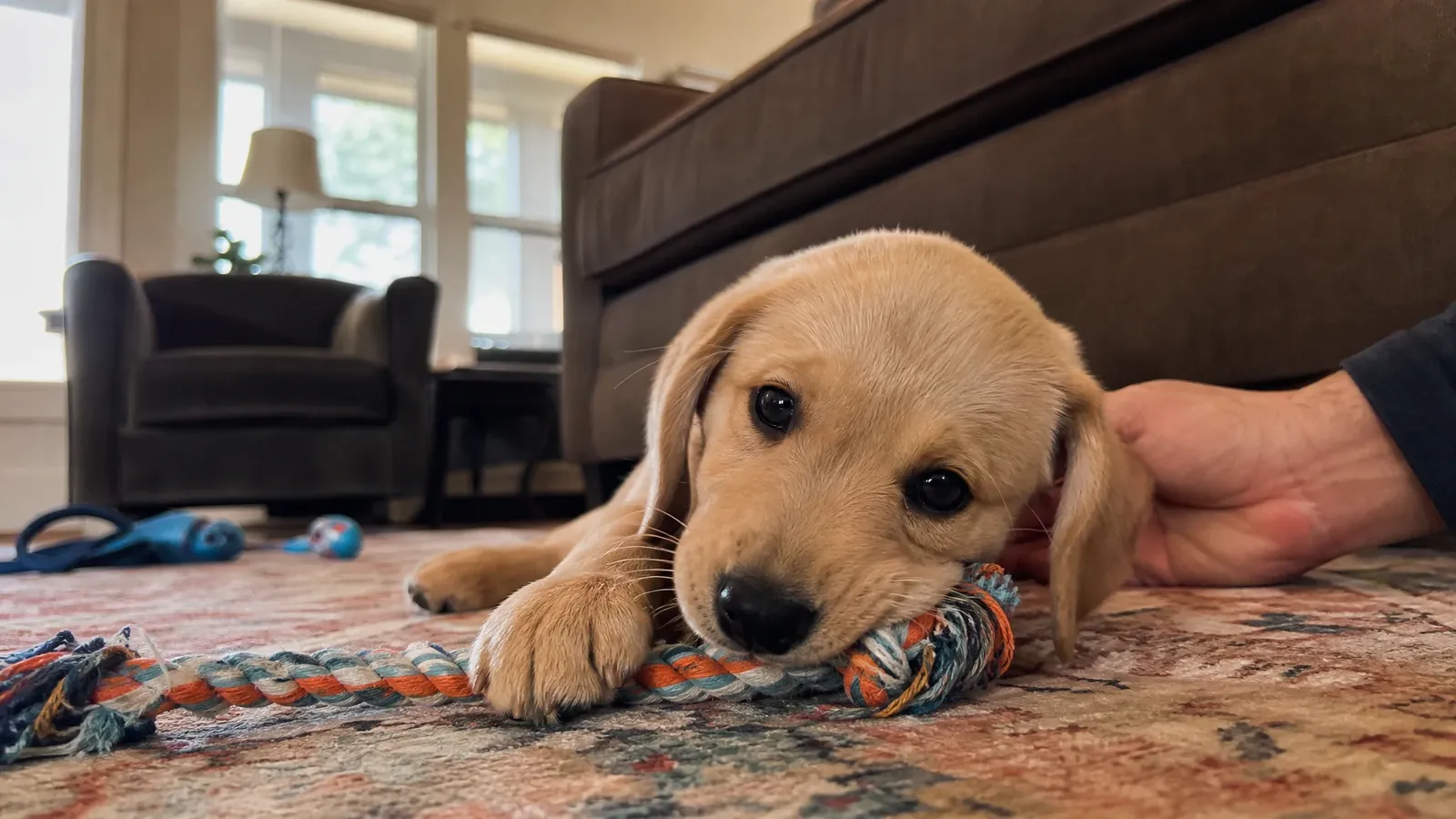
Puppy biting is normal, and it usually fades with management, redirection and rewards for gentle behavior, not with scolding. We coach Arlington families through the toughest stretch, including households with children, and tell you when the biting looks like something more.
Tell us about your puppy, whether from an Arlington Animal Services adoption or a breeder
- In-person training in Arlington and nearby areas
- Online training anywhere
- Reward-based methods only
Why does my puppy bite and nip so much?
Puppies bite because they are teething, exploring, playing and overtired. Rough play with littermates taught them how hard is too hard, and now your hands and ankles stand in for littermates.
| When it happens | Likely reason | What to do |
|---|---|---|
| Evenings, "witching hour" | Overtired and wound up | Calm chew, quiet time, an early nap |
| During hand play | Practice from play | Stop play, redirect to a toy, resume after calm |
| When picked up or handled | Wiggle and object to restraint | Short, rewarded handling sessions |
| Chasing ankles or pant legs | Herding or prey instinct | Toy drag, gate or leash indoors for control |
| Growling with a stiff body | Fear or guarding | See resource guarding and ask for help |
What should I do when my puppy bites me?
Calmly end the moment and give the puppy something it is allowed to bite. Avoid yelling, flicking the nose or holding the mouth shut, which can make puppies more frantic or afraid.
- Stay still, stop play and say "oops" in a calm voice. Give a toy and praise gentle chewing.
- Keep chew toys in every room, frozen if the puppy is teething.
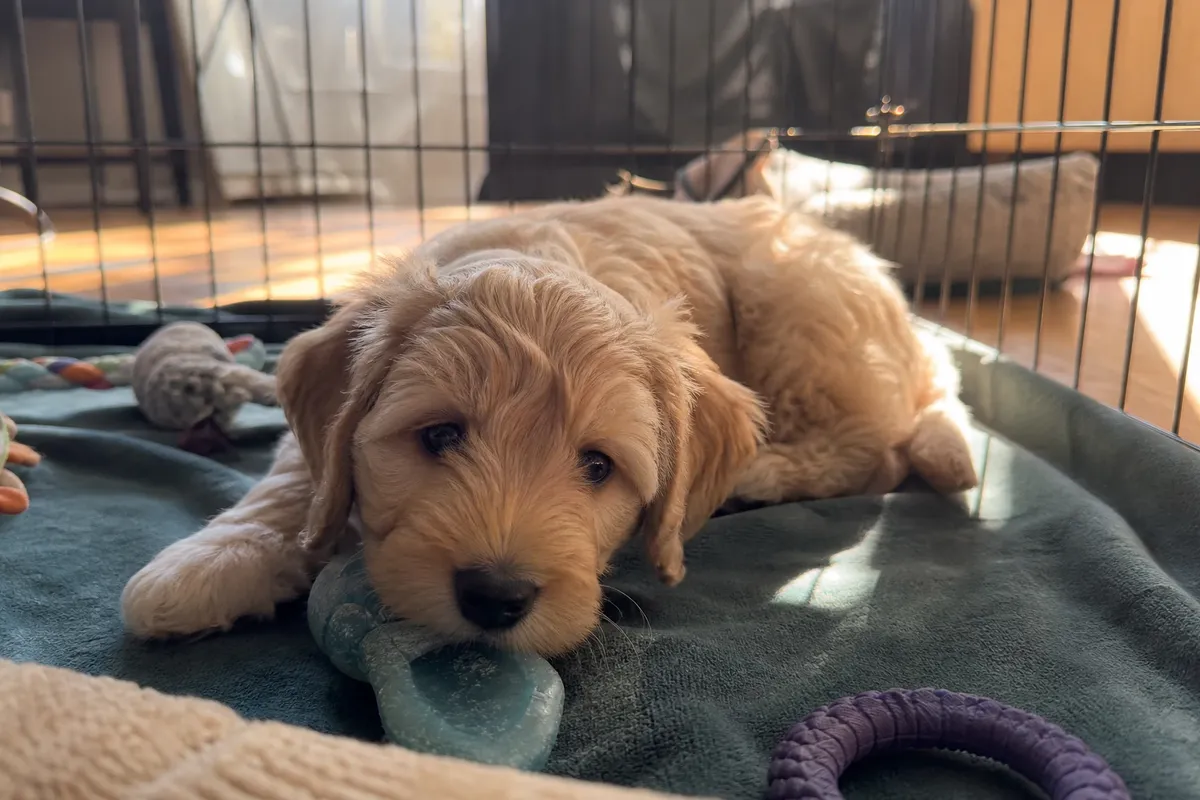
- Use a pen or gate for short, planned breaks so the puppy can settle.
- Reward calm behavior, like lying down or licking a chew, before the puppy gets wild.
- Teach children to stay calm, not squeal or run, and supervise every interaction.
What should Arlington puppy owners know about vaccines and where puppies come from?
Last verified 2026-11-11. Biting work often starts with a new puppy, so a few local points matter. Dogs adopted from Arlington Animal Services come with a spay or neuter, city license for Arlington residents, microchip, core vaccines and rabies vaccine, with a heartworm test for dogs (City of Arlington, Pet Adoption Process). Ask your vet which vaccines your pup still needs.
For follow-up shots on a budget, the city's low-cost vet page lists a TCAP community partner offering low-cost vaccinations on Wednesdays and Fridays from 9 a.m. to noon on S.E. Green Oaks Blvd., with no prices published, so confirm details on the city page (City of Arlington, Low-Cost Vet Services).
On early classes, AVSAB recommends socialization, perhaps in a puppy class, as early as 7 to 8 weeks old, with at least one set of vaccines at least 7 days before the first class according to a trainer's page that reproduces the statement (AVSAB statement via Purdue). That second detail is secondhand, so check with your vet.
Here is a common situation Arlington owners face: a new puppy gets walked on summer afternoons and pulls and bites the leash because the pavement is hot and walks are short. The city's heat guidance says to test pavement with the back of your hand and plan outdoor time for morning or evening (City of Arlington, Heat Safety Tips). Shorter, cooler sessions with chew toys can calm a puppy that is bursting with energy.
How we train puppy biting
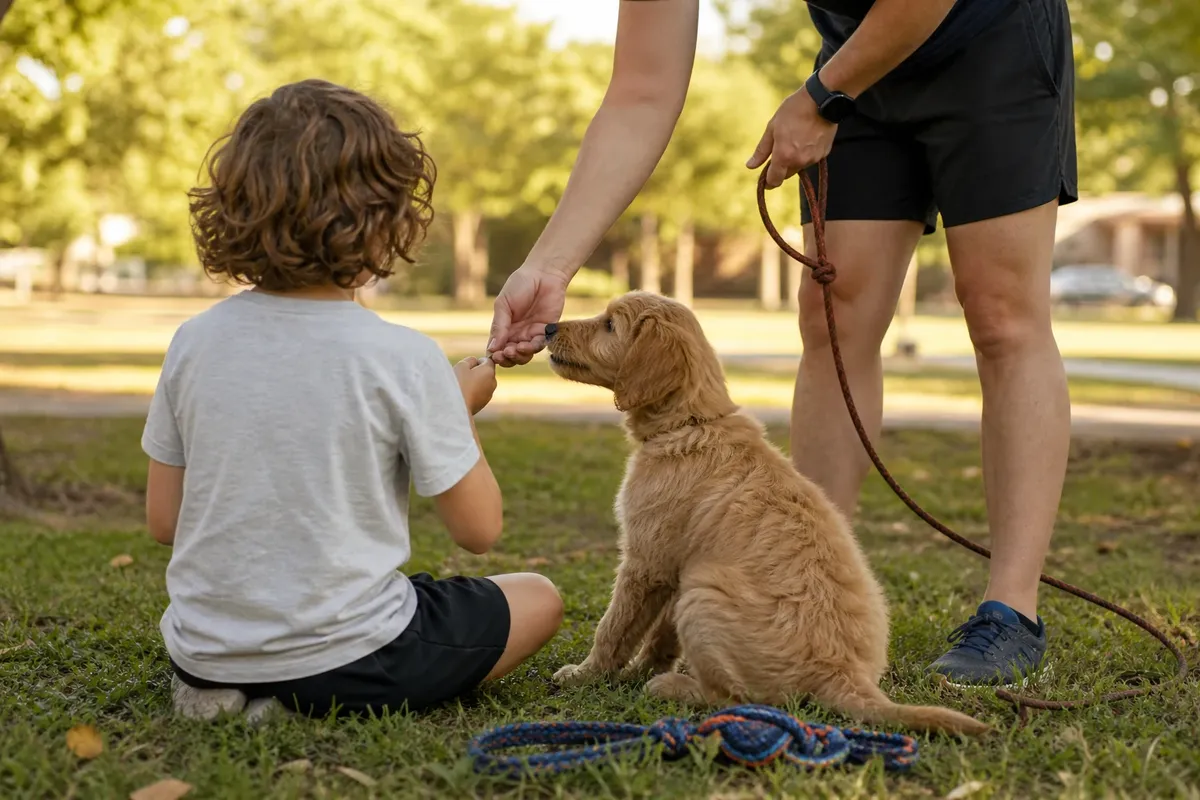
We teach bite inhibition through reward and structure, not intimidation. The goal is a puppy that chooses toys, sits for greetings and relaxes on cue.
- Set up the home. Pens, gates, toy baskets and a nap routine before training begins.
- Redirect. Swap skin for a toy, every time, with the same words.
- Reward soft mouths. Pay for gentle licks and calm hands.
- Structured play. Short tug and fetch games with start and stop cues.
- Teach greetings. Sit or four-on-the-floor earns attention; see jumping.
- Coach the family. Everyone follows the same rules, including children, with age-appropriate supervision.
A typical week at home looks like this: three or four two-minute redirect games spread across the day, one planned nap in a pen after meals, and one calm chew session in the evening when biting tends to peak. We adjust the routine to your puppy's age, breed type and your household schedule, and we check in on what is and is not working.
Sessions are short and consistent. The AVSAB position says reward-based methods are recommended for all training (AVSAB humane training statement). Puppies mature at their own pace, and progress depends on the puppy and how consistent the household is.
Is in-person or online training better for a biting puppy?
For young puppies, in-person coaching helps because we can see how you hold, play and correct, and we can set up your home. Online coaching works well for follow-up and for families who already have a routine. Compare in-person private training with online dog training, and look at our puppy training page, then apply.
Frequently asked questions
At what age does puppy biting stop?
Many puppies mouth less as adult teeth come in over several months, but it depends on the dog and on how the family responds. Without consistent redirection, the habit can stick around.
Should I hold my puppy's mouth closed when it bites?
No. Grabbing the muzzle can frighten a puppy and make it more mouthy. Redirect to a toy and end play calmly.
Is it safe to take my puppy to a dog park?
Ask your vet first, since a young puppy may not be fully vaccinated. Fenced parks put puppies in contact with unfamiliar dogs, so many families wait and use planned puppy meetups instead.
My puppy bites my children. What now?
Separate them calmly with a gate or pen, never leave them alone together and teach children quiet, calm play. Supervision is the key rule.
When should I worry about biting?
Get help if your puppy growls with a stiff body, bites to break skin often, or guards food or toys. Those patterns can be fear or resource guarding rather than normal mouthing.
Keep reading
- Puppy training in ArlingtonRead more →
- Puppy socialization in ArlingtonRead more →
- Stop jumping on peopleRead more →
- In-person private dog training in ArlingtonRead more →
- Online dog training for puppiesRead more →
- Apply for trainingRead more →
Sources
- City of Arlington, Pet Adoption Process (last verified 2026-11-11)
- City of Arlington, Low-Cost Vet Services (last verified 2026-11-11)
- AVSAB position on puppy socialization (via Purdue Canine Welfare Science Center) (last verified 2026-11-11)
- AVSAB humane dog training position (via Purdue Canine Welfare Science Center) (last verified 2026-11-11)
- City of Arlington, Heat Safety Tips for Arlington Parks (June 2026) (last verified 2026-11-11)
Tell us about your puppy, whether from an Arlington Animal Services adoption or a breeder
- In-person training in Arlington and nearby areas
- Online training anywhere
- Reward-based methods only