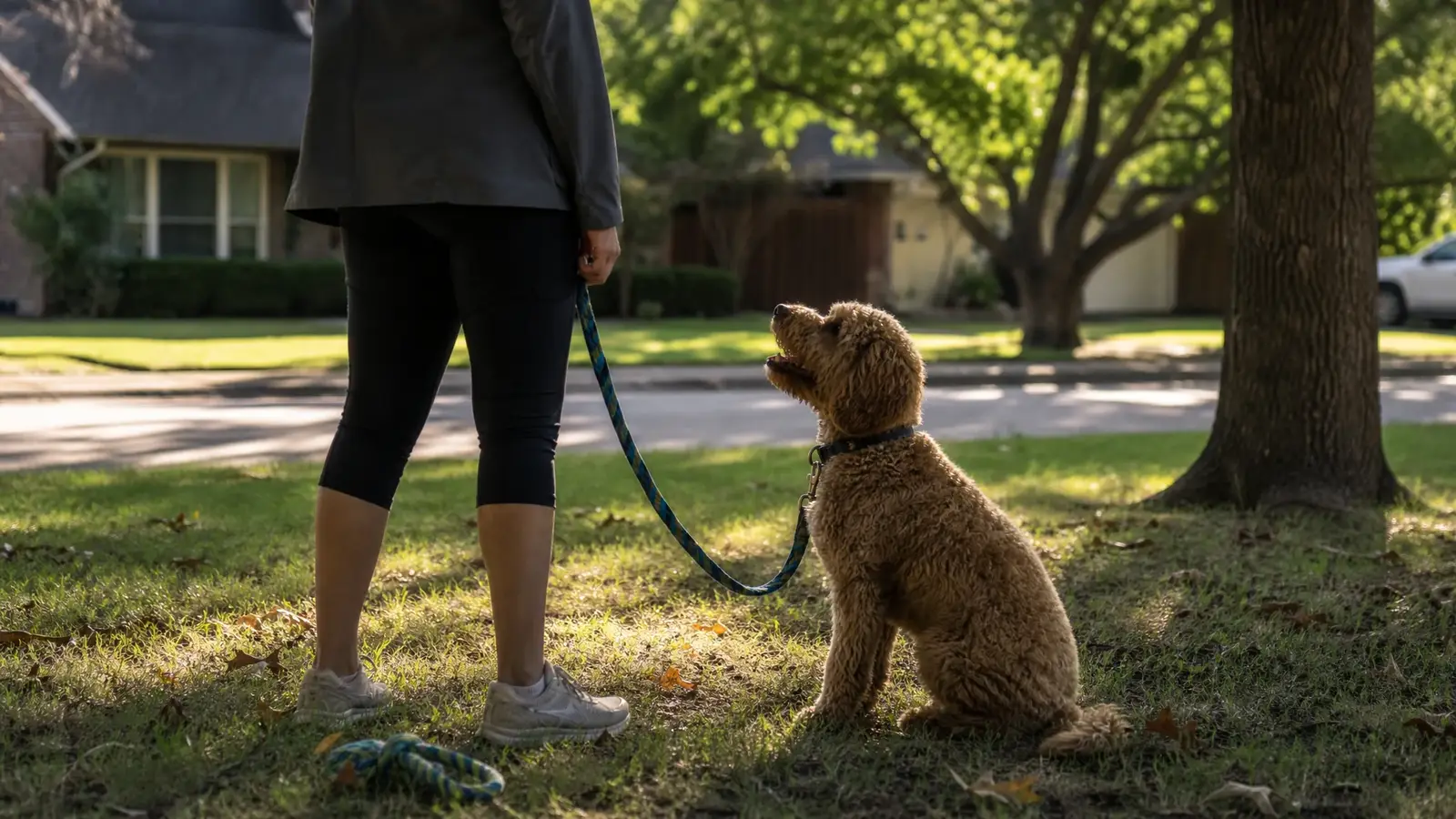
In Arlington you train around heat first, storms second and noise third. We use official weather and city guidance, from the National Weather Service to the City of Arlington, to plan when to practice, and we keep sessions short and well timed.
Training that fits Arlington's summers, storms and park schedules
- In-person training in Arlington and nearby areas
- Online training anywhere
- Reward-based methods only
How hot does Arlington get, and when should I train my dog?
Train in the early morning or evening from late spring through early fall. The nearest official weather station is NWS Fort Worth's DFW station, not Arlington itself, but its 1991-2020 normals show the pattern: 20.2 days a year at or above 100F, 7.4 of them in July, and a July normal high of 95.6F. The average first 100F day is July 1 and the last is August 27.
The City of Arlington's heat-safety tips say to schedule outdoor activities in the morning or evening, that the sun is strongest from 10 a.m. to 4 p.m., to test pavement with the back of your hand, and to bring water for your pet. We follow that and move midday practice indoors.
| Season | What to expect | How we adjust training |
|---|---|---|
| Summer | Hot pavement and long stretches of heat | Early or evening outdoor sessions; indoor games, mat work and puzzles at midday |
| Spring | Peak thunderstorm season; hail and tornadoes occur nearly every year in the Metroplex | Storm-comfort routines, safe space set up, ID and microchip check |
| Fall | Spring and fall are the wettest seasons | Mixed indoor and outdoor sessions; mud and wet-weather leash skills |
| Winter | Wintry precipitation occurs every winter, but many winters bring little or no measurable snow | Longer outdoor sessions on good days; plan for brief cold snaps |
Is the pavement too hot for my dog?
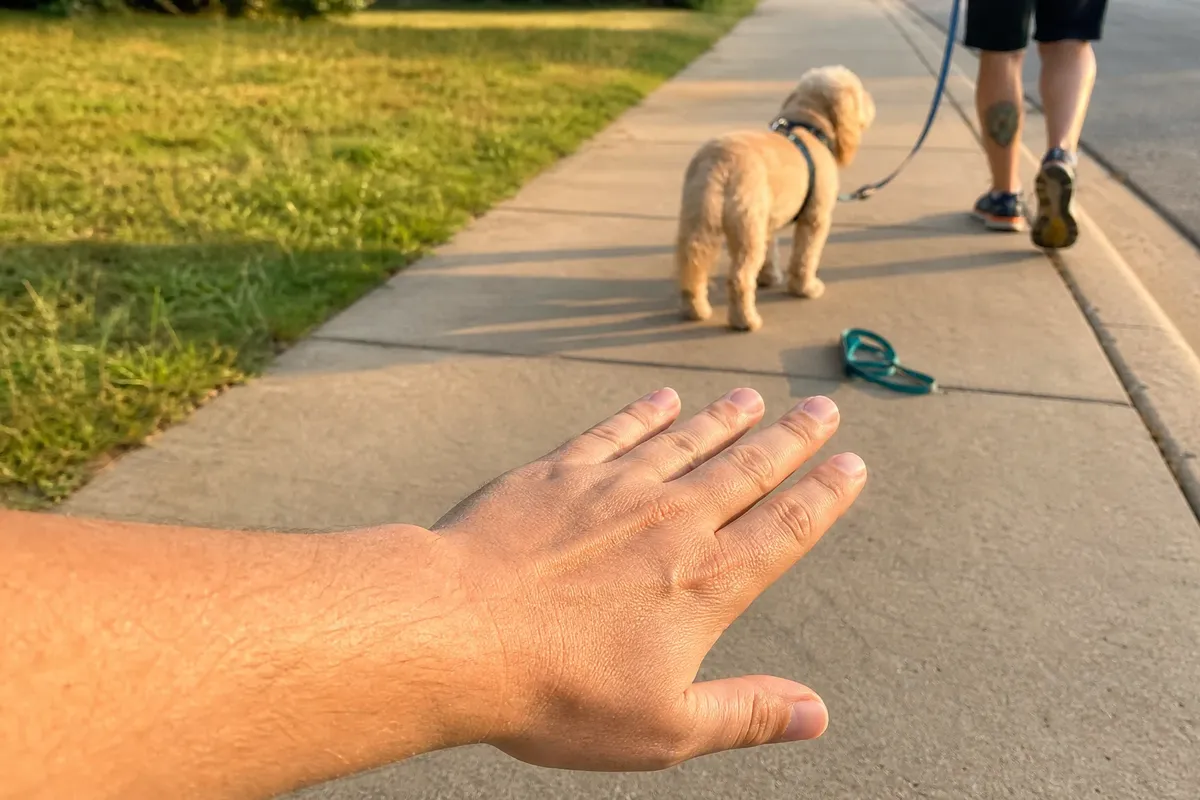
Use the back-of-the-hand test. The city's parks guidance says if it is uncomfortable or painful to hold your hand on the ground for longer than five seconds, it is too hot for your dog's paws. That rule decides whether a loose-leash lesson can happen on the sidewalk or has to happen on grass, in shade or inside.
- Walk early, and stay on grass where you can.
- Bring water for the dog.
- Watch for heavy panting, drooling, stumbling or lethargy, and stop.
- Never leave a dog in a parked car.
Heat illness is a veterinary emergency. Your vet decides care; we do not give medical advice. Our vets page lists verified 24-hour emergency options.
How do spring storms and July 4 affect training?
They change what we practice and when. NWS Fort Worth says thunderstorm and severe weather frequency peaks in spring, with large hail, damaging winds, flooding and tornadoes nearly every year in the Metroplex. For a noise-sensitive dog, that means repeated scary events during exactly the months you might want to start outdoor training.
July 4 brings its own risk. Fireworks use is illegal in Arlington, with fines up to $2,000, but the city says the July 4 period is historically when more pets go missing than at any other time. The city urges microchips and current registry details. We cover noise-fear training on our fireworks and storm page, and we recommend starting well before spring and summer.
What does a hot-weather training week look like in Arlington?
Here is a common situation Arlington owners face. In July, a high-energy young dog is full of energy by 7 a.m., but the owner works until 5 p.m. By the time they get home, the pavement is too hot for a walk, the dog is bouncing off walls, and an evening session in the backyard turns into chewing and barking.
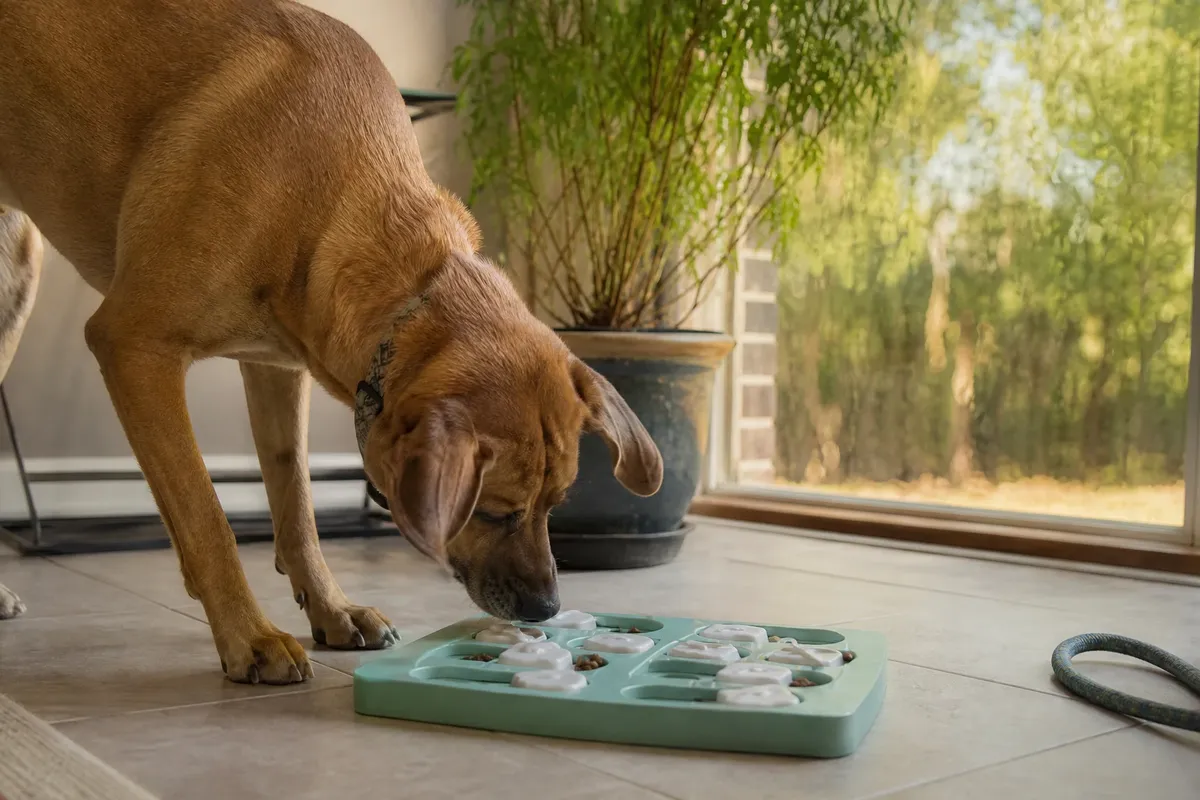
The fix is to split the exercise and move the work indoors. A short early walk, a puzzle feeder or a food-based session at lunchtime if someone can be home, and a calm evening session on grass or indoors can add up to a full day. A local audience insight: Arlington's park calendar adds closures, such as Tails 'N Trails on Tuesday mornings and Rush Creek on Wednesday mornings, so the plan has to include a backup activity. Mental work tires dogs as well as miles do.
How we train around Arlington's weather
We use reward-based methods, management and prevention, short and consistent sessions and owner coaching, with humane tools only.
- Time it. Outdoor work in cooler hours; indoor work when it is hot or stormy.
- Short sessions. A few minutes at a time, so a dog does not overheat or get bored.
- Games that burn brain energy. Scent games, food puzzles and trick training.
- Weather routines. A storm-safe space and a noise plan before they are needed.
- Surface checks. Hand test, shade and water as part of every outdoor lesson.
How quickly your dog progresses depends on the dog and on your consistency; weather only changes where and when we practice.
Is in-person or online training better in extreme weather?
Both work. Online sessions are easy to keep on schedule when it is 100F or storming, and in-home sessions can be moved to the shade or indoors. Check the private in-home page for our format and tell us on your application about your schedule.
Frequently asked questions
How many 100-degree days does Arlington get?
The nearest official normals, for the DFW station, show an average of 20.2 days a year at or above 100F. That station is not Arlington itself, so local readings can differ.
Can I train my dog outside in summer?
Yes, in the morning or evening, on surfaces that pass the hand test, with water and shade. Midday sessions are better done indoors.
Should I keep my dog outside during a storm?
The city says never to leave a pet outside in inclement weather and always to provide proper shelter.
When should I start noise training before July 4?
Well ahead, in calm weather. Fireworks use is illegal in the city but still happens, so we recommend starting weeks before the holiday.
Do you adjust training in winter?
Yes. Wintry precipitation occurs every winter but many winters bring little or no measurable snow, so we use the cooler days for longer outdoor practice.
Keep reading
- Apply for weather-smart trainingRead more →
- private in-home dog trainingRead more →
- online dog trainingRead more →
- fireworks and storm fear in Arlington dogsRead more →
- Arlington vets and emergency vetsRead more →
Sources
- NWS Fort Worth, DFW annual normals (last verified 2026-11-11)
- NWS Fort Worth, DFW Climate Narrative (last verified 2026-11-11)
- City of Arlington, Heat Safety Tips (June 2026) (last verified 2026-11-11)
- City of Arlington, Independence Day Pet Safety (June 2026) (last verified 2026-11-11)
- City of Arlington, Illegal Firework Reporting (June 2026) (last verified 2026-11-11)
- City of Arlington, Coexisting Safely with Urban Wildlife (Sept 2026) (last verified 2026-11-11)
- City of Arlington, Responsible Pet Ownership (last verified 2026-11-11)
- City of Arlington, Tails 'N Trails Dog Park (last verified 2026-11-11)
- City of Arlington, Rush Creek Dog Park (last verified 2026-11-11)
Training that fits Arlington's summers, storms and park schedules
- In-person training in Arlington and nearby areas
- Online training anywhere
- Reward-based methods only