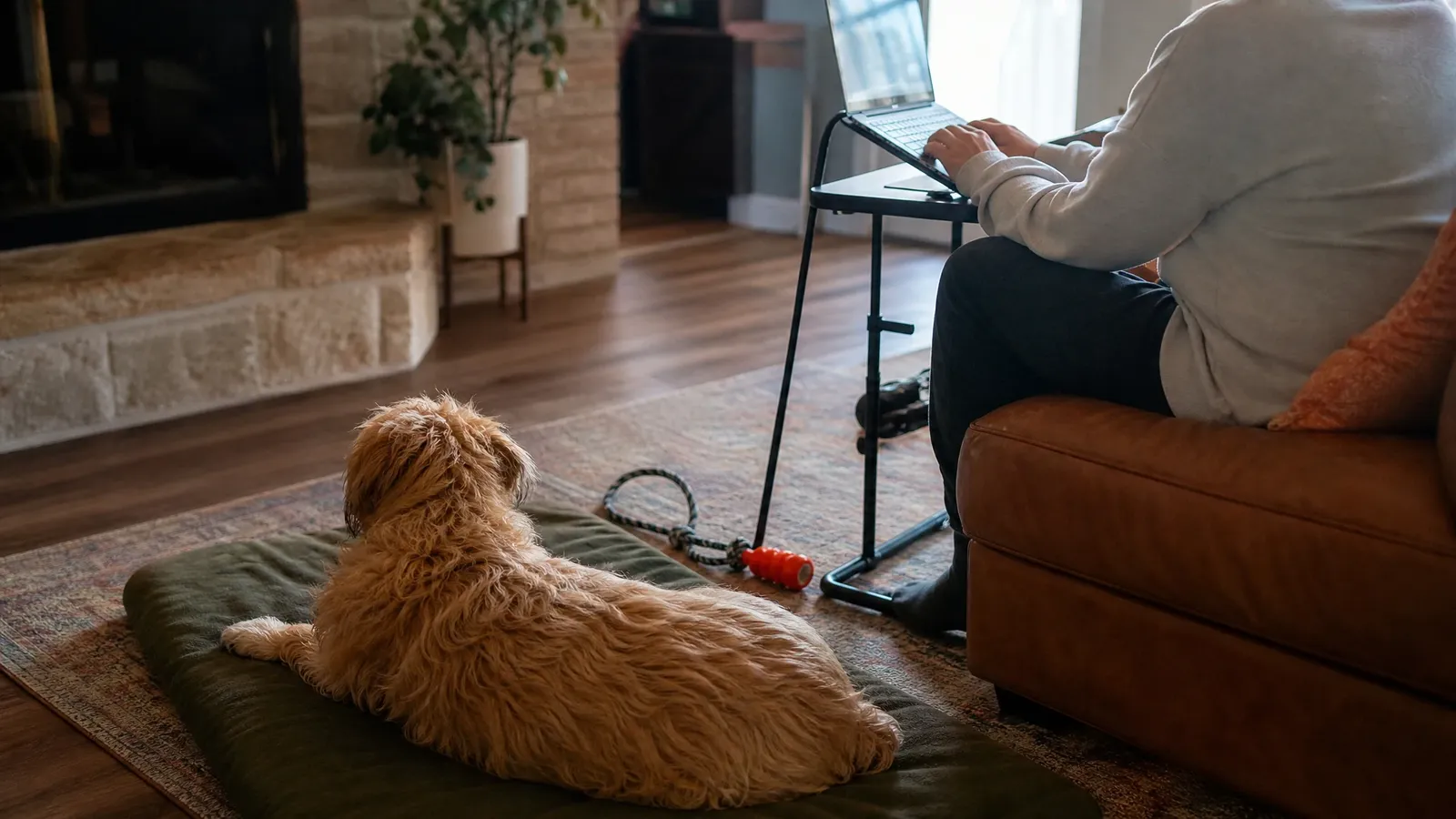
Online dog training is live video coaching: you work with your dog, we watch and coach in real time and send a written plan after each session. It fits many everyday goals and some behavior problems, and it has limits, which we explain below, last verified 2026-11-11.
Prefer to train from your own living room, even in a July heat wave? Tell us about your dog.
- In-person training in Arlington and nearby areas
- Online training anywhere
- Reward-based methods only
How does online dog training work?
You join a live video call from the room where the behavior happens. We watch your dog, you try the exercise and we coach your timing, treats and body position as it happens. After the session, you get a short written plan and, when useful, a clip showing the exercise.
- Apply and tell us about your dog, home and goals
- First session: goals, a walk-through of your space and the first exercises
- Weekly lessons with a clear practice plan
- Check-ins by video clip so we can adjust between lessons
How many sessions you need depends on your dog and your consistency.
Most owners find the written plan the most useful part. It lists what to practice, how many reps, which treats and what to do if the dog gets it wrong, so you are never left guessing between lessons. If a week goes badly, send us a short clip and we adjust the plan before the next session.
What can online training fix, and what can it not?
It works well when the owner's handling is the main lever. It is not a good substitute for hands-on help when safety is in question.
| Often a good fit online | Better in person, or with a vet first |
|---|---|
| Puppy routines, potty and crate training | Biting people, serious guarding or aggression |
| Basic cues, door manners, mat settling | Severe separation distress with panic or self-injury |
| Barking and jumping at home | Leash reactivity that needs a controlled setup with another dog |
| Loose-leash foundations | Any behavior with a sudden change that may have a medical cause |
If we think in-person is safer, we say so and suggest the in-person program instead.
Why does online training suit Arlington owners?
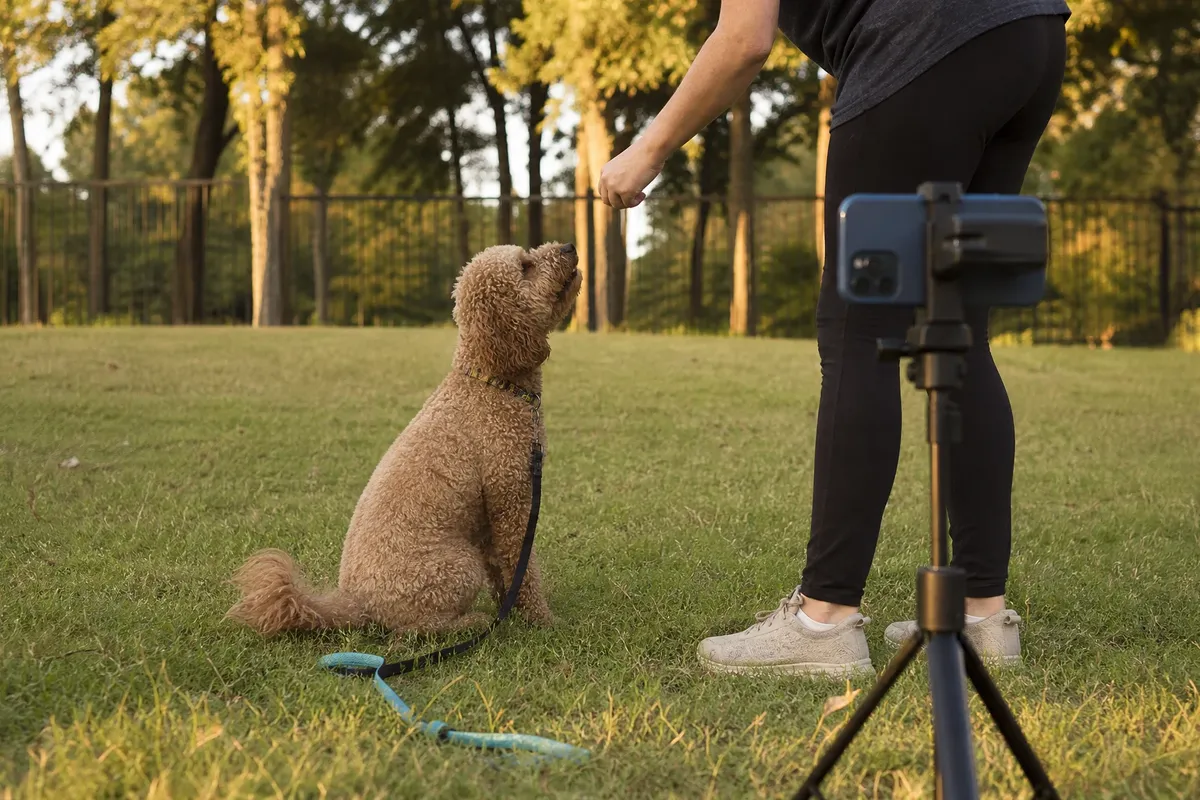
Arlington's weather and housing both make it practical. DFW averages 20.2 days a year at or above 100 degrees F (NWS normals for 1991-2020, measured at DFW, the nearest official station), and the average first 100-degree day is July 1. The city advises doing outdoor activities in the morning or evening in summer and testing pavement with the back of your hand. Online sessions let you train indoors during the hottest part of the day, then walk when it is cooler.
Indoor practice is not a lesser version of training. Many skills, such as a mat settle, name response, handling and door manners, are easier to teach in a controlled room than on a busy sidewalk. When the weather lets you go out, we add the outdoor version one step at a time.
Spring brings the other pattern. The National Weather Service says large hail, damaging winds, flooding and tornadoes occur nearly every year in the Metroplex, and frequency peaks in spring. When a storm cancels a lesson, a video session can often move to another time without a drive.
What does a common Arlington scenario look like?
A common situation Arlington owners face: a rental townhome, a dog that barks at deliveries and a work schedule that rules out a weekday class. The 2020 census summary on Wikipedia (secondary source) shows 46.0 percent of occupied housing units in Arlington are renter-occupied, so many owners live with shared walls and limited yard space.
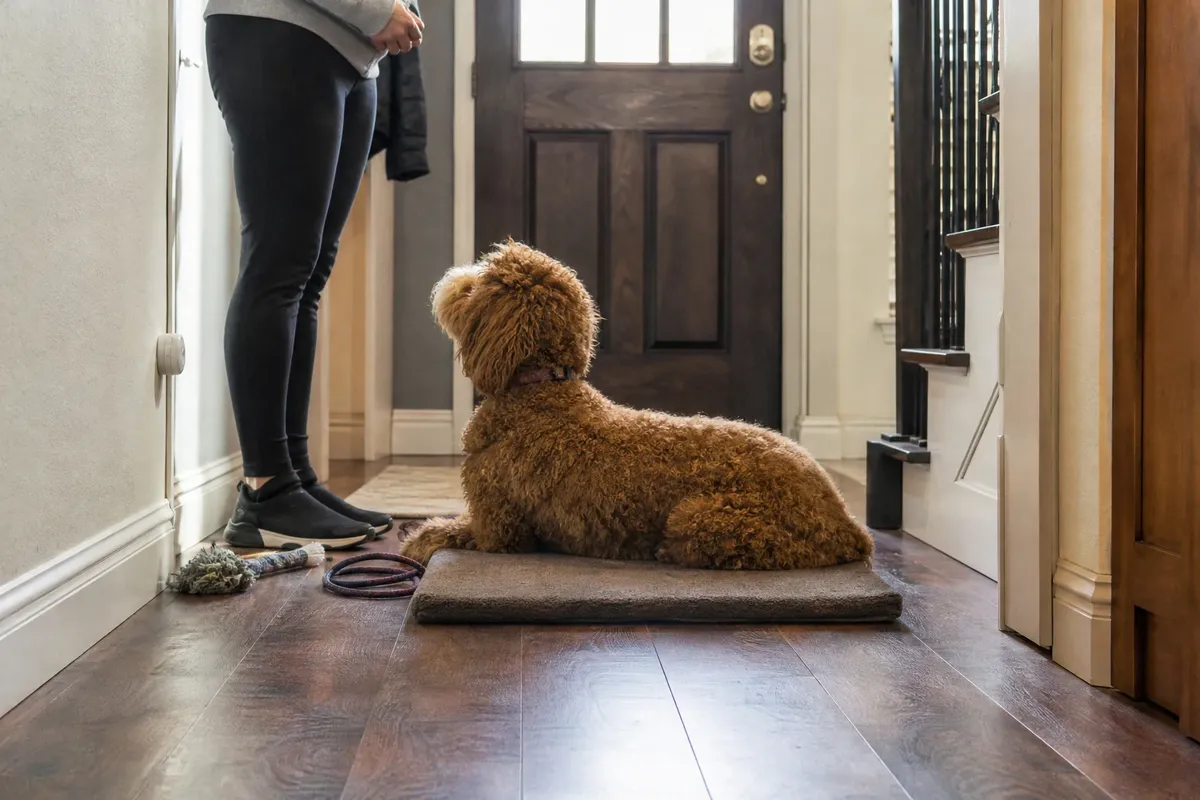
Online coaching works well here. We watch the doorbell routine from your hallway, set up a mat, teach the dog to settle on cue and practice with the delivery sound at a low volume, gradually raising it.
If you live in one of the smaller places surrounded by or next to Arlington, such as Pantego, Dalworthington Gardens, Kennedale or Mansfield, online coaching is also a convenient way to start regardless of where you are.
How we train online
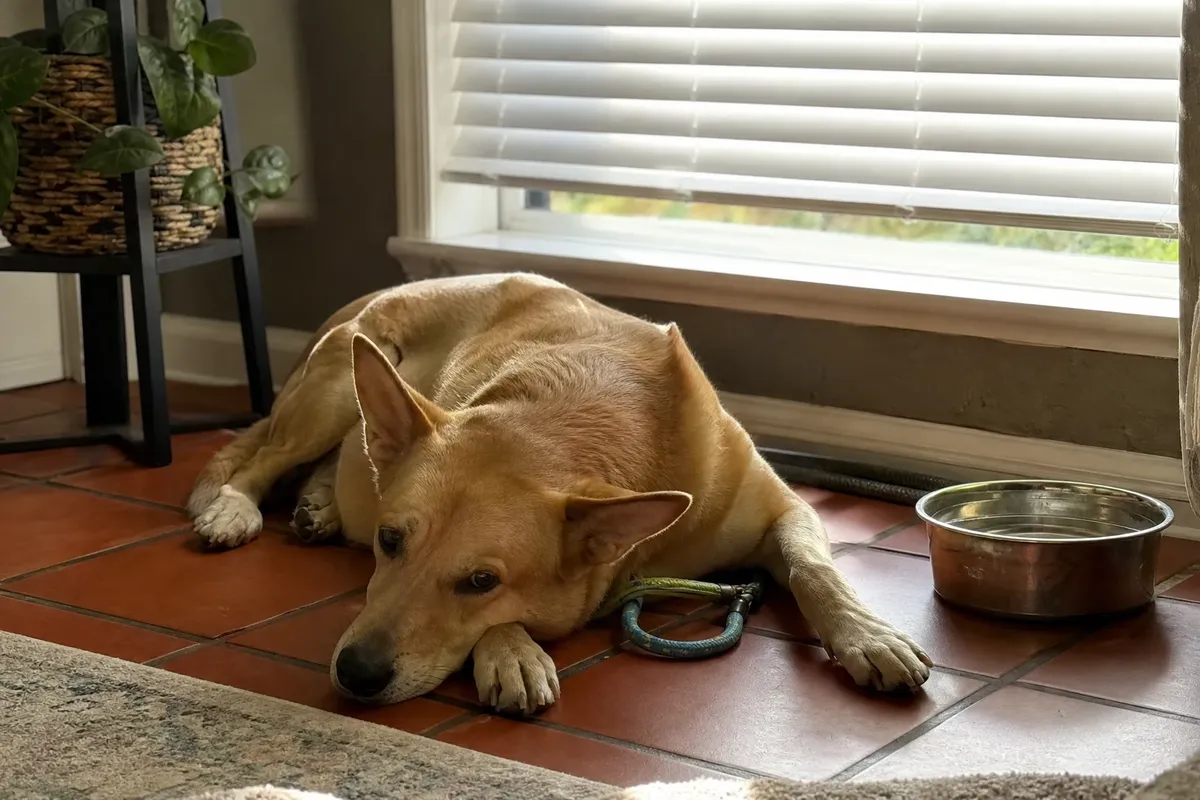
The method is the same as in person: reward-based, management and prevention, gradual desensitization and counter-conditioning, and short consistent sessions, with owner coaching at the center. Humane tools only. Veterinary behavior bodies advise against aversive methods, and we do not use them.
- Set up the space so the dog succeeds and the problem is prevented between lessons
- Practice in three- to five-minute rounds, then rest
- Review short clips so we can fix timing early
- Keep a simple practice log so we can see what changes week to week
- Raise difficulty slowly, one variable at a time
What do I need to get started?
- A tablet, laptop or other device with a camera, ideally on a stand
- Small soft treats and a clicker or marker word
- The leash, collar or harness you already use
- A quiet room, with a gate or door to control the dog's access
- A second adult or child to help with a doorbell or visitor exercise when we plan one
Online lessons also work for households with more than one handler: partners or kids can join the same call, and we coach each person on the same cues so the dog hears one consistent message. Not sure your dog suits online work? Apply and we will tell you plainly whether online, in-person or a mix will serve you best.
Frequently asked questions
Does online dog training really work?
It works best when the owner's handling is the main lever, such as routines, cues and management. It is not a fit for every dog, and we will tell you if in-person is safer.
Can I do online training if my dog is reactive?
Sometimes, for foundation work such as relaxation and focus. Active work around other dogs usually needs a controlled in-person setup, so we start with an evaluation. We would rather move you to an in-person plan early than let a problem practice itself.
How often are sessions?
Usually weekly, with short practice every day. The right pace depends on your dog and your schedule.
Do I need a yard?
No. Many skills are taught indoors, and we adapt exercises for apartments and small spaces.
Keep reading
- Private in-home dog training in ArlingtonRead more →
- Basic obedience trainingRead more →
- Apartment dog trainingRead more →
- Training in the Arlington climateRead more →
- Types of dog training comparedRead more →
- Apply for online trainingRead more →
Sources
- NWS Fort Worth, DFW annual normals (last verified 2026-11-11)
- NWS Fort Worth, Dallas/Fort Worth Climate Narrative (last verified 2026-11-11)
- City of Arlington, Heat Safety Tips for Enjoying Arlington Parks This Summer (June 2026) (last verified 2026-11-11)
- Wikipedia, Arlington, Texas (2020 census summary; secondary source) (last verified 2026-11-11)
- AVSAB Humane Dog Training Position Statement (Purdue Canine Welfare Science Center) (last verified 2026-11-11)
Prefer to train from your own living room, even in a July heat wave? Tell us about your dog.
- In-person training in Arlington and nearby areas
- Online training anywhere
- Reward-based methods only