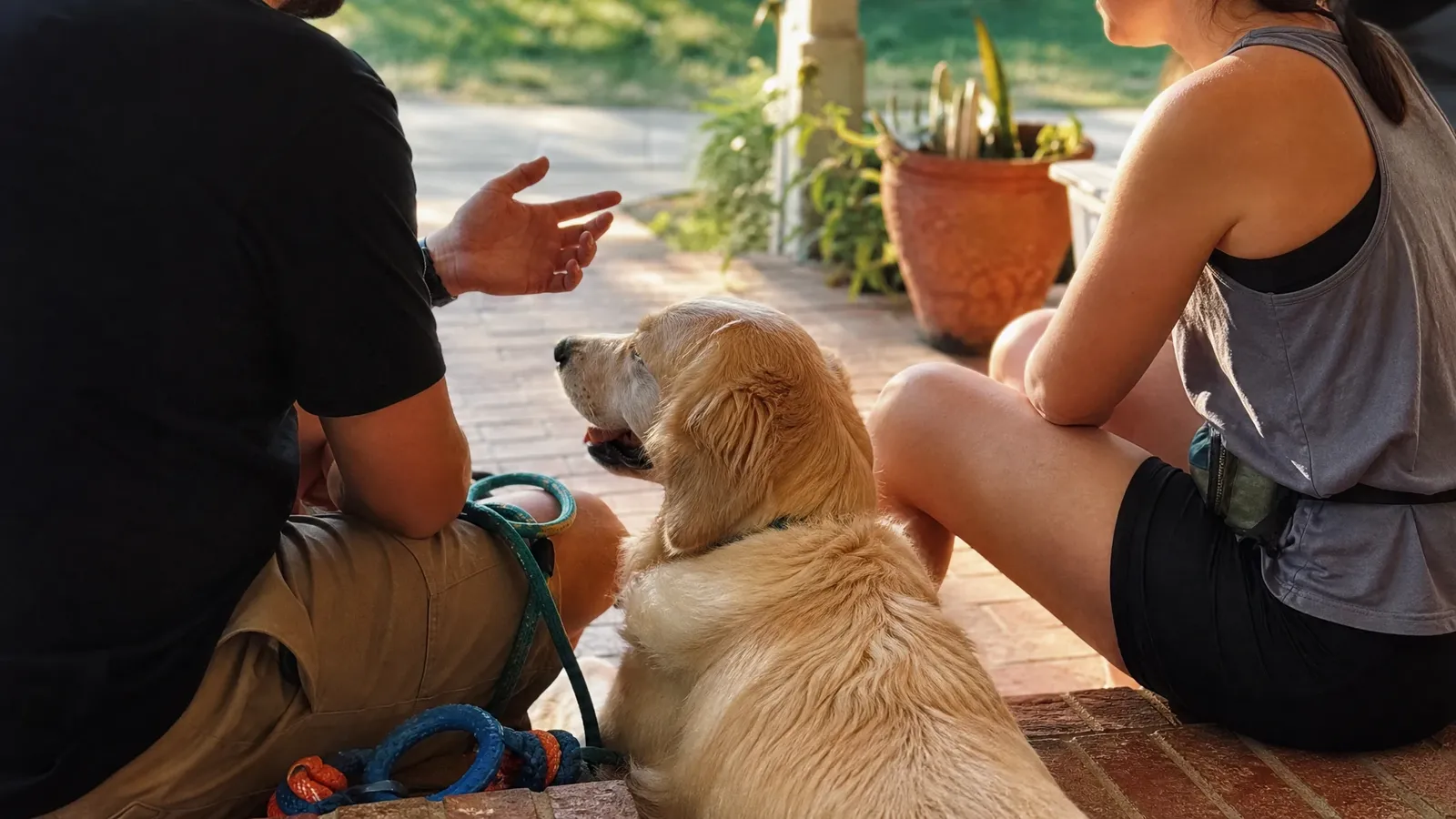
Choose a trainer, us included, whose methods you can understand, who coaches you as well as your dog, and who will not promise a result. We are trainers ourselves, so this is the checklist we would hand a neighbor. It was last verified 2026-11-11, covers credentials, methods, red flags and a few Arlington specifics.
Choosing between trainers? Picture what your dog does at the Rush Creek gate, then ask us the same questions we suggest here
- In-person training in Arlington and nearby areas
- Online training anywhere
- Reward-based methods only
What should you look for in a dog trainer?
Look first for transparent, reward-based methods, then for owner coaching and honest answers. We think any trainer, us included, should explain in plain words what they will do when your dog gets something right and what they will do when your dog gets it wrong.
| Look for | Why it matters | Ask this |
|---|---|---|
| Reward-based methods | Veterinary behavior organizations recommend reward-based training for all dogs and advise against aversive methods | "What happens when my dog gets it wrong?" |
| Owner coaching | You live with the dog; lasting change depends on your skills | "What will I practice between sessions?" |
| A plan for your dog | A fearful dog and an exuberant puppy need different work | "What will the first three sessions cover?" |
| Honesty about limits | Behavior depends on the dog and on consistency | "What can you not promise?" |
| Clear scope and cost | Avoids surprise fees | "What is included, in writing?" |
| Sensible referrals | Some problems have medical roots | "When would you send me to a vet?" |
Pay attention to how a trainer talks about your dog, not just what they say about themselves. We ask what the dog does, when it happens, what you have tried and what your home looks like before proposing anything. We explain why we change one thing at a time, and we are comfortable saying "I do not know yet" until we have seen the behavior. If any trainer diagnoses your dog from a one-line description and quotes a price in the same breath, keep looking.
Want the longer version? Read questions to ask before hiring a dog trainer.
Do credentials and certifications matter?
They can help, but they prove different things, and none of them tells you how a trainer treats a frightened dog. Ask any trainer, us included, which credential they hold and what it required, then check it with the issuing organization.
| Credential | What the organization says it is |
|---|---|
| CPDT-KA (CCPDT) | An exam covering ethology, learning theory, training technique and instruction; the page lists 300 hours of training experience as an eligibility requirement and recertification every 3 years |
| KPA CTP | A graduate of the Karen Pryor Academy Dog Trainer Professional Program who pledges force-free principles |
| CDBC (IAABC) | A behavior-consultant credential earned by exam, aimed at more complex cases; experience and education figures are recommendations rather than hard prerequisites |
Sources and details are listed below and were last verified 2026-11-11. On this site we make no credential claims and list no trainer names; we ask you to judge us on methods, plan and fit. As for law, we could not confirm any general Texas licence for dog trainers, so do not assume a licence tells you about quality. Our page on certifications explained goes into more detail.
A fair way to use a credential: treat it as one line in your checklist. Ask any trainer, us included, why they chose it, what it taught them and how they keep learning. A trainer who is proud of their methods will enjoy that question, and the answer tells you more than the letters after a name.
Which methods and tools are red flags?
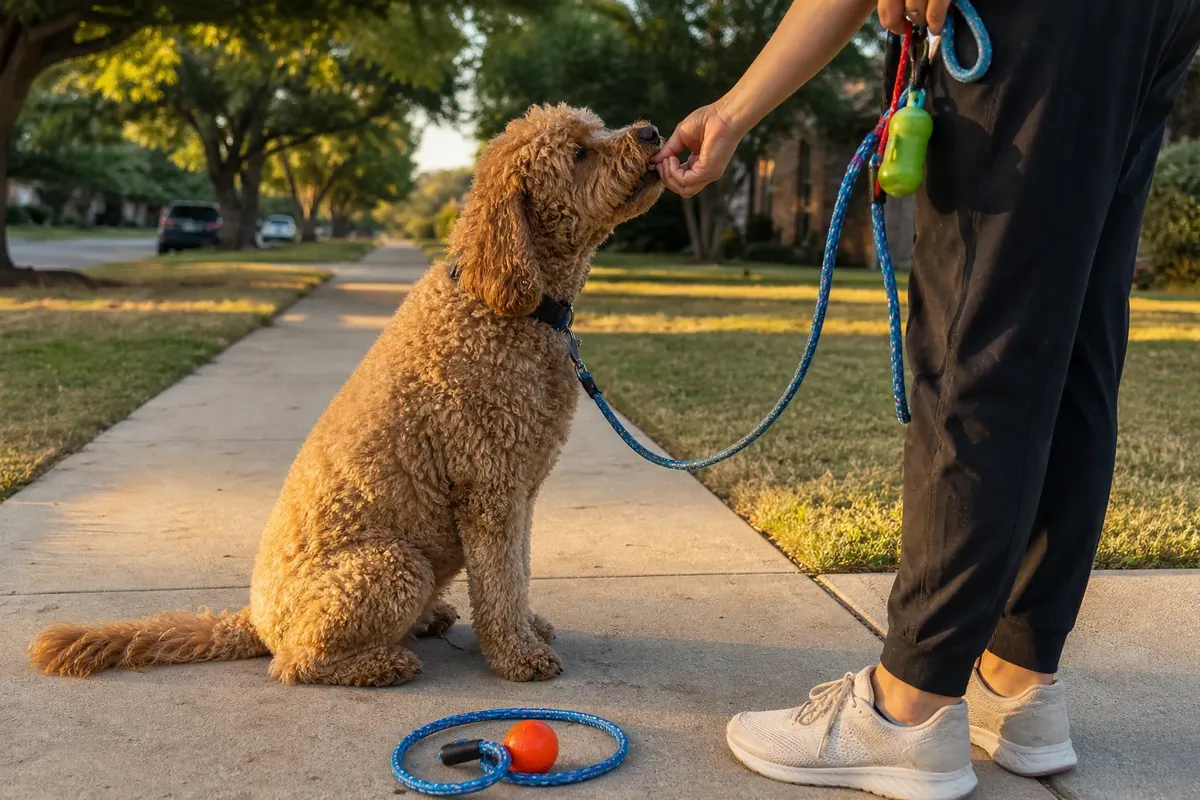
Be wary of any trainer, us included, who uses pain, fear or intimidation, or who will not tell you what they use. The American Veterinary Society of Animal Behavior states that evidence supports reward-based methods for all canine training. An AVSAB guest summary names prong collars, electronic shock collars, shake cans, shouting, alpha rolls and leash jerks as examples of aversive methods.
- Guarantees such as "fixed in two weeks".
- Choke, prong or electronic collars as a standard step.
- Talk of "dominance" or "alpha" as the reason for a behavior.
- No chance to ask questions or have the plan explained.
- A package priced around equipment rather than your dog.
- Pressure to pay the full amount today.
Some packages published by Arlington-area trainers include an e-collar, so expect to meet this choice while you shop. Our own rules are simple: humane tools only. See methods and red flags for the full list.
What Arlington-specific things should you check?
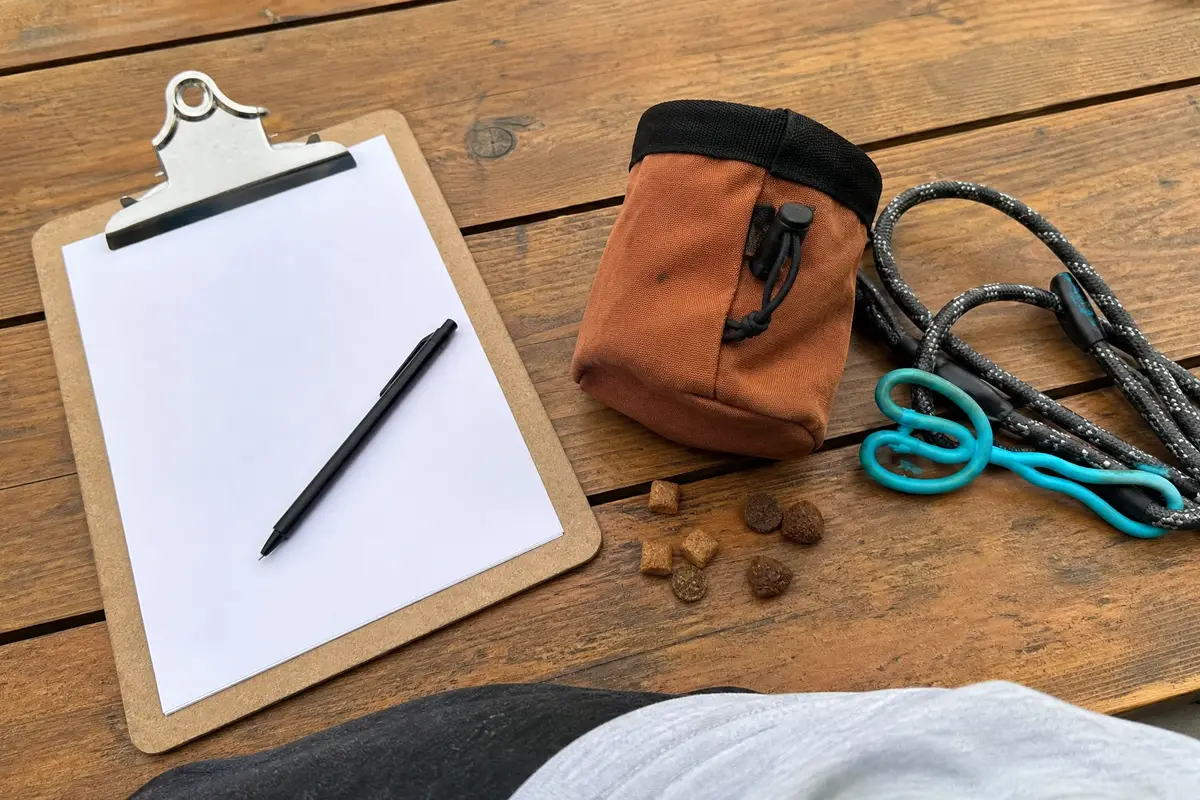
Check that any trainer, us included, understands your housing, your streets and your weather. Arlington owners often live in apartments or townhomes: about 46% of occupied housing units were renter-occupied in the 2020 census (a secondary summary of Census data, last verified 2026-11-11). That makes noise, shared hallways and landlord rules part of the training problem.
- Medical first. If a behavior changed suddenly, see your vet. Arlington has a clinic on Interstate 20 that states it takes emergencies 24 hours a day, and VEG in neighboring Grand Prairie states it is open 24/7.
- Place. Ask how sessions will deal with the places your dog struggles, such as the gate at Rush Creek Dog Park, which requires dogs to stay leashed until inside the double-gated entry.
- Heat. The city advises scheduling outdoor activity in the morning or evening and testing pavement with the back of your hand. A good summer plan uses cooler hours and indoor work.
- Complaints. If barking is the issue, the city's formal process starts with neighbors talking to each other; a trainer should help you act early.
A common situation Arlington owners face: your dog lunges at other dogs near a park entrance, and an ad promises a fix in two weeks. The better question is what the trainer will do on day one, which tools they use and how they will coach you through the same situation yourself.
How do we train, so you can compare us?
We teach with rewards, manage the environment so mistakes are less likely, and use gradual desensitization and counter-conditioning for fear and reactivity. Sessions are short and consistent, and owner coaching is central: we show you the skills, timing and troubleshooting so the work continues between visits. We use humane tools only.
We do not promise success rates or timelines. Progress depends on your dog and on your consistency. We do not name trainers or list reviews here, because you should be able to judge us on how we explain our work. Our full standards are on the about page. To see what working with us looks like, read about private in-home training, or if you would rather learn by video, online training.
What is a quick checklist before you hire?
- Methods explained in plain words, reward-based, no aversive tools.
- A written scope, price and cancellation policy.
- Owner coaching built into every session.
- A credential you can verify, if one is claimed.
- A vet check for sudden behavior changes or pain.
- No guarantees and no pressure.
Then compare the format that suits your dog on types of dog training compared, and what it should cost on cost of dog training in Arlington. When you are ready, choose in-person or online training with us.
Frequently asked questions
Does Texas license dog trainers?
We could not confirm any general Texas licence for dog trainers, so we do not claim one exists or does not. The Texas Department of Licensing and Regulation is the right place to ask. Judge a trainer on methods, plan and honesty either way.
Is a certified trainer always better?
Not automatically. Credentials prove different things: an exam, a program graduation or a case review. They are a useful signal alongside methods, a clear plan and good coaching, but they do not replace them.
Should I ask how a session runs before I commit?
Ask any trainer, us included, how a session runs and what you will practice at home. Be cautious if you cannot get a plain explanation of the approach before paying.
Why see a vet before hiring a trainer?
Pain, illness and hearing or vision changes can cause sudden shifts in behavior. A vet visit rules those out so training addresses the right problem. Arlington has a clinic that states it takes emergencies 24 hours a day.
Keep reading
- Start dog training with usRead more →
- private in-home training in ArlingtonRead more →
- online dog trainingRead more →
- questions to ask before hiring a dog trainerRead more →
- methods and red flagsRead more →
- dog trainer certifications explainedRead more →
Sources
- Purdue Canine Welfare Science Center, AVSAB Humane Dog Training Position Statement (last verified 2026-11-11)
- CCPDT, Dog Trainer Certification (last verified 2026-11-11)
- Karen Pryor Academy, Choose a KPA CTP (last verified 2026-11-11)
- IAABC, Credentials (last verified 2026-11-11)
- I-20 Animal Medical Center (own site) (last verified 2026-11-11)
- VEG Grand Prairie (own site) (last verified 2026-11-11)
- City of Arlington, Rush Creek Dog Park (last verified 2026-11-11)
- City of Arlington, Heat Safety Tips for Enjoying Arlington Parks This Summer (June 2026) (last verified 2026-11-11)
- City of Arlington, Barking Dogs Complaint Process (last verified 2026-11-11)
- Wikipedia, Arlington, Texas (2020 census; secondary summary) (last verified 2026-11-11)
Choosing between trainers? Picture what your dog does at the Rush Creek gate, then ask us the same questions we suggest here
- In-person training in Arlington and nearby areas
- Online training anywhere
- Reward-based methods only