
Under the ADA, a service animal is a dog individually trained to do work or perform tasks for a person with a disability; an emotional support animal is not a service animal. This page explains the basics and where we stop, because housing and employment rules are separate and we do not cover them.
Training a dog for public manners? Tell us your goals and where you will practice
- In-person training in Arlington and nearby areas
- Online training anywhere
- Reward-based methods only
What counts as a service dog under federal law?
A service dog is a dog individually trained to do work or perform tasks for a person with a disability. The ADA FAQ on service animals says so directly, and it is the federal definition most public places follow.
| Term | What the sources say |
|---|---|
| Service animal (ADA) | A dog individually trained to do work or perform tasks for a person with a disability |
| Emotional support animal | Does not qualify as a service animal under the ADA because it is not trained for a specific job or task |
| Texas "assistance animal" / "service animal" | Human Resources Code Sec. 121.002 describes a canine specially trained or equipped to help a person with a disability, used by that person |
Training alone does not make a dog a service dog. The task must relate to the person's disability.
What can staff ask, and is certification required?
Staff may ask two questions when a disability is not obvious: is the dog a service animal required because of a disability, and what work or task has the dog been trained to perform. Businesses may not require documentation as a condition of entry, and ADA.gov says online certificates and registries do not convey ADA rights.
Texas law also addresses access. Section 121.003 of the Human Resources Code, read on a mirror site, says a person with a disability may not be denied use of an assistance animal and that a service animal in training may not be denied admittance to a public facility when accompanied by an approved trainer. We cite the section only, because we could not confirm subsection letters. For your own situation, read the current statute or ask a qualified advisor.
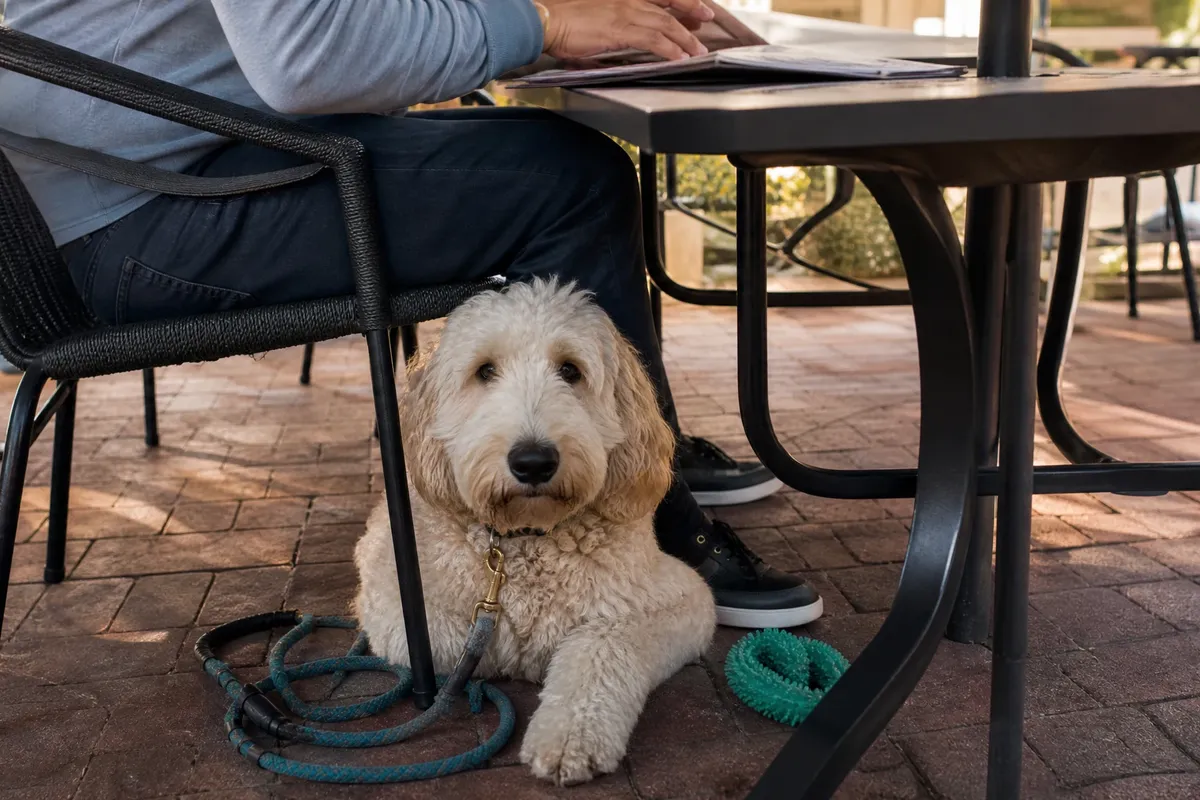
Can a pet or emotional support dog become a service dog?
Sometimes a dog can be trained to perform tasks for a person with a disability, but not every dog is suited, and the person's own needs drive the plan. A dog with fear, reactivity or low tolerance for crowds is often a poor candidate.
- Temperament matters. Calm in crowds, neutral toward strangers and other dogs, quick to recover from surprise.
- Health matters. A vet check is part of any plan. Texas requires rabies vaccination by 4 months, and Arlington requires proof of current rabies vaccination for its license.
- Task training is specific. It depends on the person's needs, and we do not guess at tasks.
Before any public-access plan, we suggest you talk with your veterinarian and, where relevant, your healthcare provider, so the plan is built around the person's real needs. A dog that is stressed in public is not safe or fair to ask more of.
We offer basic manners and public-behavior coaching; we do not certify service dogs, and no certificate from us or anyone else changes your legal rights.
Why is misrepresenting a pet as a service dog a problem?
It can cause real harm and legal trouble. Texas Human Resources Code Sec. 121.006, read on a mirror site, makes intentionally or knowingly representing that an animal is a service or assistance animal when it is not specially trained a misdemeanor, with a fine of up to $1,000 and 30 hours of community service. Verify the current text before relying on this.
Fake vests also make life harder for handlers with real service dogs, because an untrained dog that barks or lunges can create conflict. If you want a well-mannered companion in public, work on manners instead.
A common situation Arlington owners face: a student near UT Arlington asks whether a vest from a website lets a pet come into a restaurant. By the ADA FAQ, those online documents convey no rights.
How we train
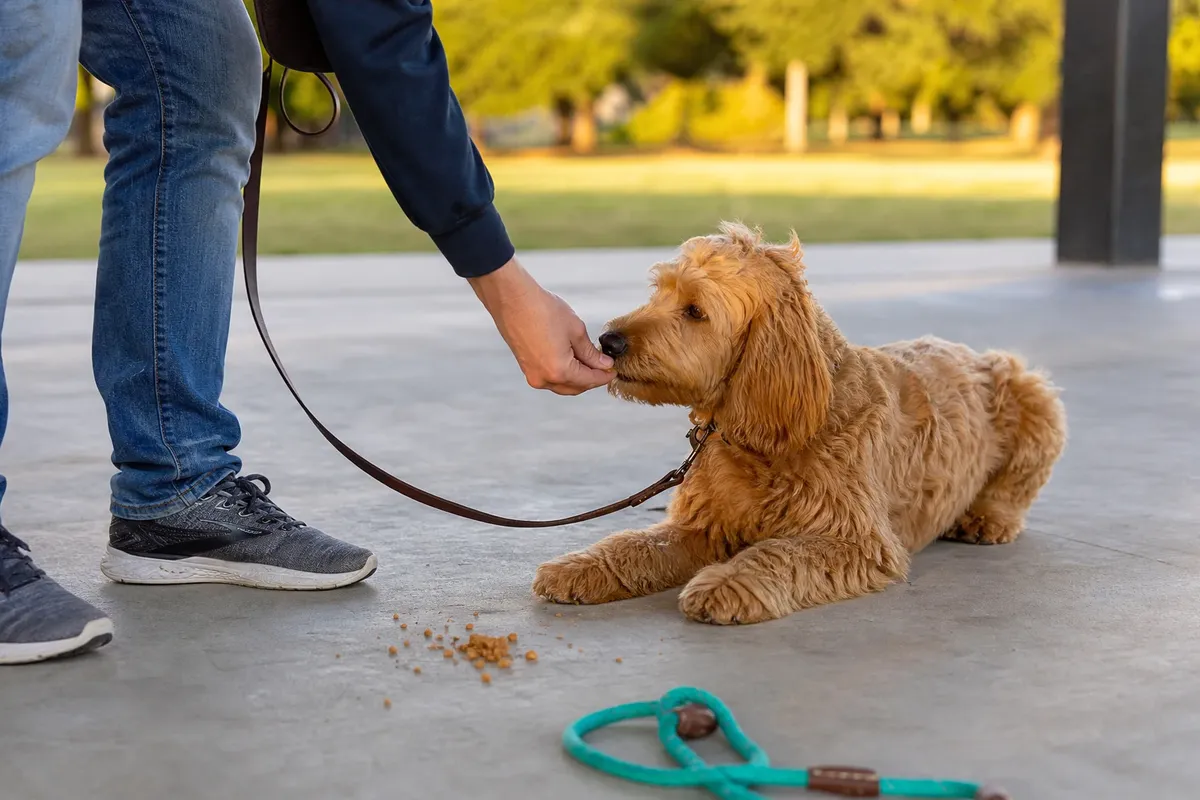
We use reward-based training, management and prevention, gradual desensitization and counter-conditioning, short consistent sessions, owner coaching and humane tools only.
For public manners we start in quiet places and build up: loose-leash walking, settling under a table, ignoring dropped food, calm greetings. Practice near Rush Creek Dog Park's entry or on a quiet street comes before busier places. How fast a dog progresses depends on the dog and on the owner's consistency.
What do Arlington owners need to know about housing and local access?
We do not cover housing rules for emotional support animals here. We could not confirm current federal housing guidance from an official source, so we are not stating it. Ask your housing provider, and consult official fair-housing resources.
One more local point: if you are adopting with public manners in mind, the city Animal Services Center lists the adoption steps and notes that adoption includes a city license for Arlington residents, a microchip and vaccines (last verified 2026-11-11). A longer meet-and-greet, or the city foster program, helps you learn how a dog actually handles busy places before you decide.
Audience insight: UT Arlington is a large campus on the south edge of downtown (41,613 students in fall 2024, per a secondary source), and a third-party summary of Census data puts about 45% of Arlington households as renters. For these owners, the housing question often matters more than the public-access one, so ask early.
Frequently asked questions
Is an emotional support dog a service dog in Texas?
Under the ADA, no. Emotional support animals are not trained to perform a specific job or task, so they do not qualify as service animals under the ADA. Texas defines service animals separately by training.
Do I need to register or certify my service dog?
The ADA FAQ says documents like online certificates and registries convey no rights under the ADA, and businesses may not require them as a condition of entry.
Can a trainer certify my dog as a service dog?
We do not, and no certificate changes your legal rights. We can coach manners and public behavior.
What can a store employee ask about my dog?
Only whether the dog is required because of a disability and what task it has been trained to perform, when the disability is not obvious.
Do you cover housing and employment rules?
No. Those are separate and we have not verified current guidance. Check with your housing provider and official resources.
Keep reading
- Canine Good Citizen and therapy dog prep in ArlingtonRead more →
- basic obedience training in ArlingtonRead more →
- dog training questions answeredRead more →
- private in-home dog training in ArlingtonRead more →
- online dog trainingRead more →
- apply for trainingRead more →
Sources
- ADA.gov, Frequently Asked Questions about Service Animals and the ADA (last verified 2026-11-11)
- Tex. Human Resources Code Sec. 121.002 (texas.public.law mirror) (last verified 2026-11-11)
- Tex. Human Resources Code Sec. 121.003 (texas.public.law mirror) (last verified 2026-11-11)
- Tex. Human Resources Code Sec. 121.006 (texas.public.law mirror) (last verified 2026-11-11)
- Texas Health and Safety Code 826.021 (texas.public.law mirror) (last verified 2026-11-11)
- City of Arlington, Rush Creek Dog Park (last verified 2026-11-11)
- Wikipedia, University of Texas at Arlington (secondary) (last verified 2026-11-11)
- RentCafe, Arlington TX rental market (third-party summary of Census data) (last verified 2026-11-11)
- City of Arlington, Pet Adoption Process (last verified 2026-11-11)
- City of Arlington, Foster Pet Program (last verified 2026-11-11)
Training a dog for public manners? Tell us your goals and where you will practice
- In-person training in Arlington and nearby areas
- Online training anywhere
- Reward-based methods only