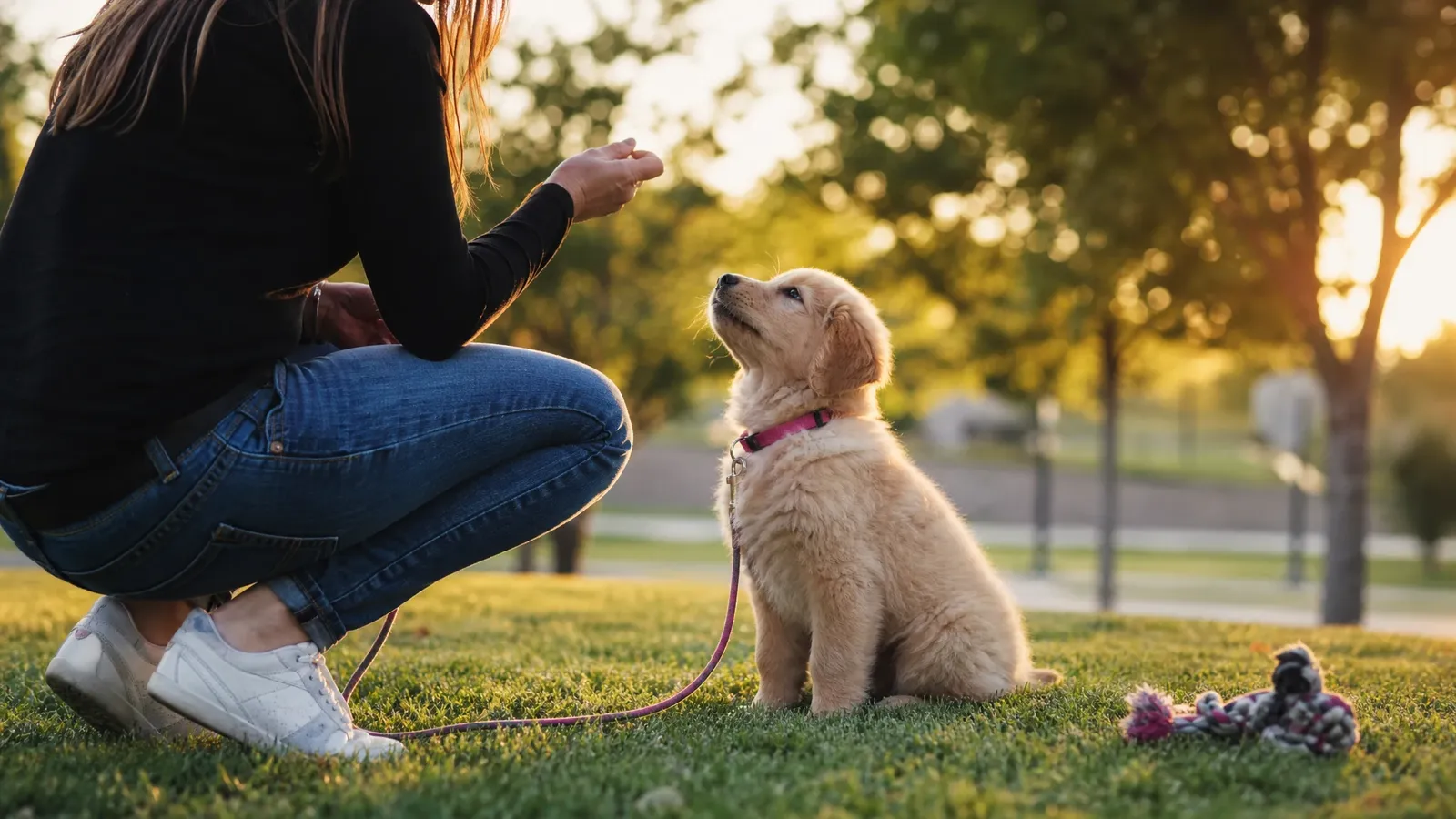
Most Arlington puppies do best with a mix: a group setting for practice around other dogs and people, and private lessons when the home, the schedule or the puppy's temperament needs a plan built around it. Below we compare the two side by side, using Arlington's own vaccine, park and housing details, last verified 2026-11-11.
Not sure which fits? Tell us about your puppy and we will point you to class, private lessons or both.
- In-person training in Arlington and nearby areas
- Online training anywhere
- Reward-based methods only
Which is better for my puppy, a class or private lessons?
Neither wins on its own. A class gives your puppy real-world practice; private lessons give you a plan fitted to your home. Use this table to see where your puppy lands.
| Question | Group class | Private lessons |
|---|---|---|
| Learning around other dogs | Built in, with a trainer managing distance and pace | Limited unless we arrange a planned meeting |
| Fit for a nervous puppy | Can be too much too soon | Gradual exposure at the puppy's own speed |
| Home problems (potty, crate, biting, noise) | General advice only | We work in the space where the problem happens |
| Schedule | Fixed weekly time | Flexible, in person or online |
| Owner coaching | Shared with the whole group | One-on-one, tailored |
| Published local cost | Varies; ask for a quote | About $90 to $200 per hour (market range, derived, retrieved 2026-11-11) |
Many families start with one or two private lessons to set up potty, crate and handling basics, then add a group class for distraction practice.
What does a puppy get from a group class that a private lesson cannot give?
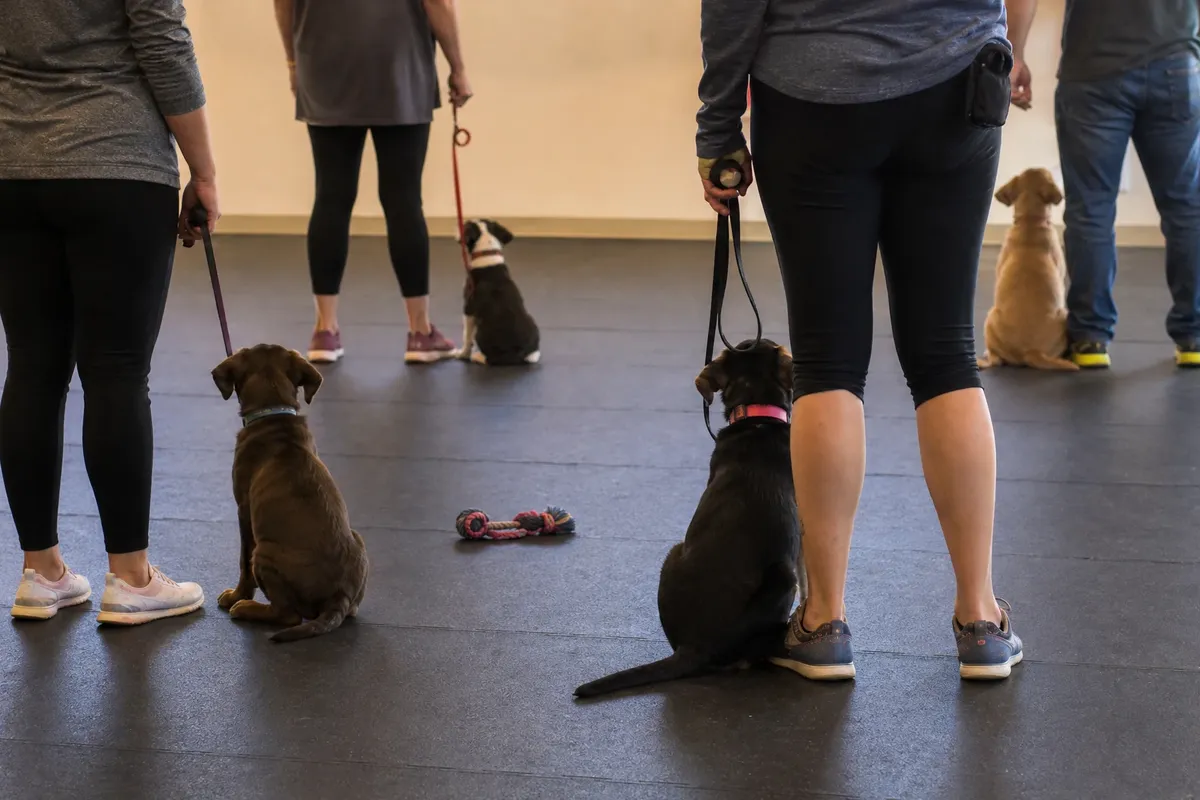
Practice with real distractions. In a well-run class, puppies learn to settle while other dogs and people are nearby, and owners see how their own puppy compares with normal puppy behavior.
- Short, structured exposure to other puppies and new people
- Practice with sits, downs, name response and loose-leash walking while something interesting is nearby
- Owners see other households working through the same biting and jumping phase
A class works best when it is small enough for the trainer to step in early, and when no puppy is pushed into a greeting it does not want.
What can a private lesson do that a class cannot?
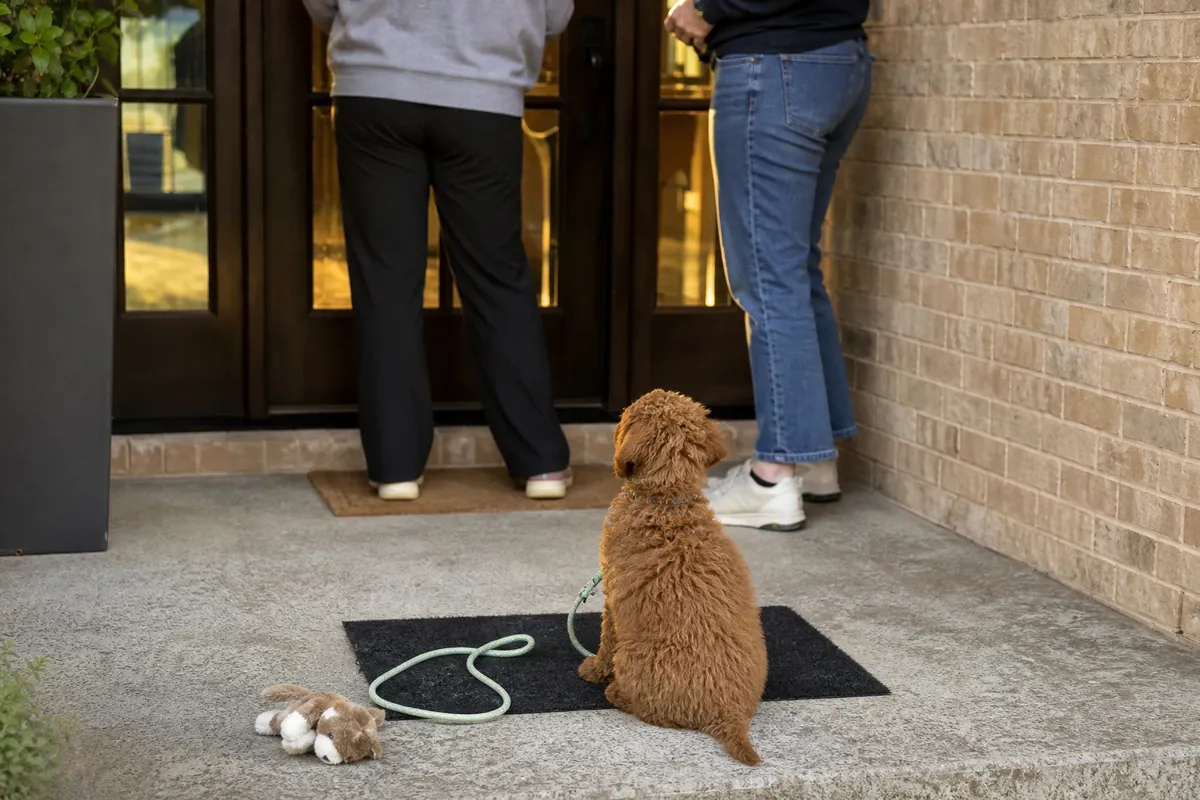
It solves the problem where it lives. Housetraining, crate settling, night waking, door manners and mouthing are easier to coach in your kitchen or entryway than in a room full of other puppies.
Private lessons also suit puppies who freeze, hide or overreact. We use gradual desensitization and counter-conditioning: the puppy meets a new thing at a distance it can handle, and good things happen. Progress depends on the dog and on how consistently the household practices.
When can my puppy start, and what about vaccines?
The AVSAB position statement, as reported by dvm360, recommends socialization (perhaps in a puppy class) as early as 7 to 8 weeks old, with follow-up vaccinations kept up to date and no signs of illness. The Purdue-hosted statement goes further and calls socialization before full vaccination the standard of care in the first three months of life.
What that means for a specific puppy is your veterinarian's call. Ask which vaccines your puppy needs before a first class, and which places to avoid until then. Texas also requires rabies vaccination of dogs by 4 months of age, and a city may not license an unvaccinated dog.
- Adopted from Arlington Animal Services? The city lists spay or neuter, license (for Arlington residents), microchip, core vaccines including distemper, parvovirus and bordetella, and a rabies vaccine as part of adoption. Bring the paperwork to your vet.
- Need low-cost shots? The city's Low-Cost Vet Services page lists a community partner offering low-cost vaccinations on Wednesdays and Fridays from 9 a.m. to 12 p.m. Confirm times on the city page.
What does puppy training look like around Arlington?
A common situation Arlington owners face: a family adopts a young dog, lives in a townhome or apartment, and is not sure whether the dog is ready for the city's dog parks. The 2020 census summary on Wikipedia (a secondary source, last verified 2026-11-11) shows 46.0 percent of occupied housing units in Arlington are renter-occupied, so many puppies learn potty routines and quiet hours in shared buildings rather than in a big yard.
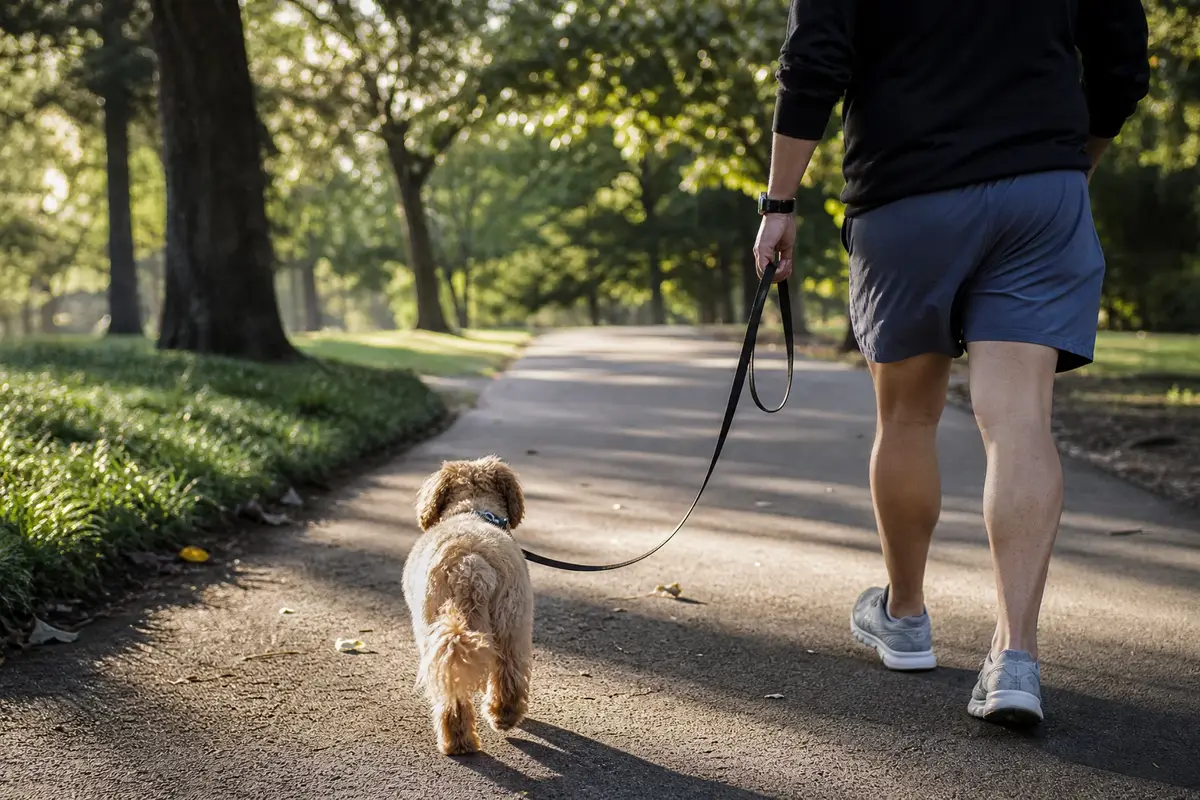
That shapes the plan. Short potty trips on a schedule, calm crate time and quiet greetings in hallways matter early. When a puppy is ready for the city's fenced off-leash areas, the city publishes details for Rush Creek Dog Park (free, three dogs per visit, closed Wednesdays until noon for maintenance) and Tails 'N Trails Dog Park (free, daylight hours, closed Tuesdays until noon for maintenance). Ask your vet whether your puppy is ready, because a dog park is not a substitute for a managed introduction.
Summer matters too. The city's heat guidance says to hold the back of your hand to pavement for five seconds before a walk, and to plan outdoor time for morning or evening. For a puppy with small paws, that is a good rule for any training outing.
How we train puppies
We keep it reward-based, short and consistent. Sessions are a few minutes of play-based practice, repeated through the day, with management (gates, crates, leashes, chews) doing the heavy lifting between lessons.
- Reward good choices and prevent rehearsal of bad ones
- Introduce new people, surfaces and sounds gradually, with distance and treats
- Coach the owner on timing and routines, because the owner is the daily trainer
- Use humane tools only: flat collar or harness, a leash, treats and toys
When a puppy shows persistent fear or aggression, we say so and adjust the plan rather than push through it.
Frequently asked questions
Can my puppy attend a group class before finishing vaccines?
Many veterinary behavior guidelines support early socialization with vaccinations started and kept up to date. The right timing for your puppy is a question for your vet, who knows its history and local disease risk.
Are private lessons worth it for a puppy?
They are worth it when the home is the problem: potty accidents, crate protest, biting or a nervous puppy. They are less necessary for a confident puppy whose owner mainly wants distraction practice.
How much do puppy classes cost in Arlington?
We do not publish a local group-class figure because we could not verify one on a local trainer's own page. Ask each provider for a written quote, what it includes and how many weeks it runs.
Can I do both?
Yes, and many owners do. A common pattern is a few private lessons to set up routines, then a group class for practice around other dogs.
Keep reading
- Puppy training in ArlingtonRead more →
- Puppy socialization, step by stepRead more →
- Private in-home dog trainingRead more →
- Group dog training classesRead more →
- Online dog training for busy ownersRead more →
- Apply for puppy trainingRead more →
Sources
- AVSAB puppy socialization position, as reported by dvm360 (last verified 2026-11-11)
- AVSAB Puppy Socialization Position Statement (Purdue Canine Welfare Science Center) (last verified 2026-11-11)
- City of Arlington, Pet Adoption Process (last verified 2026-11-11)
- City of Arlington, Low-Cost Vet Services (last verified 2026-11-11)
- Texas Health and Safety Code 826.021 (texas.public.law mirror) (last verified 2026-11-11)
- City of Arlington Park Finder, Rush Creek Dog Park (last verified 2026-11-11)
- City of Arlington Park Finder, Tails 'N Trails Dog Park (last verified 2026-11-11)
- City of Arlington, Heat Safety Tips for Enjoying Arlington Parks This Summer (June 2026) (last verified 2026-11-11)
- Wikipedia, Arlington, Texas (2020 census summary; secondary source) (last verified 2026-11-11)
- Published private-lesson price pages of four DFW trainers (provenance only; ranges derived) (last verified 2026-11-11)
Not sure which fits? Tell us about your puppy and we will point you to class, private lessons or both.
- In-person training in Arlington and nearby areas
- Online training anywhere
- Reward-based methods only