Puppy Training in Arlington: Classes, Socialization and When to Start
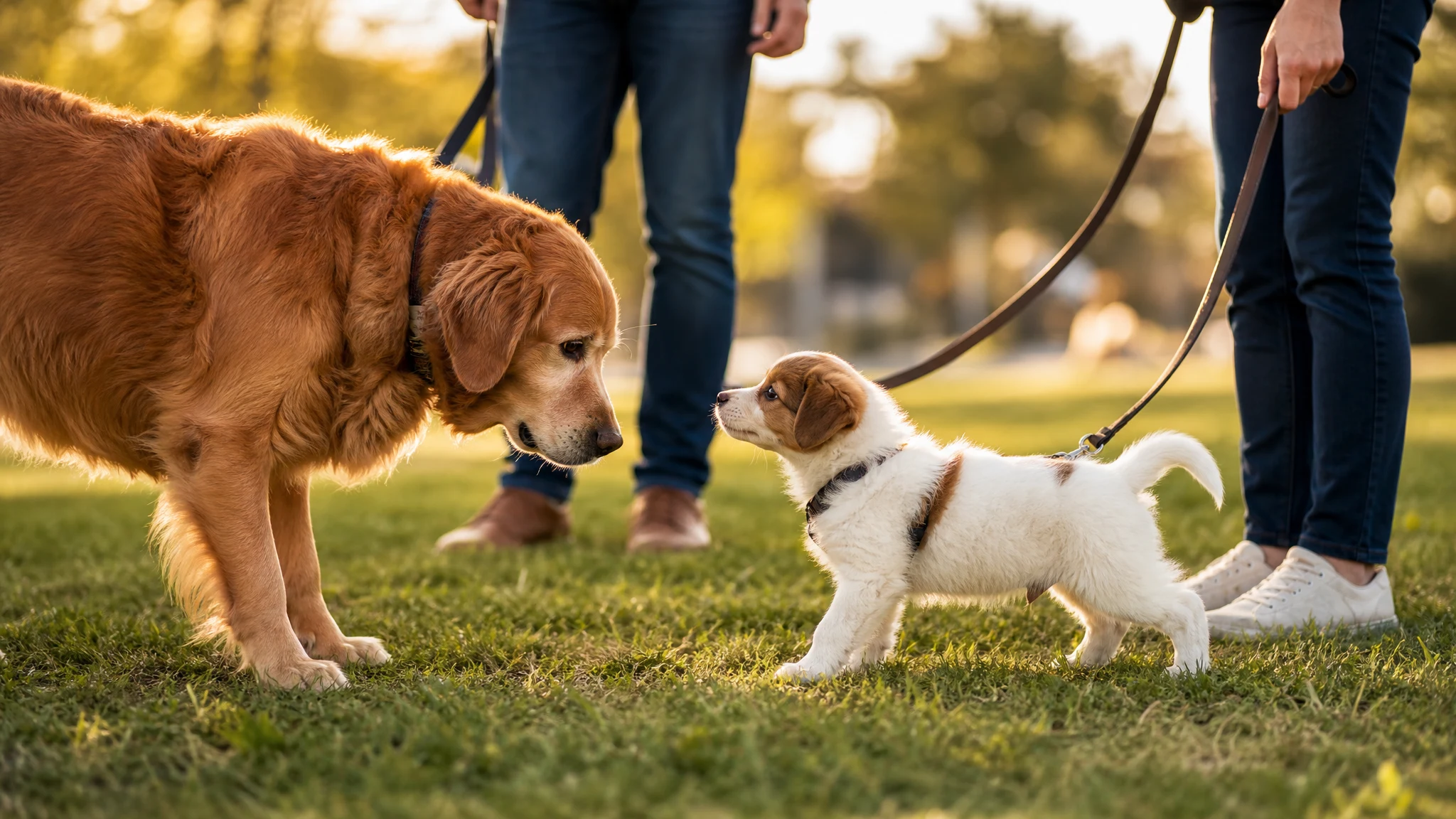
General training information. For aggression, sudden behavior changes or health concerns, see your veterinarian first.
You brought a puppy home to Arlington, and now everyone has an opinion about when to start training. The short answer is that learning begins the day your puppy arrives. Formal puppy training classes can begin earlier than many owners expect, with some sensible precautions.
This guide walks you through the steps: when to start, how to choose puppy classes in Arlington, how to socialize safely around the city, and how to set up your first weeks at home. It is written for owners in Arlington, so we point to local rules and places along the way.
What You Need Before You Begin
- Small, soft treats. Pea-sized pieces work best. Your puppy should be able to swallow them in one second.
- A flat buckle collar or a harness, and a 4 to 6 foot leash. Skip prong, choke and shock collars. They do not belong in puppy training.
- A crate or playpen sized for your puppy, plus a chew toy or two.
- Your puppy's vaccination records from your veterinarian, to show any class provider.
- A water bottle and a towel for outings, especially in hot months.
- A notebook for questions to ask your veterinarian and your trainer.
Step 1: Talk to Your Veterinarian First
Before you sign up for anything, book a visit with your veterinarian. They know your puppy's age, health and vaccine schedule. They can tell you which places are safe for your puppy right now and which ones to hold off on.
Ask three questions:
- Where can my puppy go this week, and where should we wait?
- Is my puppy ready for a group class, given where we are in the vaccine series?
- When is the next vaccine due, and when will my puppy be considered fully covered?
Rabies is the one vaccine with a clear legal timeline. The Texas Health and Safety Code, Sec. 826.021, says a dog or cat must be vaccinated against rabies by 4 months of age and at regular intervals after that. Your veterinarian will set the rest of the schedule.
Step 2: Understand When to Start
Many owners hear that puppies must stay home until every vaccine is finished. That advice can cost you the most important learning window your puppy has.
The American Veterinary Society of Animal Behavior (AVSAB) publishes a position statement on puppy socialization. It says puppies can start socialization classes before the vaccine series is complete, as long as precautions are in place. The reasoning is that behavior problems, including fear and aggression, are a major reason dogs are given up. Early, gentle socialization helps guard against that.
Precautions usually look like this:
- Your puppy has had at least the first round of vaccines, as your veterinarian directs.
- The class is held in a space that is cleaned between sessions.
- Every puppy in the class is healthy and enrolled under the same kind of vaccine requirements.
- You avoid places where unknown dogs have been, such as pet store floors, busy sidewalks where dogs relieve themselves, and crowded parks.
Your veterinarian makes the final call for your puppy. If they say wait, ask what you can do at home in the meantime. There is plenty.
Step 3: Find Puppy Classes in Arlington
Searching for puppy classes in Arlington can feel overwhelming, so start with what to look for rather than a name. A good class is reward-based, small enough that each puppy gets attention, and supervised closely during play.
What local classes require
Vaccine requirements differ from one provider to the next. We could not confirm a standard set of requirements for Arlington puppy classes, so ask each trainer directly before you enroll. Good questions include:
- Which vaccines must my puppy have, and how long before the first class?
- Do you accept puppies who are still in the vaccine series?
- How do you clean the space between classes?
- How many puppies are in a class, and how old can they be?
Trainers who serve the Arlington area
These professionals are listed with the credentials and service areas shown by their sources. Confirm every detail, including whether they offer puppy classes, directly with them.
- Denise Ames, Out And About Dog Training. The DFW Force-Free Trainers Network lists her as CPDT-KA and serving Mansfield, Arlington, Grand Prairie and surrounding areas. That directory is not a certification registry, so ask her about her credentials.
- Karah Wilkes, Diamond Dogs Pet & Service Dog Training. The DFW Force-Free Trainers Network lists her as CPDT-KA and a CGC evaluator, serving Arlington, Fort Worth, HEB and Mansfield. Her own site names Fort Worth and describes the team as certified professional dog trainers without naming a certification, so confirm the details with her.
- Stacy Greer, Sunshine Dog Training & Behavior. Her site shows CPDT-KA, plus Fear Free Certified Professional and AKC CGC Evaluator. She works in the DFW area, and the DFW Force-Free Trainers Network lists Arlington among the places she serves.
- Jennifer (Jenny) Kraus, Wiggle Butt Academy. The CCPDT directory lists her as CPDT-KA and a Certified Behavior Consultant Canine, Knowledge Assessed, in Dallas, which is near Arlington rather than in it. The profile gives no service area, so ask whether she works with Arlington families.
We have not ranked or reviewed any of them. Visit, observe if you can, and trust what you see. Puppies should look curious and relaxed, not overwhelmed, and the trainer should use treats, toys and praise.
Red flags
- Any use of shock, prong or choke collars, alpha rolls, scruffing or "dominance" talk.
- Large, free-for-all play sessions with no breaks or supervision.
- Pressure to force a scared puppy to meet other dogs or people.
- Promises of perfect results. Every puppy learns at their own pace.
Step 4: Socialize Safely Around Arlington
Socialization means helping your puppy feel calm about the world, not meeting as many dogs as possible. The goal is a long list of pleasant, low-pressure experiences: different people, sounds, surfaces and settings.
Start with the places you control
- Your own yard or patio, with different surfaces such as grass, tile, a towel and a baking sheet.
- Friends' homes with healthy, vaccinated dogs your veterinarian is comfortable with.
- Short car rides, ending somewhere fun, and never with your puppy left alone in the vehicle.
Be careful with Arlington dog parks
The city lists several off-leash areas. They are great for adult dogs, but ask your veterinarian before taking a young puppy, because many unfamiliar dogs use them.
- Rush Creek Dog Park, 1900 Valleywood Dr. The City of Arlington says it is free, allows up to three dogs per visit, and requires owners to clean up. Dogs stay on leash until they are inside the double-gated entry. It is closed each Wednesday until noon for maintenance. The rainout line is 817-462-8441. Confirm the address and hours with the city.
- Tails 'N Trails Dog Park, 950 SE Green Oaks Blvd. The city describes it as off-leash, fully fenced, open during daylight hours at no charge, and closed each Tuesday until noon for maintenance. The rainout line is 817-462-8441.
- Doggie Depot, 105 N Mesquite St. in downtown Arlington. The city says it opened March 13, 2025. We could not confirm its hours or rules, so check with the city or Downtown Arlington first.
Once your veterinarian clears your puppy, you can use these places in a different way. Stand outside the fence and let your puppy watch from a distance while you hand out treats. That counts as socialization too.
Protect paws and bodies from Texas heat
Arlington summers are hard on puppies. The City of Arlington advises checking pavement with the back of your hand. If it is uncomfortable to hold your hand there for more than 5 seconds, it is too hot for your dog's paws.
The city also advises never leaving animals in a parked vehicle, offering plenty of fresh water, and watching for heavy panting. Flat-faced breeds are more susceptible to heat stroke. Schedule outings for early morning or evening. If your puppy collapses or pants heavily and cannot settle, call a veterinarian right away.
A simple socialization checklist
Aim for short, happy exposures. Pair each one with treats, and stop if your puppy shows fear, such as a tucked tail, cowering or refusing food.
- People of different ages, including children (always supervised), people in hats or sunglasses, and someone using a cane or stroller.
- Sounds like vacuums, doorbells, traffic and storms, played quietly at first.
- Handling of paws, ears and mouth, followed by a treat.
- Being briefly crated, left in a playpen, and picked up.
Step 5: Set Up the First Weeks at Home
Class is one hour a week. The rest of the week is where habits form.
- Build a routine. Feed, water, potty and nap at predictable times. Take your puppy out after waking, eating and playing, and reward right after they go outside.
- Teach the name and eye contact. Say your puppy's name. When they look at you, mark it with a cheerful "yes" and give a treat. Do a few repetitions several times a day.
- Teach sit and down with a lure. Hold a treat at the nose and move it slowly so your puppy follows into position. Reward the moment their bottom or elbows touch the floor.
- Make the crate a happy place. Toss treats inside, feed meals there, and build up the time gradually. Never use the crate as punishment.
- Practice leash manners indoors. Let your puppy drag the leash for short, supervised periods. Reward standing next to you and walking at your side.
- Redirect, do not scold. When your puppy chews your hand or shoes, offer a toy and praise them for taking it.
- Keep sessions short. Two to five minutes is plenty. End while your puppy is still eager.
Do not forget the license
City of Arlington Animal Services requires dogs and cats to be licensed annually, with proof of current rabies vaccination. The city's own pages list different fees, so check the pet registration portal or call Animal Services at 817-459-5898 for the current amount. The Animal Services Center is at 1000 SE Green Oaks Blvd. Confirm its hours before you go, since the city's pages list them differently.
Arlington does not have a leash rule we can quote here, so ask Animal Services what applies in your neighborhood. In the meantime, keep your puppy on leash in public. It is safer, and it is good practice.
Tips for Success
- Use real rewards. If your puppy is not interested in the treat, it is not rewarding enough. Try a softer, smellier option.
- Let your puppy opt out. A puppy who walks away from a stranger is telling you something. Respect it and give space.
- Keep everyone consistent. Make sure everyone in your household uses the same cues and rules.
- Plan for the neighbors. A bored, lonely puppy can become a barking dog. Arlington handles barking complaints through a notarized affidavit filed with Animal Services, so it helps to teach quiet settling early.
Common Mistakes to Avoid
- Waiting until the vaccine series ends to do anything. Safe socialization can start earlier with your veterinarian's guidance.
- Flooding a shy puppy. Pushing a nervous puppy into a crowd can make fear worse.
- Letting puppies play too roughly. Take breaks, and step in if one puppy is being bullied.
- Punishing accidents. It teaches your puppy to hide, not to go outside.
- Skipping practice. One class a week is not enough without short daily sessions.
- Using harsh tools or methods. AVSAB recommends reward-based training and advises against punishment-based methods.
What Results to Expect
Every puppy is different, so timelines vary. With regular, gentle practice, many owners find that their puppy starts to respond to their name, settle in a crate, and sit for a treat within a few weeks. Potty training and leash manners often take longer and may have setbacks.
Socialization often helps puppies feel more comfortable around new people and places, though it cannot promise a particular temperament. Adolescence can bring a bumpy stretch, so keep practicing.
When to Get Extra Help
See your veterinarian if your puppy is lethargic, vomiting, has diarrhea, stops eating, or seems unwell in any way. Pain and illness can look like behavior problems.
If your puppy growls, snaps or bites people in a way that worries you, talk to your veterinarian and then a certified behavior professional. Do not try to handle aggression on your own.
Sources
- Texas Health and Safety Code Sec. 826.021
- City of Arlington, Animal Services pet registration portal
- City of Arlington, Animal Services Rapid Reference Guide
- City of Arlington, Barking Dogs Complaint Process
- City of Arlington, Rush Creek Dog Park
- City of Arlington, Tails 'N Trails Dog Park
- City of Arlington, Doggie Depot grand opening
- City of Arlington, Heat Safety Tips for Enjoying Arlington Parks This Summer
- City of Arlington, Keep Pets Safe During Soaring Temperatures
- City of Arlington, Animals & Pets
- DFW Force-Free Trainers Network, Find a Trainer
- Sunshine Dog Training & Behavior
- CCPDT certified dog trainer directory, Jennifer Kraus
- Diamond Dogs Pet & Service Dog Training