Arlington Dog Laws: Leash, License, Rabies and Barking Rules
General training information. For aggression, sudden behavior changes or health concerns, see your veterinarian first.
Living with a dog in Arlington, Texas comes with a few legal to-dos. Some are simple paperwork. Others shape how you train every day, from how your dog walks on a leash to how well they come when called.
This guide walks you through Arlington dog laws one step at a time. For each rule, you will see what the city or the state says, what it means for your training, and where the city's own pages leave a gap you should confirm yourself. Rules and fees change, so treat the city as the final word.
What You Need Before You Start
- Your dog's rabies vaccination certificate. Arlington asks for proof of a current rabies vaccination when you license a dog.
- Your dog's spay or neuter status. The city sets license fees by whether a dog is altered or unaltered.
- A standard flat collar or a well-fitted harness, and a fixed-length leash. These are the basic tools for the leash habits below. Choose gear that does not hurt or frighten your dog.
- Small, soft treats. Rewards make leash manners and recall easier to build.
- The Arlington Animal Services phone number. The city lists 817-459-5898.
- A little time. Most of these steps are quick, but checking the city's pages for current details is worth doing.
Step 1: Check the Arlington Leash Law with the City
Many owners want a simple answer to the Arlington leash law question: how long can the leash be, and where is off-leash allowed? The city pages we relied on do not state a general leash rule or a general leash length, so we will not guess at one.
Here is what is safe to say. The City of Arlington lists dedicated dog parks where dogs may be off leash inside the fence (see Step 6). A leash of 6 feet or less appears in the city's dangerous dog rules, but that applies only to dogs registered as dangerous. It is not a general leash limit for every dog.
To get the exact wording, call Arlington Animal Services at 817-459-5898 or read the Animals chapter of the city code through the city's Animals & Pets pages. Ask three things: what counts as a dog being restrained, whether there is a maximum leash length, and what applies on trails and in parks outside the dog parks.
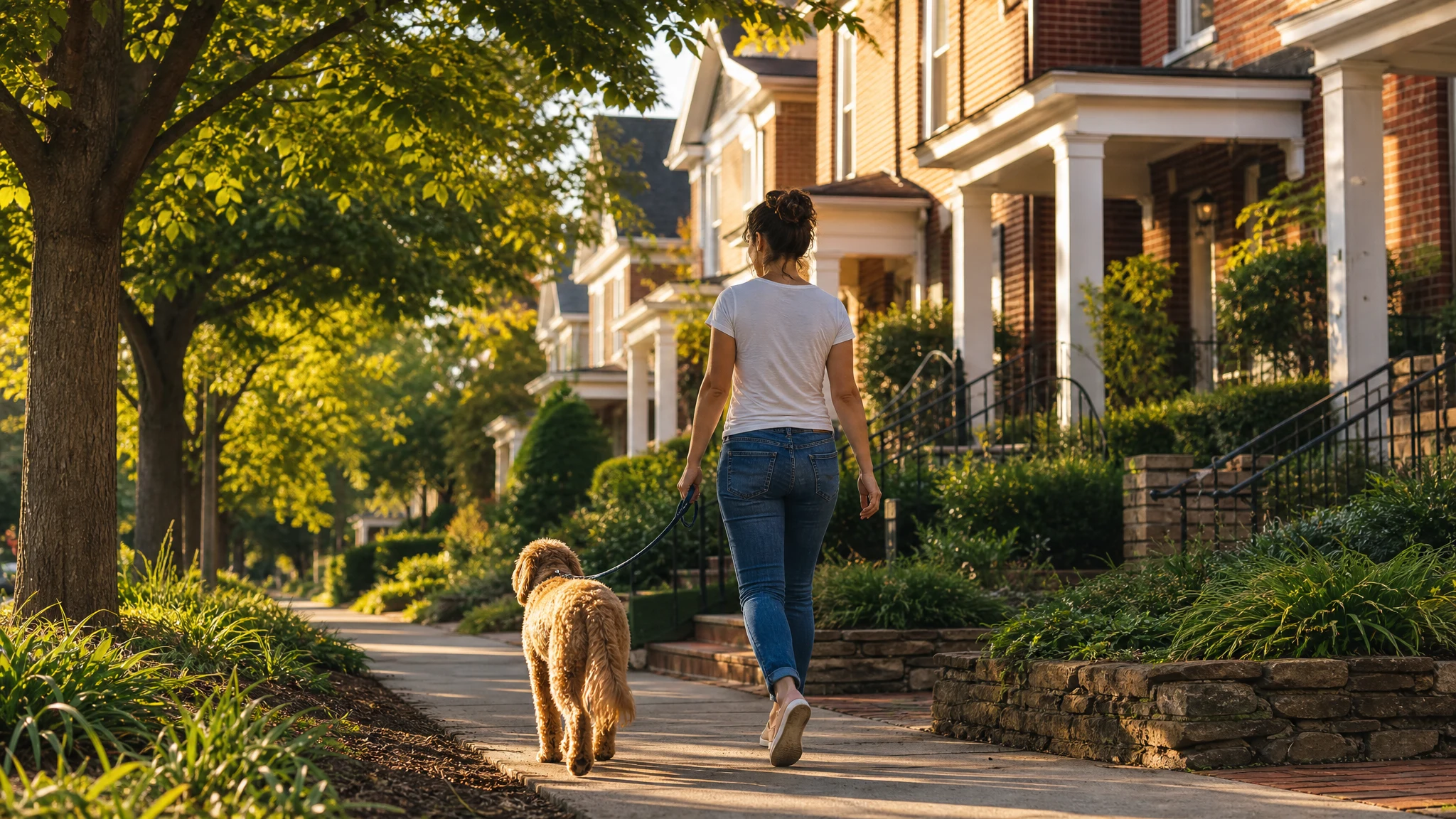
What it means for training: Until you have confirmed the details, plan on keeping your dog on a leash whenever you are outside a fenced dog park. That is a safe habit that also protects your dog from traffic, heat and other dogs. Practice walking with a loose leash. Reward your dog each time they check in with you, and turn and walk the other way, calmly, when the leash goes tight.
Step 2: Get an Arlington Dog License
An Arlington dog license is required. According to the City of Arlington, dogs and cats must be licensed every year, and Animal Services runs an online pet registration portal. You will need proof of a current rabies vaccination.
- Gather your records. Find the rabies certificate and note whether your dog is spayed or neutered.
- Open the city's pet registration portal. It is on the City of Arlington website, linked in the Sources list below.
- Enter your dog's details and upload proof of rabies vaccination.
- Pay the fee. The fee is lower for an altered dog than for an unaltered dog.
- Put the tag on your dog's collar once you receive it, and set a reminder to renew each year.
About the fee: Two City of Arlington pages list different amounts. The Animal Services Rapid Reference Guide and the online registration portal do not match. Because we cannot tell which is current, we are not quoting a number. Check the portal or call Animal Services for the amount that applies to your dog. The pages we reviewed also do not name which office issues the license, so the phone number is the quickest way to confirm.
What it means for training: A tag with current license information is useful if your dog slips out and a neighbor finds them. It is one more reason to teach a solid recall and door manners (see Step 3).
Step 3: Keep Rabies Vaccination Current
Texas Health and Safety Code Sec. 826.021 says a dog or cat must be vaccinated against rabies by 4 months of age and at regular intervals after that. It also says a county or municipality may not license an animal that has not been vaccinated. This is why Arlington asks for proof when you license your dog.
Ask your veterinarian when your dog's next vaccine is due and how often the schedule repeats. Keep the certificate where you can find it, and photograph it so it is on your phone.
What it means for training: We do not have a published rule for when a puppy may start group classes, so ask your veterinarian and the class provider about vaccine requirements before you enroll. Early socialization matters, but your vet is the right person to say what is safe for your puppy.
Step 4: Understand Barking Complaints
Arlington handles barking through a complaint process. The City of Arlington's Barking Dogs Complaint Process says the complainant files a notarized affidavit with Animal Services. Animal Services reviews it and may issue a citation. The page does not give an ordinance section number, so check with the city if you need the exact code language.
Neighbors are asked to put a complaint in writing, so a barking problem can become official without a conversation first. A friendly chat over the fence, or a note, often goes further.
What it means for training: Barking is communication, and punishing it usually makes it worse. Try these humane steps:
- Work out why your dog barks: boredom, a window view, noises, loneliness or alerting.
- Add exercise and mental work such as food puzzles, sniff walks and short training games.
- Block the view that triggers barking, or move your dog's resting spot.
- Teach a quiet cue by rewarding the moment your dog pauses between barks.
- Do not leave a dog outside for long stretches without supervision.
If barking comes with distress when you leave, such as destroying doors or panicked drooling, talk to your veterinarian. Separation problems can be medical or anxiety-related and need professional support.
Step 5: Know the Dangerous Dog Rules
Arlington's dangerous dog rules are strict, and it helps to understand them before you ever need them. According to the City of Arlington, a dangerous animal is one that makes an unprovoked attack on a human causing bodily injury. The city cites the Animals Chapter, Article VIII, Section 8.01, together with Texas Health and Safety Code 822.041.
The city's process works like this:
- Reports must be in writing and notarized.
- The owner is notified in writing.
- The owner may appeal to a justice, county or municipal court within 15 days.
If a dog is registered as dangerous, the city lists these requirements:
- A secure enclosure, or a muzzle with a leash of 6 feet or less under the control of a capable person.
- A $100,000 liability policy.
- A $50 annual renewal fee.
- A tag worn at all times.
- Proof of rabies vaccination.
Remember, the 6-foot leash applies only in this situation and is not a general rule.
What it means for training: Prevention is the goal. Teach your dog to be comfortable with handling, visitors and being left alone. Manage gates and doors so a nervous dog cannot get to a stranger. If your dog growls, snaps or bites a person, call your veterinarian first to rule out pain or illness, and then work with a certified behavior professional. Do not try to fix aggression with punishment, which can make it more dangerous.
Step 6: Know Where Off-Leash Practice Is Allowed
The city lists these places. Always confirm current hours and rules before you go.
| Place | Address | What the city says |
|---|---|---|
| Rush Creek Dog Park | 1900 Valleywood Dr., Arlington, TX 76013 | Free. Up to three dogs per visit. Clean up after your dog. Dogs stay on leash until inside the double-gated entry. Closed Wednesdays until noon for maintenance. Rainout line 817-462-8441. No regular hours listed. |
| Tails 'N Trails Dog Park | 950 SE Green Oaks Blvd., Arlington, TX 76018 | Off-leash and fully fenced. Open during daylight hours at no charge. Closed Tuesdays until noon for maintenance. Rainout line 817-462-8441. |
| Doggie Depot (Downtown Arlington) | 105 N Mesquite St., Arlington, TX 76011 | Opened March 13, 2025. The city's announcement lists no hours, fees or rules, so check before you visit. |
What it means for training: A fenced park is a good place to practice recall, but only when your dog is ready. Start with a long, fixed-length leash in a quiet area. Call your dog's name once, cheerfully, and reward with something special when they come. Do not call your dog to end the fun every time, or they may learn that coming means the party is over. Mix in a few extra rewards and send them back to play.
Step 7: Check the Pet Limit
Many owners ask how many dogs a household can have. The city pages we reviewed do not state a pet limit, so we cannot give you a number. Call Arlington Animal Services at 817-459-5898 or read the Animals chapter of the city code before adding another dog. Also check your lease or homeowners association rules.
For training, a new dog in the home means more management, such as separate feeding spaces and one-on-one training time with each dog.
Tips and Common Mistakes
- Assuming one rule covers everything. The 6-foot leash is a dangerous dog rule, not a general rule. Confirm the general leash rules with the city.
- Letting the license lapse. The city requires annual renewal. Set a calendar reminder.
- Forgetting the rabies certificate. Without it, the city cannot license your dog.
- Ignoring barking until a neighbor files. Early, kind changes to your dog's routine can prevent a formal complaint.
- Using harsh gear. Shock, prong and choke collars are not part of humane training. The American Veterinary Society of Animal Behavior supports reward-based methods.
- Walking in the heat. The City of Arlington advises checking the pavement with the back of your hand. If it is uncomfortable to hold there for more than 5 seconds, it is too hot for your dog's paws. The city also says never to leave a dog in a parked vehicle, to provide fresh water, and to watch for heavy panting. Flat-faced dogs are more prone to heat stroke. If you see signs of heat stroke, contact a veterinarian right away.
- Skipping the call to the city. Where this guide says to check, a short call to Animal Services is worth the time.
What You Can Expect
If you follow these steps, you may find that licensing and rabies records are easy to keep on top of, and you will know where to look for the rules that are less clear. With regular, reward-based practice, many dogs get calmer on leash and more reliable at coming when called, though progress depends on the dog, the setting and how consistently you practice. Barking often improves when a dog's exercise, enrichment and routine improve, but results vary.
If you would like help building these skills, see our guide to dog training in Arlington, where to train and what it costs.
Who to Call
- Arlington Animal Services Center: 1000 SE Green Oaks Blvd, Arlington, TX 76018, phone 817-459-5898. The city's pages list different hours, so confirm before you go. The Animals & Pets page lists Tuesday to Friday 10 a.m. to 6 p.m. and Saturday 10 a.m. to 4 p.m., with Sunday and Monday closed.
- Your veterinarian: for vaccines, medical concerns, heat illness and any sudden behavior change.
- A certified behavior professional: for aggression toward people.
Sources
- City of Arlington, Animal Services pet registration portal
- City of Arlington, Animal Services Rapid Reference Guide
- City of Arlington, Barking Dogs Complaint Process
- City of Arlington, Dangerous Dogs
- City of Arlington, Animals & Pets
- Texas Health and Safety Code Sec. 826.021
- City of Arlington, Rush Creek Dog Park
- City of Arlington, Tails 'N Trails Dog Park
- City of Arlington, Doggie Depot grand opening
- City of Arlington, Heat Safety Tips for Enjoying Arlington Parks This Summer
- City of Arlington, Keep Pets Safe During Soaring Temperatures