Adopted a Dog in Arlington? A 30-Day Training Plan
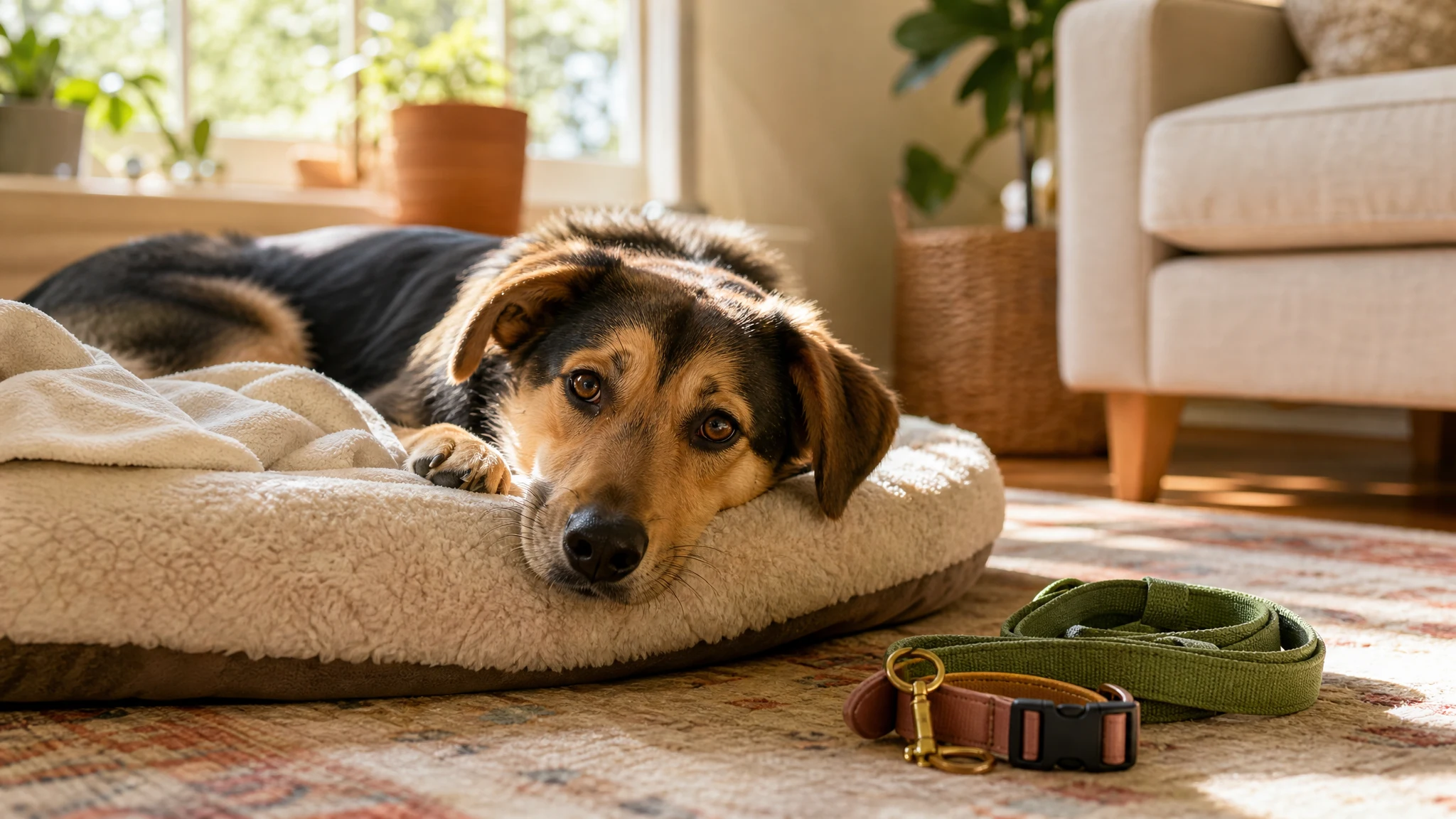
General training information. For aggression, sudden behavior changes or health concerns, see your veterinarian first.
You signed the papers, buckled the seat belt, and drove home with a new family member. Now the quiet question arrives: what do I do first?
This plan is for training a rescue dog during the adopted dog first 30 days. It is built around four weeks, one focus each. It is written for Arlington owners, so it points to local rules, local places and our Texas heat where they matter.
Every dog is different. Treat the weeks as a guide, not a deadline. If your dog needs more time on a step, give it more time.
Where Arlington adopters often start
Many people adopting in the city begin at the Arlington Animal Services Center, the municipal shelter at 1000 SE Green Oaks Blvd, Arlington, TX 76018. The phone number is 817-459-5898. City pages have listed different hours, so call before you go. The City of Arlington's Animals & Pets page currently lists Tuesday to Friday 10 a.m. to 6 p.m. and Saturday 10 a.m. to 4 p.m., with Sunday and Monday closed. Confirm that with the city.
You may also come across Friends of Arlington Animal Services (FAAS). It is an independent nonprofit support group for the city shelter. It is not a shelter facility itself.
Ask the staff what they know about your dog: how the dog acted around other dogs, children, car rides and handling. Write it down. It gives you a starting point, even if it is incomplete.
What you need
- A well-fitted flat collar or a front-clip harness, plus a standard 6 foot leash
- An ID tag with your phone number, and a microchip registered to you
- A crate or a gated resting area with a comfortable bed
- Small, soft treats your dog loves, cut pea-sized
- A long line (15 to 20 feet) for recall practice
- Food puzzles, chew toys and a lick mat
- Enrichment items such as a sniff mat or a cardboard box to shred
- Enzymatic cleaner for accidents
- Fresh water and a paw check habit for hot days
- A notebook for tracking meals, potty trips and mood
You will not need a shock, prong or choke collar. The American Veterinary Society of Animal Behavior (AVSAB) recommends reward-based training, and that is what this plan uses.
Before day one: the paperwork
Texas law, under Texas Health and Safety Code Sec. 826.021, requires a dog to be vaccinated against rabies by 4 months of age and at regular intervals after that. The statute also says a county or municipality may not license an animal that has not been vaccinated.
The City of Arlington requires dogs and cats to be licensed every year, and asks for proof of current rabies vaccination. Fees are different for altered and unaltered pets, and the city's own pages have shown different figures. Check the current fee with Arlington Animal Services through its pet registration portal. Your shelter paperwork should show your dog's vaccination status.
Week 1: Decompression (days 1 to 7)
Your goal this week is simple: let your dog settle. A new home is a lot to take in. Many rescue dogs seem fine at first, then show stress days later.
Step 1: Make a calm landing spot
Set up a crate or gated corner in a quiet room, away from the front door and the TV. Put a bed and a water bowl there. Let your dog walk in and out freely. Toss in a treat now and then.
Step 2: Keep the world small
Skip the welcome party. No visitors, no dog park, no pet store trips for now. Short, quiet potty breaks on leash in your own yard or apartment area are enough.
Step 3: Let your dog set the pace
Do not hug, loom over, or pull your dog out of hiding. Sit nearby, read a book, and drop a treat when your dog looks your way. This teaches your dog that you are safe and predictable.
Step 4: Feed on a schedule
Feed two meals a day at the same times. Ask the shelter what food your dog was eating, and change foods slowly if you switch. A vet visit in the first week is a good idea for a health check and a microchip scan.
Common mistake: Doing too much, too soon. Many adopters mean well and take the dog everywhere. A tired, overwhelmed dog tends to cope worse, not better.
Week 2: Routine (days 8 to 14)
Dogs relax when they can predict what comes next. This week you build a daily rhythm.
Step 5: Set a daily schedule
Aim for the same wake-up, meals, walks, play and bedtime each day. A sample day: potty and breakfast, a short sniff walk, a chew or puzzle, rest, a midday potty break, play, dinner, a final potty trip, bed.
Step 6: Teach the first few cues
Practice for two to three minutes at a time, a few times a day. Start with these:
- Sit: Hold a treat at your dog's nose and slowly lift it over the head. When the bottom lowers, say "yes" and reward.
- Touch: Present your open palm. When your dog sniffs it, say "yes" and treat.
- Settle on a mat: Reward any time your dog lies on the mat, then build up to longer stays.
Step 7: Choose walks that help
Let your dog sniff on walks. Sniffing is tiring and calming for many dogs. Pick quiet streets first and add busier ones as your dog gains confidence.
Step 8: Watch the heat
Arlington summers can be hard on paws. The City of Arlington's parks guidance says to press the back of your hand on the surface. If it is uncomfortable or painful to hold it there for longer than 5 seconds, it is too hot for your dog's paws. The city also says never to leave animals in a parked vehicle and to watch for heavy panting. Flat-faced breeds are more susceptible to heat stroke. Walk early or late in hot months.
Common mistake: Changing the rules from day to day. If the couch is off limits, keep it that way for everyone in the house.
Week 3: House training and manners (days 15 to 21)
Even a dog who was house trained before may have accidents in a new place. Plan on starting from scratch.
Step 9: Take your dog out often
Go out first thing in the morning, after every meal, after naps, after play, and before bed. Many adult dogs do well with a trip every two to three hours at first. Puppies need more.
Step 10: Reward right where it counts
Go to the same spot each time. When your dog finishes, praise and treat right away, while still outside. A treat given after coming back inside rewards the door, not the potty.
Step 11: Supervise indoors
Keep your dog in sight, use a leash tether to you, or use the crate or gate when you cannot watch. If you see sniffing in circles or heading to a corner, calmly head outside.
Step 12: Handle accidents calmly
If you find a mess, clean it with enzymatic cleaner and move on. Do not scold or rub a nose in it. Punishment can teach a dog to hide when they need to go, which makes training harder.
Step 13: Start gentle handling practice
Touch a paw, then treat. Touch an ear, then treat. Lift a lip, then treat. This helps with vet visits and grooming later.
Common mistake: Expecting a clean record after a week. Accidents in the first month are common and are not a sign of failure.
Week 4: Name, recall and alone time (days 22 to 30)
By now your dog likely knows your voice and your routine. This week you add two skills that make daily life easier.
Step 14: Make the name mean good things
Say your dog's name once in a cheerful voice. When your dog looks at you, say "yes" and give a treat. Repeat in different rooms. Never use the name to scold. If the shelter gave your dog a name your dog does not respond to, you can pick a new one and teach it the same way.
Step 15: Build recall on a long line
Start indoors. Say "come" in a happy voice, step back, and reward when your dog reaches you. Move to the yard on the long line. Use a very tasty treat and make coming to you the best thing that happens all day. Do not call your dog to end the fun or for something unpleasant.
Keep your dog on a leash or long line outside a fenced area until recall is very reliable. Some rescues take months to get there, and some never get fully reliable. The City of Arlington can tell you its current leash rules, so check with Animal Services.
Step 16: Practice alone time in small steps
Give your dog a chew or stuffed toy and step out of the room for a few seconds. Come back before your dog gets worried, and calmly continue. Add time slowly: 10 seconds, 30 seconds, one minute, five minutes. Then try leaving the house for a short trip.
Do not make hellos and goodbyes a big event. Stay calm and low-key.
If your dog panics, drools heavily, destroys doors, or hurts themselves when left alone, that is more than a training issue. Talk to your veterinarian and ask for a referral to a certified behavior professional.
Step 17: Consider a first outing
If your dog is relaxed and social, you might try a local off-leash park. Rush Creek Dog Park (1900 Valleywood Dr.) is free, allows up to three dogs per visit, and requires dogs to stay on leash until they are inside the double-gated entry. Tails 'N Trails Dog Park (950 SE Green Oaks Blvd.) is fully fenced and open in daylight hours at no charge. Both close for maintenance on certain mornings and have a rainout line at 817-462-8441. The city also opened Doggie Depot at 105 N Mesquite St. in downtown Arlington in March 2025. Check with the city for its hours and rules.
Go at a quiet time, stay for a few minutes, and leave if your dog seems tense. A park is optional. Plenty of good dogs never enjoy one.
Tips for the whole month
- Keep sessions short. Two to five minutes, several times a day, works better than one long session.
- Reward what you like. Catch your dog being calm and say "yes" with a treat.
- Use the "3-3-3" idea loosely. Many rescuers talk about three days to decompress, three weeks to learn a routine and three months to feel at home. It is a rough guide, not a rule.
- Take notes. A short daily log helps you spot patterns and gives your vet useful details.
- Be patient with setbacks. Progress often goes up and down.
Common mistakes to avoid
- Introducing lots of people and dogs in the first week
- Using punishment, yelling or physical corrections, which can increase fear
- Leaving a new dog alone for long hours right away
- Letting a dog off leash outside a fenced area before recall is solid
- Walking on hot pavement in the afternoon
- Skipping the vet visit and the license
When to get help
See a veterinarian first for any sudden change in behavior, appetite, or energy, or for signs of pain. Medical problems can look like behavior problems.
If your dog growls, snaps or bites people, call your veterinarian and ask for a certified behavior professional. Do not try to fix aggression on your own. In Arlington, the City's dangerous dog rules apply when a dog makes an unprovoked attack on a person causing bodily injury, so it is worth knowing them. See the city's Dangerous Dogs page for the process.
For classes and one-on-one help, see our guide to dog training in Arlington, where to train and what it costs. If you want help with rescue dog training in Arlington, look for trainers who use reward-based methods and ask about their credentials.
What to expect
Every dog moves at a different pace. By day 30, many adopted dogs begin to settle into the household. You may see more relaxed body language, a steadier potty routine, and a better response to their name and a few basic cues. Some dogs still need more time, especially if they were shy, had a hard start or came from a stressful shelter stay.
Training a rescue dog is a longer process than one month. Think of these 30 days as the foundation, and keep building from there.
Sources
- City of Arlington, Animals & Pets
- City of Arlington, Animal Services Rapid Reference Guide
- City of Arlington, Animal Services pet registration portal
- Texas Health and Safety Code Sec. 826.021
- City of Arlington, Dangerous Dogs
- City of Arlington, Rush Creek Dog Park
- City of Arlington, Tails 'N Trails Dog Park
- City of Arlington, Doggie Depot grand opening
- City of Arlington, Heat Safety Tips for Enjoying Arlington Parks This Summer
- City of Arlington, Keep Pets Safe During Soaring Temperatures
- Best Friends Animal Society, Friends of Arlington Animal Services